We offer a wide range of services for that fresh look, or just maintenance or updates to keep your home functioning and safe. Regardless of the size of the job, we have a craftsman that can tackle it. We offer a wide range of services for that fresh look, or just maintenance or updates to keep your home functioning and safe. Regardless of the size of the job, we have a craftsman that can tackle it.
Home Improvement / July 13, 2026
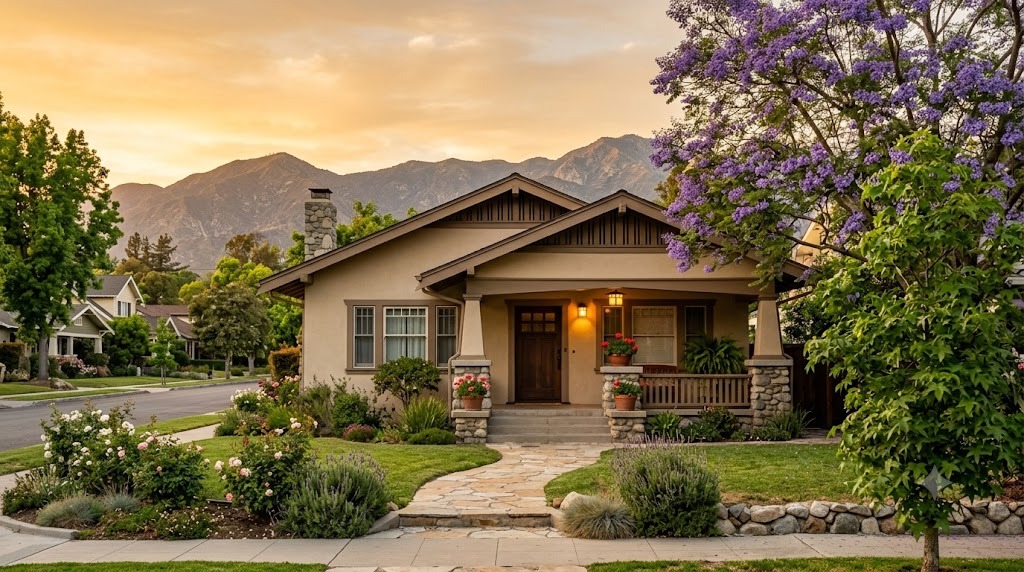
When July settles over the San Gabriel Valley and the afternoon sun turns the 210 Freeway corridor into a shimmering ribbon of heat, your attic quietly climbs to 130–150°F — and every degree of it radiates down into your bedrooms all evening. That’s why attic insulation in Pasadena is the single most overlooked cooling upgrade in our area. Homeowners invest in AC, ceiling fans, even whole house fans, yet leave a thin, 40-year-old layer of insulation between their living space and a super-heated attic. This guide answers the questions Pasadena homeowners actually ask: what attic insulation cost looks like in 2026, whether blown-in insulation or spray foam insulation is the smarter choice here, and whether this is really a DIY job.
Heat moves from hot to cold, and in a Pasadena summer the hottest place on your property is the attic. Without adequate insulation, that heat pours through the ceiling and forces your air conditioner to fight a battle it cannot win. Because both jobs touch the same surface, many Pasadena homeowners schedule insulation work alongside popcorn ceiling removal and smooth ceiling refinishing to avoid paying for containment twice.. The U.S. Department of Energy estimates that proper attic insulation and air sealing can cut heating and cooling costs by roughly 10–20% — real energy savings that show up on every summer bill from now on.
The problem is especially acute in our older housing stock. Many Craftsman bungalows in Bungalow Heaven, Spanish Colonial homes near Orange Grove Boulevard, and mid-century ranches in Altadena and Temple City still have their original insulation — often a compressed, patchy layer delivering R-11 or less. California’s Title 24 energy code and the DOE both point San Gabriel Valley homes toward R-38 or better in the attic. If you can see your ceiling joists poking above the insulation, you’re well below that mark, and you’re paying for it every afternoon.
Not sure whether your home has a problem? These are the tell-tale symptoms our craftsmen see most often across the San Gabriel Valley:
If two or more of these sound familiar, an attic assessment will almost certainly pay for itself. Most Pasadena homeowners recover the cost of an insulation upgrade in two to four summers of energy savings — faster than nearly any other efficiency project.
Let’s answer the number-one question directly. In the Los Angeles area in 2026, attic insulation cost for a typical 1,000–1,200 square foot attic breaks down like this:
What moves the price? Attic size and access, how much old material must be hauled out, ductwork in the way, and the R-value you’re targeting. Homes near the Arroyo Seco with steep rooflines or tight hatches take more labor than a walk-up attic in an Arcadia two-story.
Want a real number instead of a range? Request a free estimate from Handyman Connection of Pasadena and we’ll assess your attic’s current R-value, air leaks, and ventilation before recommending anything — no surprises on installation day.
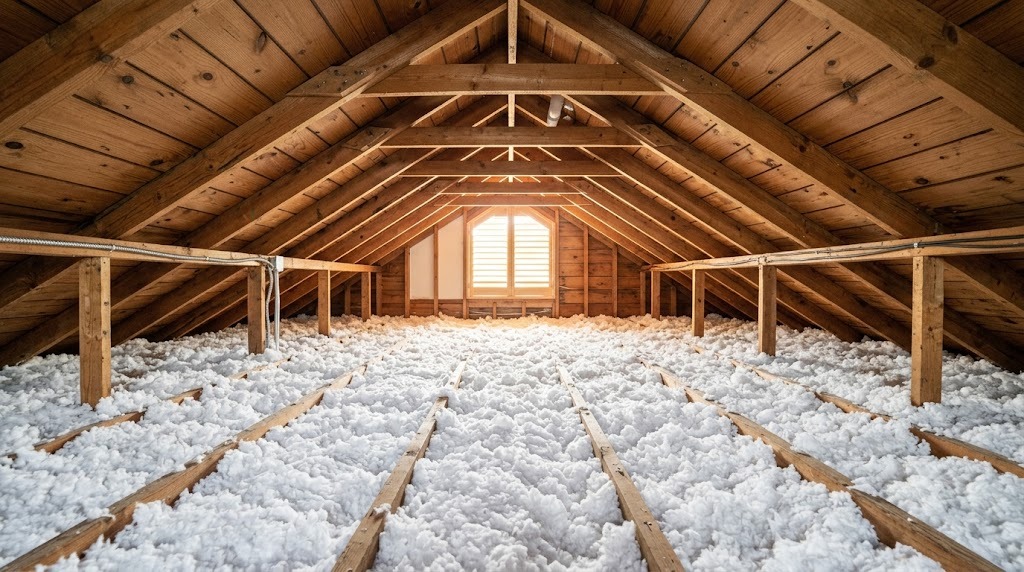
For the classic vented attics found in most Pasadena, South Pasadena, and San Marino homes, blown-in insulation — loose-fill fiberglass or cellulose — is the value champion. Fiberglass delivers roughly R-2.9 to R-3.8 per inch and cellulose R-3.2 to R-3.8, so 10–13 inches gets most homes to the R-38 target. It fills irregular joist bays beautifully, which matters in 1920s Craftsman bungalows where framing is rarely uniform. Paired with proper air sealing, it delivers most of the performance of premium options at roughly half the price.
Spray foam insulation earns its higher cost in specific situations: closed-cell foam delivers about R-6.5 per inch, air-seals as it insulates, and can convert the attic into conditioned space — valuable if your AC ducts run through the attic or you plan to use it for storage. The honest advice most homeowners in Sierra Madre or La Cañada Flintridge need to hear: for a standard vented attic, blown-in insulation plus dedicated air sealing usually wins on value. Spray foam is the right call for roofline encapsulation, tricky low-slope sections, or homes being converted for ADUs and attic living space.
In our climate, a radiant barrier deserves a mention no national cost guide gives it. Southern California attics take direct, intense sun for eight-plus hours a day in summer. A reflective barrier under the rafters can knock attic temperatures down 20–30°F, easing the load on both your insulation and your AC — meaningful energy savings for homes from Eagle Rock to Monrovia that bake on west-facing lots.
Rolling out a few batts in an accessible attic is genuinely DIY-able, and we’ll never pretend otherwise. But three realities push most attic projects into professional territory. First, the prep is the hard part: air sealing gaps, baffling around can lights and flues (a fire-safety issue), and protecting soffit vents so the attic can still breathe. Second, older Pasadena and Highland Park homes hide hazards — knob-and-tube wiring that must not be buried in insulation, and occasionally vermiculite that needs testing before anyone disturbs it. Third, a 140°F attic in July is a brutal, genuinely unsafe workplace for an unacclimated homeowner.
A licensed craftsman handles all of that in a single visit, and the work is done to code. Handyman Connection of Pasadena operates under California contractor license #992200, and our craftsmen work in historic homes across the area every week — from plaster-ceiling bungalows near Old Town Pasadena to hillside homes above the Rose Bowl. Explore the full range of home repair and improvement services we offer, from insulation and drywall to carpentry and electrical. If cracked or water-stained wallboard is the more urgent problem, start with our 2026 drywall repair guide for Pasadena.
Insulation works best as part of a system. Many of our customers combine an insulation top-off with a whole house fan — the fan flushes the attic’s heat at night, the insulation blocks it during the day, and the AC finally gets to rest. If your summer plans are bigger — an ADU conversion, a new primary suite, or an open-concept remodel where every wall and ceiling gets touched — our remodeling division Pasadena Remodeler folds insulation upgrades into the larger project, and you can browse recent local work at PasadenaRemodel.com.
Handyman Connection of Pasadena upgrades attic insulation throughout the San Gabriel Valley and northeast Los Angeles, including Altadena, South Pasadena, Arcadia, San Marino, Sierra Madre, La Cañada Flintridge, Eagle Rock, Highland Park, Monrovia, and Temple City. Whether it’s a simple top-off in a Temple City ranch, a full removal-and-replace in an Altadena Craftsman, or air sealing a drafty Victorian near South Lake Avenue, the same licensed, insured local craftsmen handle the work — backed by our written satisfaction guarantee.
Aim for R-38 or better, per California Title 24 and DOE guidance for our climate zone. Many older San Gabriel Valley homes are sitting at R-11 or less, so even a modest top-off produces noticeable energy savings.
A straightforward blown-in insulation top-off usually takes half a day. Removal plus re-insulation typically takes one full day; spray foam insulation at the roofline can take one to two days including prep and curing time.
Yes. The same barrier that blocks 140°F attic heat in July holds furnace heat in during January’s chilly nights, so the payback runs year-round.
Active knob-and-tube wiring should not be buried in insulation. We evaluate the wiring first and give you an honest answer — sometimes a small electrical update unlocks the whole project safely.
Summer in the San Gabriel Valley doesn’t wait, and neither should your attic. Proper attic insulation in Pasadena starts paying you back the first hot afternoon, protects your home through winter, and adds lasting value from Bungalow Heaven to the Rose Bowl. Request your free estimate today or call (626) 744-0402 — and make this the last summer your upstairs feels like an oven.

110 S Rosemead Blvd Suite G
Pasadena, CA 91107
License #992200

© Handyman Connection 2026 | Privacy Policy

 (626) 744-0402