We offer a wide range of services for that fresh look, or just maintenance or updates to keep your home functioning and safe. Regardless of the size of the job, we have a craftsman that can tackle it. We offer a wide range of services for that fresh look, or just maintenance or updates to keep your home functioning and safe. Regardless of the size of the job, we have a craftsman that can tackle it.
Aging in Place / January 9, 2026
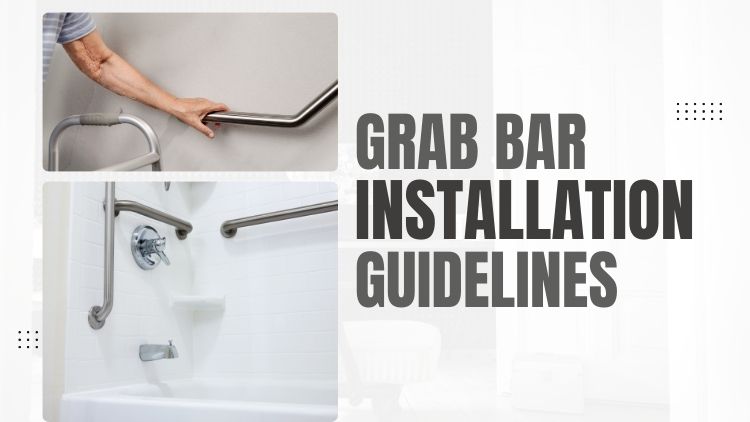
You want your tub or shower to feel safe for everyone who uses it. You want peace of mind knowing the space is easy to move in, stable to hold on to, and designed in a way that meets real safety standards.
That’s why ADA grab bar installation matters so much. When the bars are placed at the correct height and angle, they give people a firm and reliable support point. When they are installed wrong, the risk of slipping or losing balance increases.
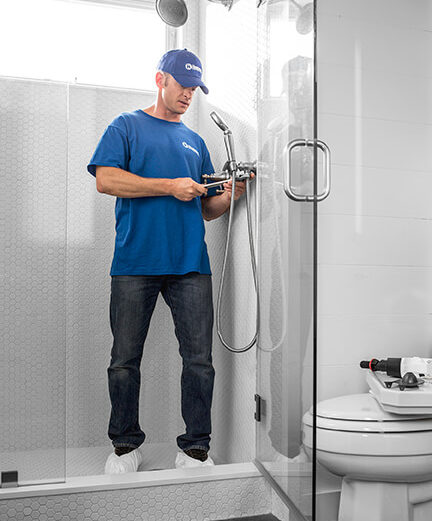
You keep your home safer when you follow proper guidelines for bathroom safety grab bars and trust trained professionals to handle every part of the job. You avoid stress when experienced pros, like our team at Handyman Connection in Winnipeg, take care of the measurements, placement, and secure fastening needed for tub and shower grab bar services.
You’ll see in the steps below how each part of ADA placement works and why each spot matters. In this blog, you’ll learn exactly how the ADA guidelines shape safe grab bar placement in tubs and showers.
You may already know that grab bars help prevent slips, but you may not know how much the exact placement affects safety. ADA guidelines explain where each bar must go so the person using the tub or shower always has a stable place to hold, no matter which direction they move.
You trust these rules because they come from years of research and real testing. They are clear, repeatable, and built to support different users with different mobility needs. When you follow these guidelines, you get the right height, angle, distance, and length—details that trained professionals handle with accuracy.
You get a safer bathing space when the tub has a seat because a person has two support points: the seat and the grab bars. For this setup, ADA guidelines require two bars on the back wall, one on the control wall, and one on the head wall. Each bar must be placed at a height and distance that supports someone moving from sitting to standing or shifting along the seat.
Back Wall Requirements
You must follow these measurements carefully:
These distances ensure that someone sitting on the seat can reach the bars without leaning too far.
Control Wall Requirements
Head Wall Requirements
These two bars help a person move safely toward or away from the seat.
You may have a standard bathtub with no seat. In that case, ADA rules focus fully on supporting someone while they stand, step in, or steady themselves after slipping. The placement must give the user a bar within reach from any direction.
Back Wall Requirements
For tubs without seats:
Control Wall Requirements
Head Wall Requirements
These bars work together to prevent falls and provide steady support at every stage of movement.
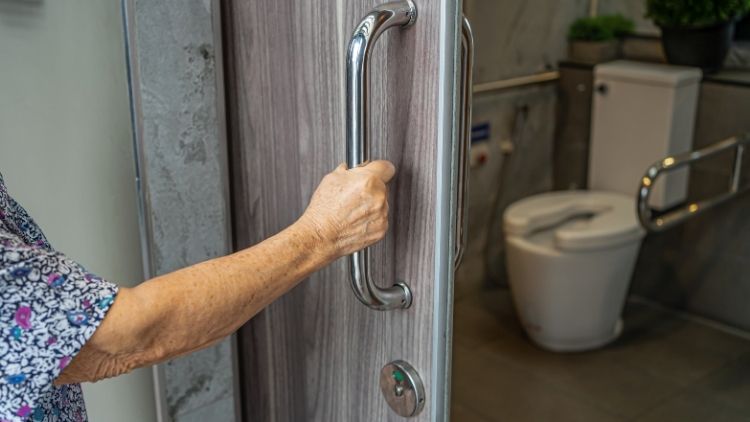
You may also have a walk-in shower instead of a bathtub. These spaces require stable support along the longer wall and enough reach near the controls. ADA guidelines call for horizontal bars and sometimes diagonal support when the length of the shower is larger.
In many walk-in showers, the long wall is where the main horizontal bar goes. This bar should be 33–36 inches from the floor and run the full length of the wall, or at least long enough to span the user’s main movement area. A second bar may be added on the opposite wall to support turning movements.
The control wall may also include a shorter bar placed near the faucet controls. This keeps the user steady while adjusting water temperature or reaching forward.
You may wonder why the ADA height range stays so tight. The rule of 33–36 inches is based on the average reach and grip strength of adults who need support. When the bar is placed too high or too low, the wrist angle becomes unsafe.
Here’s why the height matters:
By keeping every bar within this height range, you give users confidence and stability.
You may not realize how important length is for bathroom safety grab bars. ADA rules require 24-inch and 12-inch lengths for a reason. A bar that is too short forces someone to reach, and a reach is often what causes a fall.
A 24-inch bar gives enough space for both hands. When a person changes position, they can slide their hands along the bar without losing grip. This makes standing, turning, and shifting weight much safer.
A 12-inch bar is used for quick balance points. In a tub or shower, you want at least one area where you can quickly grab on if you lose footing. That’s why the short bar goes near the entry section of the tub or shower.
You want every grab bar to stay solid even when someone applies full body weight. That’s why proper fastening is one of the most important parts of ADA grab bar installation. Only trained professionals should handle this step because the mounting must be anchored into strong structural support.
You get stronger results when pros locate studs, choose secure fasteners, and check load strength. These steps make sure the bar can handle real-world pressure from anyone who uses it. A properly secured bar supports hundreds of pounds without shifting or loosening.
You also get peace of mind knowing the bar meets ADA load requirements and stays tight for years.
You get safer results when every small guideline is followed. ADA rules include extra details that shape how each bar performs. Here are a few that professionals always watch for:
These rules keep the user’s hands secure while allowing smooth movement across the space.
You may think placing a bar is simple, but the difference between “almost right” and “ADA compliant” is huge. You keep your home safe when trained pros measure, place, and secure each bar to exact standards. You reduce the risk of falls and injuries when the installation is handled by experts who know how to apply every guideline with accuracy.
When you trust our team at Handyman Connection, you get set-ups that meet safety rules, follow proper code, and stay secure long-term. You also get peace of mind knowing the work is done correctly the first time.
You feel more confident when your space includes ADA grab bar installation done to proper guidelines. You lower risks when you add strong, secure bathroom safety grab bars and place them exactly where users need stable support. You also get dependable results when trained professionals handle every part of your tub and shower grab bar services.
Our team at Handyman Connection in Winnipeg is here to help you make your space safer for everyone. You can request an estimate to learn more about how we install grab bars to ADA standards with safe, reliable methods that last.

204-1080 Wall Street
Winnipeg, MB R3E 2R9

© Handyman Connection 2026 | Privacy Policy

 204-895-1744