We offer a wide range of services for that fresh look, or just maintenance or updates to keep your home functioning and safe. Regardless of the size of the job, we have a craftsman that can tackle it. We offer a wide range of services for that fresh look, or just maintenance or updates to keep your home functioning and safe. Regardless of the size of the job, we have a craftsman that can tackle it.
Aging in Place / April 19, 2026
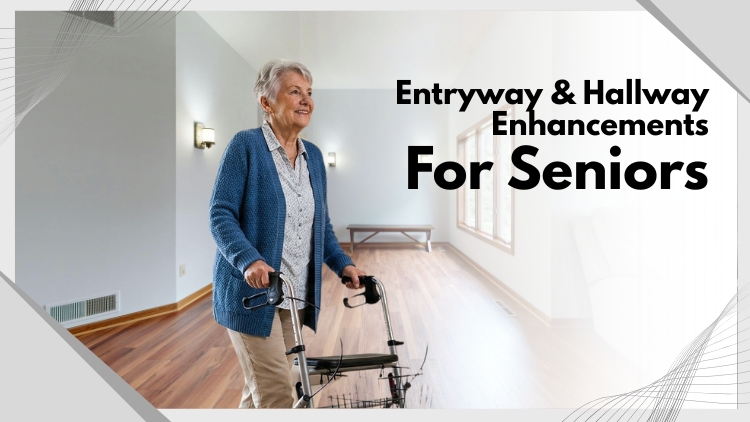
Falls are one of the leading causes of injury for older adults at home. Many of those falls happen in the most common areas of the house — right at the front door or along a hallway. The good news is that these spaces can be made much safer with the right modifications.
Professional entryway and hallway enhancements help seniors move around with confidence by removing barriers, improving stability, and adding smart safety features. These changes reduce fall risk, support the use of mobility aids like walkers and wheelchairs, and make it easier to get in and out of the home independently. They’re not minor cosmetic updates — they’re meaningful upgrades that protect health and preserve freedom.
You don’t have to move out of your home to live safely in it. With the help of our experienced professionals at Handyman Connection in Kelowna, these modifications can be completed efficiently and correctly, so everything works the way it should from day one. In this blog, we’ll walk through the key enhancements that make the biggest difference, from zero-step entries to smart lighting and explain why having the right team handle the work matters.
Seniors need safety, independence, and the ability to stay in the comfort of their own home. Many seniors value the sense of familiarity and security their own space provides, and it plays a crucial role in maintaining their overall well-being. According to a 2020 survey by the Canadian Association for the Aging, nearly 70% of seniors expressed a strong desire to live at home for as long as possible. This highlights the importance of making their living environments safe and easy to navigate.
To ensure this, homes need to adapt to the changing needs of seniors. One of the most important considerations is creating accessible pathways. This could mean installing ramps in place of stairs, widening doorways for mobility devices, or arranging furniture so that it doesn’t block walking areas. Proper lighting is also essential to prevent falls and create a space where seniors feel confident moving around. These basic adjustments can dramatically improve both safety and ease of movement.
Support structures like grab bars in bathrooms, stair railings, and non-slip floors are essential additions to a senior’s home. These features help reduce the risk of injury and provide the stability they need every day. Furthermore, seniors benefit from homes equipped with smart technology, like voice-activated lights and emergency-alert systems. These enhancements bring peace of mind and allow seniors to live independently while staying prepared for unexpected situations. It all begins with thoughtful changes, starting right at the front door.
The front entrance is the first test of accessibility every single day. Steps, narrow doors, and slippery surfaces all create risk. Our professionally upgraded entryway removes those obstacles entirely. Here’s how:
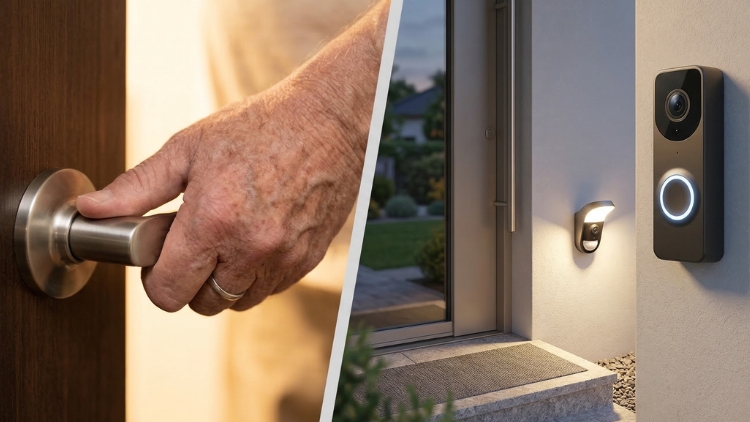
Making hallways safer helps seniors move through the home with more confidence. The right upgrades reduce fall risks and make it easier to get from room to room. Simple changes can make a big difference in comfort and safety.
Poor lighting is one of the most overlooked safety hazards in a home. According to the National Institutes of Health, people in their 60s need three times more light to see clearly than those in their 20s. Dimly lit hallways and entryways make it far harder to spot obstacles — and far easier to fall.
Smart home technology adds an extra layer of safety that works silently in the background. For seniors who want to live on their own, these tools provide greater comfort and peace of mind. They help make daily tasks much easier while helping everyone feel secure in their home environment.
With smart locks and video doorbells, there’s no need to fumble with keys in bad weather or late at night. These devices allow keyless entry and also make it easy to check who’s at the door without getting up. Remote monitoring adds another level of convenience, keeping seniors connected and in control of their home’s safety.
Voice-activated home automation is another key feature. It allows seniors to manage lighting, locks, and emergency systems simply by speaking. This makes it possible to maintain independence without needing to move around. Our team handles the installation and setup of these systems, so they are ready to use right away, making the process effortless and stress-free.
Some home upgrades may look simple, but they can be harder than they seem. For example, installing a ramp requires the right slope to make it safe and easy to use. Handrails must also be secured tightly into the wall so they can support a person’s weight. Even flooring needs careful installation so it does not shift, bubble, or create trip hazards.
That is why it helps to work with trained professionals for aging-in-place projects. At Handyman Connection in Kelowna, our craftsmen have experience with these types of upgrades. We help choose the right materials and design solutions that fit your home. Every step is done carefully so the finished result is safe and reliable.
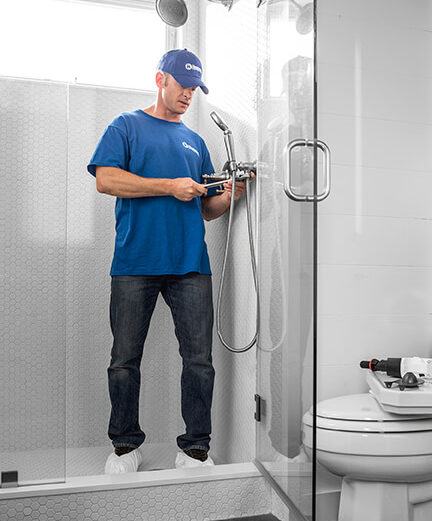
Our professionals help also makes it easier to spot safety issues early. Trained experts know what to look for during a home inspection. They can place grab bars in the right spots and make sure flooring changes are smooth and safe. These small details help make the home more comfortable and secure for people who want to age in place.
Beyond entryway safety, the interior of a home must also be adapted to handle Kelowna’s seasonal climate changes. During the colder months, heating systems need to be efficient and reliable, ensuring a warm environment. Proper insulation not only keeps homes comfortable in winter but also helps regulate temperatures during the hot summers. Our team recommends energy-efficient heating and cooling systems along with weather-stripping to seal windows and doors effectively.
Lighting is another key aspect of home safety for seniors. Shorter daylight hours in the fall and winter can lead to dimmer conditions inside the home, increasing the risk of trips and falls. Installing bright, energy-efficient LED lighting can illuminate hallways, staircases, and frequently used areas. Additional motion-sensor lighting can provide convenience and safety at night. These upgrades help ensure visibility and reduce hazards throughout the year.
Lastly, outdoor walkways and driveways need to remain safe and accessible. Kelowna’s wet and icy winters require regular maintenance to prevent slipping and falling. Heated driveway systems and proper snow removal tools can be essential for safety. Durable, weather-resistant surfaces are ideal, as they provide added stability. By addressing these outdoor challenges, seniors can enjoy better mobility and security regardless of the season.
A minimum of 32 inches is recommended, though 36 inches is the preferred standard. Wider doorways make it easier to pass through with any mobility aid comfortably and safely.
Yes. Ramps can be built to suit a wide range of exterior layouts, including concrete steps, wooden decks, and landscaped pathways. The slope, material, and design are all customised to the specific property.
The timeline depends on the scope of work. Simple modifications like lever handles and threshold strips can be completed in a single visit. Larger projects like ramp installation or doorway widening may take a day or two.
Most are permanent and are designed to last. However, modular ramp systems can be assembled in a way that allows for adjustments or removal if needed in the future.
Grab bars are typically shorter, fixed-point supports used in specific locations like beside a toilet or in a shower. Handrails run continuously along a wall or corridor and are designed to support movement over a longer distance.
Making your home safer and more accessible can seem like a big task, but small changes can have a huge impact. Simple updates such as installing ramps, motion-sensor lights, or non-slip flooring can reduce the risk of accidents and make it easier to move around your space. These changes can help seniors or anyone with mobility challenges feel more confident and independent in their own home.
At Handyman Connection in Kelowna, we are here to make this process simple and stress-free. Our team works closely with you to find the best solutions for your needs. We take the time to assess your space, recommend options that fit your lifestyle, and complete the work with great care and high-quality craftsmanship.
No matter the project, making your home safer is always worth it. Take the first step toward a space where you or your loved ones can feel more secure and independent every day. Contact Handyman Connection in Kelowna to request an estimate. With the right modifications, your home can truly become a place where everyone feels safe and comfortable.

212 1884 Spall Rd.
Kelowna, BC V1Y 4R1

© Handyman Connection 2026 | Privacy Policy

 250-717-5500