We offer a wide range of services for that fresh look, or just maintenance or updates to keep your home functioning and safe. Regardless of the size of the job, we have a craftsman that can tackle it. We offer a wide range of services for that fresh look, or just maintenance or updates to keep your home functioning and safe. Regardless of the size of the job, we have a craftsman that can tackle it.
Flooring / January 22, 2026
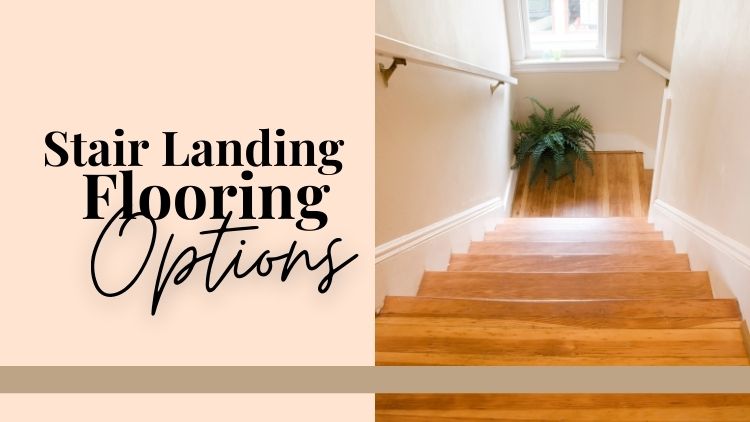
When you step from one type of flooring to another, you want that transition to feel smooth, safe, and intentional. You don’t want an awkward bump, a loose edge, or a stair landing that feels uneven under your feet. You want a clean finish that looks like it was always meant to be there.
That’s why stair landing and threshold solutions for mixed flooring matter so much. When you use stair landing flooring solutions from trained professionals, every detail is measured, fitted, and secured the right way.
You also need proper mixed flooring threshold installation when two floors meet at different heights or different materials. Even a small difference can create a trip point or a gap that collects dirt, shifts over time, or causes long-term damage. Our team provides stair threshold repair services that handle these issues at the source. You get a finish that looks great and holds up with daily use.
In this blog, you’ll learn how professionals handle stair landing flooring solutions, mixed flooring transitions, and threshold setups so the whole space feels safe and complete.
When two floors meet—carpet to hardwood, tile to vinyl, or laminate to wood—you need more than a simple join. You need a solution that keeps the space level, prevents movement, and blends the look of both surfaces. This is especially important on stair landings, where foot traffic is heavy and safety matters most.
A well-built transition does three things:
Without the right support, these meeting points can move, warp, or break down over time. That’s why professionals handle the build, fit, and securement steps carefully from beginning to end.
Before any work begins, we look closely at the landing itself. You want the transition to work with both flooring types, so we check the height, thickness, and direction of each surface. We also check the subfloor below, because mixed flooring often sits at slightly different levels.
We look at:
This planning step affects the entire job. A good fit begins with accurate measurements and a clear plan for how the materials will meet.
Once the assessment is finished, we decide whether the space needs a reducer, T-moulding, a threshold, or a stair nosing. Every landing has its own shape and challenges, so we match the solution to the structure, not the other way around.
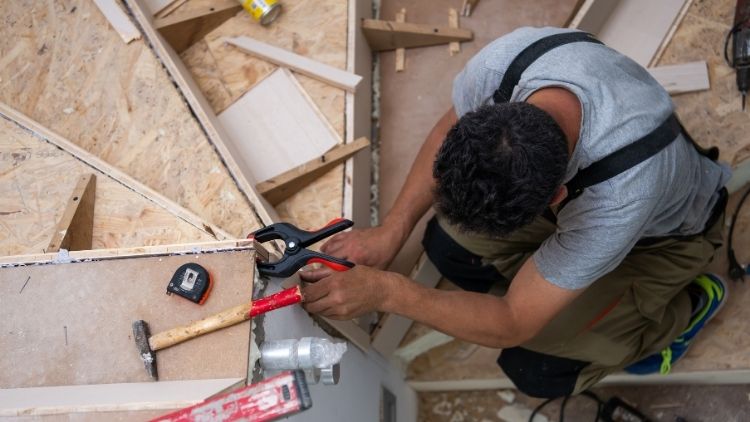
Transition pieces are a major part of stair landing flooring solutions. They help the floors meet safely while protecting their edges. They also improve the look of the landing by creating a clean and finished break between the two surfaces.
Each type of transition piece has its purpose:
These pieces come in wood, metal, vinyl, and other materials. We choose the option that blends well with the existing flooring or complements the room’s style.
Transition pieces protect the floors from chipping or lifting. They also prevent the surface from shifting and keep the landing safer for people walking up and down the stairs.
When mixed flooring threshold installation is done the right way, the transition almost disappears into the space. It feels natural and smooth under your feet.
The edge where the stair landing meets the top step is one of the most important parts of the whole area. Stair nosing, sometimes called bullnose, protects this edge and gives the step a safe and comfortable profile.
Stair nosing is an important part of any landing because it defines the edge of the step and makes the transition clear as you move from one level to the next. It protects the flooring from wear, adds strength to the edge, and helps prevent trips by giving your foot a stable place to land.
A well-fitted nosing also creates a clean, finished look that ties the whole staircase together. It must sit tight and solid on the landing, because a loose or uneven nosing can make the entire stairway feel unsafe and unsteady.
We choose a nosing that suits the flooring material on the landing. Some homes want a perfect match, while others use a contrast that looks stylish and intentional.
For floating floors like laminate or luxury vinyl, we use a nosing made for expansion and contraction. The flooring stays flexible, but the nosing stays firmly anchored to the subfloor where it belongs.
Professionals secure the nosing carefully so the step feels stable every time you walk over it.
When two floors meet, the design matters just as much as the build. You want the transition to support the overall look of your space and feel like it belongs there. Mixed flooring can look beautiful when it’s planned with intention, and that’s why we help people choose options that fit their style and layout.
You don’t want two materials that “almost match,” because that kind of pairing usually looks unplanned. A clear, intentional contrast often looks cleaner, sharper, and more modern. Many homeowners choose combinations like a wood landing next to a tile hallway or dark vinyl beside light oak because the difference looks defined. Strong contrast gives the landing a purposeful style that stands out in a good way.
Sometimes the best transitions come from shared features rather than matching materials. You can connect two flooring types by aligning undertones, using similar trim colours, or repeating metal accents that appear elsewhere in the staircase. These subtle touches help the entire space feel coordinated without forcing the floors to look identical. When the details match, the mixed flooring looks unified and balanced.
A rug or runner on the landing can soften the look of two different flooring materials and bring them together visually. It adds warmth and comfort, especially in a high-traffic area, while reducing wear on the surfaces below. A well-chosen rug also helps bridge the colour and texture differences between the two floors. It’s a simple design choice that can make the transition feel smoother and more inviting.
One of the biggest challenges is when the two flooring types don’t sit at the same height. Even a small difference can create a bump or a lip that becomes a trip hazard.
We solve this by:
A smooth landing should feel natural under your feet. You shouldn’t feel the change in height.
Some homes already have thresholds or trims in place, but they’re loose, cracked, or worn down. That’s when stair threshold repair services become important.
We remove the damaged parts, check the subfloor, and rebuild the area so the transition works like new. Sometimes the solution is a fresh piece that matches the flooring; sometimes the landing needs a more modern upgrade that fits better with mixed flooring.
A proper repair prevents further damage and keeps the space safe.
Once the transition pieces, nosing, and landing details are in place, we check:
Small adjustments make a big difference. A proper fit gives you a landing that lasts for years without shifting or loosening.
When your home has mixed flooring, the transition at the stair landing needs extra attention. You stay safer and get a cleaner look when you use stair landing flooring solutions from trained professionals. You also get mixed flooring threshold installation that fits tightly and stair threshold repair services that keep everything stable.
Our team at Handyman Connection in Calgary is ready to help you create a landing that feels smooth, secure, and well designed. Request an estimate to learn more about how we can build or repair your stair landing with the right materials and a professional finish.

206 2915 21 St NE
Calgary, AB T2E 7T1

© Handyman Connection 2026 | Privacy Policy

 403-735-3257