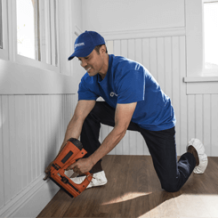
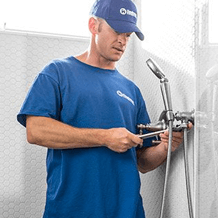
We are excited to announce that a long time Master Craftsman of our business is now the proud new owner; please join us in congratulating Earl Swader as the new owner of Handyman Connection of Blue Ash. Earl has previous business ownership already under his belt and is looking forward to continuing to serve the Blue Ash community as the proud owner.

Home Maintenance>Repairs / August 24, 2026

Paying for an education you’ve never experienced before is uncomfortable. You don’t know what a good class even looks like yet, so you end up guessing based on a website, a couple of reviews, and maybe a phone call with an admissions rep whose job is to get you to sign up. If you’re looking at becoming a home inspector, you’ve probably noticed how many training programs exist, and how similar they all sound.
Sorting through that is genuinely hard, and the stakes aren’t small. You’re spending months of your time, and in a lot of states, your shot at getting licensed rides on how good the program actually is. Here’s the reassuring part: the gap between a weak program and a strong one isn’t some hidden secret. It comes down to a short list of things that tell you whether you’ll be able to actually do the job afterward, not just pass a test.
Before getting into ‘what makes a program good’ or ‘how do you become a home inspector’, it helps to understand why somebody would bother with this profession at all. The U.S. Bureau of Labor Statistics calculated approximately 146,720 construction and building inspectors nationwide as of May 2025, with a median annual salary of $74,690.
That’s a stable income for a job that, in most states, doesn’t need a four-year degree. Separately, the National Association of Realtors has recorded that regular homebuying activity supports demand for inspection services linked to the broader housing market. Neither figure pledges you a paycheck the day you graduate, but concurrently they explain why career changers, retired tradespeople, and individuals who just want more control over their schedule keep gravitating toward this field.
Plenty of training programs are built around one goal: get you through the exam. Fair enough, licensing exams are a real hurdle. But a program that stops there isn’t doing you any favors. Home inspection is a judgment call, over and over again, all day. You walk into a house you’ve never seen, built by people you’ll never meet, and you’ve got an hour or two to figure out what’s wrong with it. No multiple-choice test prepares you for that. Look for a program that:
Anyone can slap a stock photo of a house on their website and call the course hands-on. What actually matters is whether you get to practice on a real structure, with real tools, under conditions that feel something like an actual inspection. Reading about how to test a GFCI outlet is not the same as doing it while someone stands over your shoulder correcting your form. If a school can’t tell you plainly how many practice inspections you’ll run and where, ask before you hand over any money.
Who teaches you matters more than the name on the school’s letterhead. An instructor who’s crawled under hundreds of houses, gone back and forth with contractors, and written reports that held up when a deal got contentious brings something no syllabus can fake. Look the instructors up by name. Are they still inspecting, or did they stop years ago and move into teaching full time? Have they written or spoken publicly about the trade anywhere? Ten minutes of searching tells you more than any brochure will.
Finishing a training program is where the job starts, not where it ends. Good programs know your questions don’t stop once you have a certificate in hand — if anything, they pick up, right around the time you’re standing in your first real attic trying to decide if that stain is an active leak or just old damage nobody fixed. A program worth what it costs should give you:
So, how do you become a home inspector? The path is more manageable than it looks from the outside. Necessities shift a lot from state to state. Some want standard coursework plus a licensing exam, some want an apprenticeship time, and a handful scarcely need anything at all. Broadly, though, it plays out like this: extrapolate what your state actually needs, complete an authorized training program, log whatever field hours or ride-alongs are needed with a licensed inspector, pass the state exam if there is one, and get liability insurance lined up before you take a single disbursing client.
Not every program is straight with you about what you’re getting, and the ones that let students down tend to share a few habits:
A syllabus tells you what’s presumed to transpire in the class. What you honestly want to know is what happened to the people who already took it. Ask a school directly how many of their graduates are working as inspectors a year out, and whether you can talk to one of them. If the program is any good, they won’t hesitate to connect you.
Picking a home inspection training program isn’t about discovering the shiniest option. It’s about finding one that treats the work earnestly: teaches judgment alongside realities, gets you real training, puts you in front of instructors who’ve honestly done this for a living, and doesn’t vanish the day the course ends. Take your time with it. An exemplary program won’t just get you past the exam. It’ll get you comfortable walking into a stranger’s house, knowing you can give the people relying on your report something they can actually trust.

11115 Kenwood Rd.
Blue Ash, OH 45242

© Handyman Connection 2026 | Privacy Policy

 (513) 771-3950