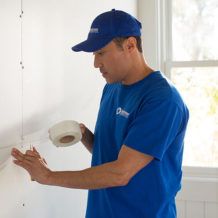
We are excited to announce that a long time Master Craftsman of our business is now the proud new owner; please join us in congratulating Earl Swader as the new owner of Handyman Connection of Blue Ash. Earl has previous business ownership already under his belt and is looking forward to continuing to serve the Blue Ash community as the proud owner.

Home Improvement / August 31, 2026
Go-to-market (GTM) technology is the digital engine behind how companies find, win, and keep customers. Rather than relying on guesswork, GTM tech brings together CRMs, marketing automation, AI-powered sales tools, and analytics to create a connected pipeline that turns market interest into revenue.
Large GTM stacks are common in tech, where companies use them to score leads, automate outreach, track customer usage, and scale subscriptions quickly. But you don’t have to be a tech company to put the same technology to work.
Take scaling home service companies (HVAC, plumbing, lawn care, cleaning, general contracting, and more). They can build GTM stacks around what actually drives growth, from hyper-local targeting and instant lead capture to customer retention and lifecycle marketing.
So, what does that look like in practice? Let’s take a look.
Unlike standard B2B companies that use Salesforce or HubSpot as their GTM core, the home services industry relies on Field Service Management (FSM) software like ServiceTitan, Housecall Pro, Jobber, and Workiz.
Modern FSM platforms go beyond a back-office administration board that dispatches vans, assigns jobs, and tracks worker schedules. They are functioning as the single operating system driving the entire customer life cycle.
This simplifies the tech stack because companies don’t need to add a separate CRM tool. The FSM tracks physical property details alongside standard contact info and past service logs. When an existing client calls, the dispatcher instantly sees every previous call recording, unbooked estimate, invoice, and technician note tied to that specific address.
Take a roofing company that just booked a job in a new neighborhood. The job itself is great, but it also creates an opportunity to reach dozens of nearby homeowners who may need similar work. A simple email or direct-mail campaign saying, “We’re working on your street this week,” sent to the 50–100 homes nearby could generate new jobs before the original project is even finished.
And the marketing team doesn’t have to build that campaign by hand. Tools like PostcardMania or Lob integrate with mapping/property data APIs to identify nearby properties and can automatically trigger direct-mail campaigns.
On the other hand, a commercial cleaning service company relies on proactive, account-based targeting. Instead of waiting for a business to search for a cleaning service, sales and marketing teams can identify potential customers in a specific area and figure out who the right decision-makers are.
If a commercial cleaning service business wants to target all Class-A office buildings or outpatient medical clinics in a 25-mile radius, a local business directory isn’t going to give you that level of detail. But a platform like GTM AI can pull precise B2B firmographics and identify who to call and what offer they can’t refuse.
In other words, GTM technology lets home service companies do more than wait for the phone to ring. They can identify where demand is likely to come from, act on it quickly, and put the right offer in front of the right people.
Urgency is often a big part of running a growing home service company. Customers tend to call when something happens, whether their pipe just burst or their AC broke in July. They need the job done as soon as possible, and if you are not there to take the call, they’ll move on to the competition.
To capture the lead without spending a fortune on a customer service team, many small businesses use automated conversion tech like AI voice and webchat agents or automated lead re-engagement.
Applications like Slingshot, ZyraTalk, or Hatch use natural language processing (NLP) to handle inbound calls and online inquiries 24/7. These tools answer basic questions, verify geographic coverage, and directly book appointments on the FSM dispatch calendar without human intervention.
For undecided clients (estimates or quotes that sit in the system for a period of time), the system can automatically launch an emailing sequence and offer micro-discounts, lifting estimate conversion rates.
Many home service companies focus on building their skills, which is important for staying competitive, but overlook the equally important role technology plays in growth. The main impediment is usually the cost and effort of implementing a complex system.
But GTM tech can be deployed directly on field tablets (iPads/Android devices) and helps drive average order value by smoothing out the technician-client experience. For instance, mobile software built into modern FSMs allows technicians to generate interactive presentation tiers on-site. Standardized, multi-tiered pricing options typically increase job ticket sizes compared to single-estimate paper quotes.
Tools like GreenSky, Wisestack, and GoodLeap also let technicians offer customers soft-credit-check financing options (e.g., “$89/month for a new HVAC system”) at the point of decision, reducing price friction for high-ticket installations.
A well-designed GTM setup can remove friction at every step, from finding and contacting the right local leads to scheduling jobs, following up, and turning one-time customers into loyal ones. With modern tools, home service companies can make that process faster, more targeted, and easier to scale.
In the end, for growing home service companies, the goal isn’t to copy the massive GTM stacks used by tech companies. It’s to build a stack that fits the way local service businesses actually operate.
11115 Kenwood Rd.
Blue Ash, OH 45242

© Handyman Connection 2026 | Privacy Policy

 (513) 771-3950