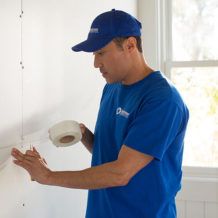
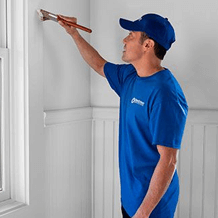
We are excited to announce that a long time Master Craftsman of our business is now the proud new owner; please join us in congratulating Earl Swader as the new owner of Handyman Connection of Blue Ash. Earl has previous business ownership already under his belt and is looking forward to continuing to serve the Blue Ash community as the proud owner.

Carpentry / June 3, 2026

The pre-move repair checklist is one of those quiet-ROI items that separates a smooth sale from a painful one. Most sellers understand they need to paint and clean before listing. Far fewer understand the specific list of small, cheap, high-impact repairs that buyers notice during showings and inspectors flag during due diligence. The result is predictable: a list of deal-stressing concessions at the closing table that would have cost $300 to fix upfront and end up costing $3,000 in credits or re-negotiations.
For sellers coordinating the move alongside the sale, the repair work needs to happen before packing starts. Once boxes are in place, access to walls, baseboards, ceiling fixtures, and HVAC equipment gets harder and the repair window effectively closes. The bigger-ticket pre-move items, especially HVAC service, ductwork, and electrical, usually need a licensed pro before showings start. Southwestern Ontario sellers in Chatham-Kent, London, Windsor-Essex, Sarnia, Leamington, or St. Thomas often turn to family-run operators like Handy Bros. a heating and cooling company serving the region since 1959, to handle the HVAC and maintenance work that sits on the pre-move list alongside the cosmetic fixes. Scheduling the contractor work 4 to 6 weeks before the listing date gives a clean workflow. Here’s the checklist that actually protects your closing price.
Three structural reasons small repairs punch above their weight in sale outcomes.
Inspectors flag lots of small items that compound. A home inspection that lists 3 small items reads differently than one that lists 30. Each item adds to the buyer’s psychological sense of “what else is wrong,” even when individual items are trivial. Fixing the small stuff first reduces the inspector’s list dramatically.
Buyer showings are pattern-matching exercises. Buyers spend 15-30 minutes in a home on a first showing. They can’t diagnose systems in that window, so they look for visible signals. Worn door hinges, scuffed baseboards, and cracked switch plates communicate “deferred maintenance” regardless of what the roof and HVAC actually look like.
Negotiation psychology favors resolved issues over credited ones. Buyers who see a fixed issue value the fix at full price. Buyers who see an un-fixed issue and receive a credit usually undervalue the credit because they’re now on the hook for coordinating the fix. A $300 fix generates $1,000+ of negotiation strength.
Guidance from OSHA’s construction industry resources covers basic safety standards that also apply to DIY repair work; ladders, electrical, and demolition all have safety-critical practices even at the homeowner scale.
The DIY items below are ordered by ROI, not by cost. Most run under an hour each and require no specialty tools.
Door and cabinet hardware. Tighten loose hinges (replace stripped screws with larger ones or wood-fill-and-refill); plane or shim sticky doors so they close cleanly; tighten or update cabinet handles, knobs, and drawer slides. Homeowners weighing bigger projects alongside cosmetic ones often review options for adding home square footage at the same time.
Walls and surfaces. Spackle nail holes and dents, then touch-up paint; magic-eraser-and-paint handles 80 percent of wall issues. Repair drywall corners and re-glue wallpaper seams; remove dated wallpaper from high-traffic rooms. Fresh caulk at window edges and baseboards signals care.
Plumbing. Replace washers on dripping faucets (20 minutes each); flapper replacement on running toilets ($10, 15 minutes); snake slow drains and follow with enzymatic cleaner; re-caulk loose toilet bases or replace the wax ring. Stain-block primer plus paint removes water-stained ceilings (disclose history if asked).
Lighting. Tighten outlet and switch plates; replace cracked or yellowed plates. Replace every burnt-out bulb before showings. Standardise on one colour temperature per room, since mixed warm-and-cool whites read as chaotic.
Some items on the pre-move list sit outside DIY scope, either because of code, because the work touches load-bearing or live systems, or because the inspection penalty for a sloppy fix is bigger than the cost of doing it right.
HVAC and ductwork. Annual furnace and AC service produces a clean inspection-tag record; fresh filters at every air handler are the first thing inspectors check. Duct cleaning before listing removes any visible-dust signal at supply registers, and a modern programmable or smart thermostat reads as a maintained home rather than a deferred-maintenance one.
Electrical beyond the outlet plate. Loose switches with exposed wires need an electrician. Failing GFCIs in kitchens, bathrooms, and garages get flagged on every inspection. Aluminium wiring, double-tapped breakers, and obsolete-brand panels (Federal Pacific, Zinsco, Sylvania) are buyer-disqualifying in many markets, so a panel inspection 8 to 12 weeks before listing surfaces these in time to plan.
Exterior and safety. Front door paint and hardware set the showing tone. Clear house numbers, cleaned and secured gutters, stable deck boards, and tightened railings are inspection-required in most markets.
For homes targeting older buyers, the scope overlaps with aging-in-place home modification service considerations, including grab-bar reinforcement, level thresholds, lever-style handles, and well-lit stairwells.
The temptation is to handle repairs alongside packing; this is usually the wrong sequence.
A cleaner sequence:
This sequence keeps the repair work before the access barrier that packing creates. Repairs done around packed boxes take longer and generate compromises.
Kitchen repairs are disproportionately weighted in seller ROI since kitchens drive buyer perception.
High-ROI kitchen prep:
Cabinet hinge tightening and soft-close adjustment. Free; 1-2 hours; noticeable improvement.
Faucet cartridge replacement if flow is inconsistent. $30 in parts; 1 hour work; fixes visible usability issues.
Backsplash cleaning and regrouting if grout is discolored. Cheap materials; 3-4 hours; visually striking improvement.
Appliance deep-cleaning. Oven, fridge interior, microwave, dishwasher. Inspectors and buyers open every appliance.
Counter repair of minor chips or cracks using stone-appropriate fillers. Specialist help needed for stone counters; DIY for laminate.
Kitchen design standards from the NKBA on industry research track what buyers increasingly expect in resale kitchens, which informs where to spend and where not to.
Sellers who work through a complete pre-move repair checklist before listing, and before packing, systematically outperform sellers who skip it. The cost is usually under $500 in parts plus a weekend of work. The payoff shows up in shorter market times, fewer post-inspection concessions, and cleaner closings. For anyone also coordinating a long-distance move, the additional benefit is that handling repairs before the packing disruption saves the stress of trying to reach broken fixtures through boxes. Start 6-8 weeks before your target listing or move date, work the list, and the numbers at the closing table usually reflect the effort.
For an average single-family home in good condition, $300 to $800 in materials plus a long weekend handles the DIY checklist. Homes needing more substantial work (flooring, painting multiple rooms, HVAC service, electrical updates) run $2,000 to $5,000 if hiring out.
Electrical beyond outlet replacement, plumbing beyond faucet cartridges, HVAC service, and anything requiring permits should go to professionals. Small cosmetic repairs, caulking, hinge tightening, and paint touch-up are usually safe DIY.
As-is sale prices reflect a discount usually larger than the repair cost would be. Unless the home has major issues, small repairs before listing almost always net out positive even on as-is sales.
Pre-inspections can surface issues before buyer inspections do. Useful for homes with unknown condition history; less critical for homes with recent ownership and regular maintenance records.

11115 Kenwood Rd.
Blue Ash, OH 45242

© Handyman Connection 2026 | Privacy Policy

 (513) 771-3950