When home repairs start piling up, it’s easy to feel overwhelmed. From small fixes to larger improvement projects, having a trusted professional makes all the difference. At Handyman Connection, our skilled craftsmen are here to handle everything from drywall repairs and painting to shelving installation and general home maintenance—so you can focus on what matters most.
Working with licensed, bonded, and insured professionals ensures your home is in capable hands. Our team takes pride in delivering high-quality workmanship, clear communication, and reliable service on every project. Whether you need help tackling a to-do list or completing a more detailed renovation, we provide solutions that are efficient, safe, and built to last.
Ready to get started? Skip the stress of DIY and let the experts take care of it. Request an estimate today and discover how easy it can be to bring your home projects to life with professional support you can trust.

Home Maintenance / July 18, 2019
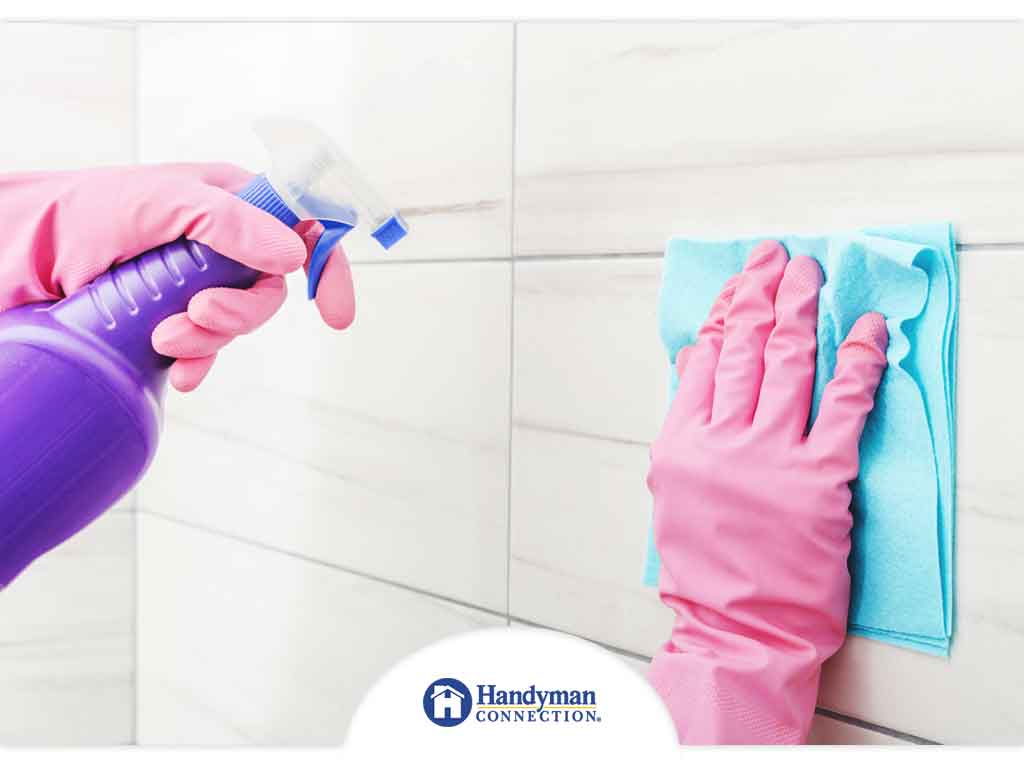
It’s easy for first-time DIYers to confuse grout and caulk; after all, both are an essential part of any tile project. There are a few crucial differences between the two, however.
Even if you’re not a DIYer, having an idea on the uses of grout and caulk can still pay off; it will be easier for you to explain bathroom issues to your contractor. Plus, you may be able to identify emerging problems before they get worse.
Handyman Connection® of Lexington-Nicholasville lists and elaborates on the uses of grout and caulk below.
Grout for Shower Tiles and Other Wet Areas
Grout comes in a dry powder that needs to be mixed with water and is commonly used for tiled shower walls and floors. After the tiles have been installed on the walls and floors, grout is applied to fill the gaps between the tiles.
However, if the tiles meet a different surface or a bathroom fixture like your tub, for example, switch to using caulk.
Caulk for Multipurpose Sealing Needs
Caulk is a semi-liquid substance that usually comes packaged in tubes and can be used in more areas than grout. Whereas grout is restricted to shower wall and tiles, caulk can be used to seal gaps in windows or the boundary where any two construction materials meet. Caulk does especially well in angled seams.
Ease of Use
Now that the two substances’ uses have been covered, first-time DIYers will want to know how easy it is to use either of the two. If you have a project that calls for the use of caulk, we recommend letting a professional handle it. To apply caulk evenly, you’ll need a steady hand, one that can only be gained after years of experience.
A project that needs grout, on the other hand, is easier to do. Just be prepared for an extensive cleanup afterward as applying grout to tiles can get messy.
Of course, if you have any doubts about any aspect of your DIY project, it would be better to call a professional.
Handyman Connection of Lexington-Nicholasville offers a wide range of general contracting services, including tile and flooring. To get an estimate, call us at (859) 274-4477, or fill out this form.

1585 Mercer Rd STE 120,
Lexington, KY 40511

© Handyman Connection 2026 | Privacy Policy

 (859) 276-1811