We offer a wide range of services for that fresh look, or just maintenance or updates to keep your home functioning and safe. Regardless of the size of the job, we have a craftsman that can tackle it. We offer a wide range of services for that fresh look, or just maintenance or updates to keep your home functioning and safe. Regardless of the size of the job, we have a craftsman that can tackle it.

Fences / April 7, 2026
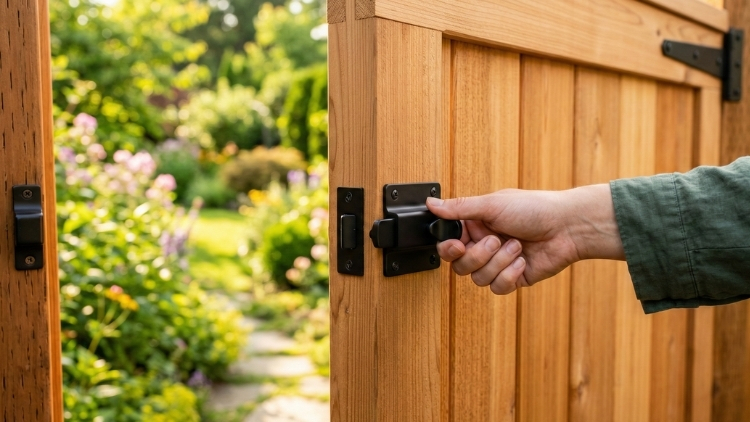
Have you had enough of wrestling with a stubborn gate that just won’t close properly? Whether it’s dragging on the ground, refusing to latch securely, or creaking with every movement, a misbehaving gate can be a constant frustration. The problem often lies in worn-out hinges or a latch that’s seen better days. The good news? You don’t have to keep fighting with it. Fixing these issues not only makes your life easier but also keeps your property safe and secure.
At Handyman Connection in Kitchener, we understand how crucial it is to have a gate that works smoothly every time. Often, the solution comes down to some expert fence repairs. When done right, these repairs can transform a troublesome gate into one that opens and closes without effort, offering peace of mind along with reliable security..
A banging gate is usually the result of one of two things: no gate stop installed, or a latch that isn’t catching properly on the first swing. When a gate swings too freely and hits the post with force, it puts stress on both the hinges and the latch mechanism over time.
The fix starts with inspecting the latch alignment. If the latch arm isn’t meeting the catch plate at the right angle or height, the gate will either slam past it or bounce back open. A professional will assess the full swing path, adjust or relocate the catch plate as needed, and install a gate stop to control the closing motion. Gate stops are designed to absorb the impact, protect the hardware, and keep everything in place.
Addressing the banging early matters. Left unchecked, repeated impact will loosen hinge screws and wear down the latch, turning a simple fix into a more involved repair.
Gate sag is one of the most common issues our craftsmen see. You’ll notice it when the bottom corner of the gate drags on the ground, or when the latch no longer lines up with the catch. The culprit is almost always the top hinge pulling away from the post.
When our team addresses a sagging gate, the process involves:
Hinges are what carry the full weight of the gate every time it opens and closes. When they fail, everything else fails with them. Getting the hinges right is always the first step.
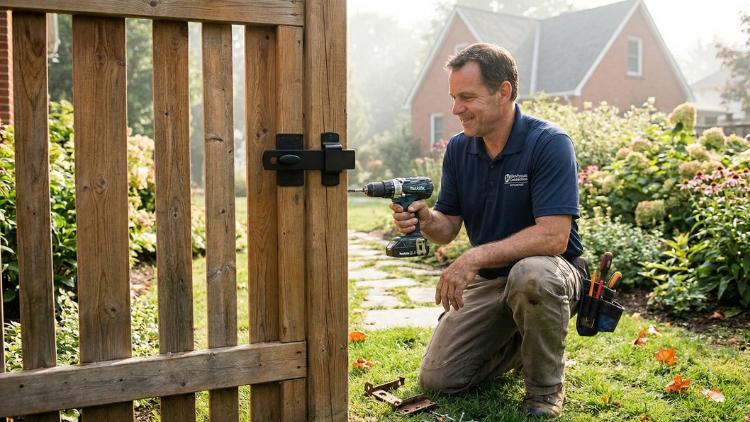
Sometimes tightening the hinges isn’t enough. If the gate frame has shifted into a parallelogram shape—wider at the top or bottom than the other—the structure itself needs support. This is where an anti-sag kit comes in.
Our craftsmen will assess the extent of the frame distortion and take the appropriate steps:
This approach addresses the root cause rather than masking the symptom. A properly squared gate puts far less strain on the latch and maintains smooth operation through every season.
Once the hinge and frame issues are resolved, attention turns to the latch. A stuck, rusted, or misaligned latch means the gate won’t close securely—no matter how well the hinges are working. Our team approaches latch repairs methodically:
A latch that doesn’t catch reliably isn’t just an inconvenience—it’s a security concern. Our craftsmen make sure the latch is both aligned and durable so it performs consistently, day after day.
Getting your gate working again is important. But keeping it working well over time matters just as much. After we complete the repair, our team looks at ways to protect the hardware and prevent future problems. Small upgrades can make a big difference in how long your gate lasts.
One simple fix is installing a gate stop. This helps prevent the gate from slamming shut and reduces stress on the hinges and latch. We may also add a self-closing hinge or a gate spring. This allows the gate to close and latch on its own, which improves safety and security.
We also clear away debris around the gate post and underneath the gate. Dirt, rocks, and leaves can cause the gate to stick or bind when opening and closing. Removing these obstacles helps the gate move smoothly. These practical steps protect your repair and help your gate stay in good shape for years.
Kitchener’s climate puts real wear on outdoor hardware. Freeze-thaw cycles through the winter months cause wooden posts to shift and metal components to expand and contract. Heavy spring rainfall leads to wood swelling, which can throw off latch alignment almost overnight. Summer heat then dries everything out and causes further movement.
These seasonal changes mean that a gate that was perfectly adjusted in October might be sticking or sagging by April. Our craftsmen factor in local weather patterns when making repairs—choosing hardware finishes that resist rust, using exterior-grade fasteners that hold through temperature swings, and ensuring adjustments leave enough tolerance for natural material movement.
For Kitchener homeowners, annual spring checks are a smart habit. Catching loose screws, early rust, or minor misalignment in April is far easier and less costly than dealing with a gate that’s completely off its hinges by June.
If tightening the screws brings the gate back into alignment and the hinges aren’t visibly bent or rusted, tightening may be sufficient. If the screws won’t grip, the hinge is warped, or the gate sags again shortly after tightening, replacement is the right call.
In many cases, yes. Loosening the catch plate and repositioning it to align with the latch arm is often all that’s needed. If the latch mechanism is rusted, bent, or broken, replacement is the more reliable solution.
The most common causes are gate sag (which shifts the latch arm away from the catch plate), a loose or shifted catch plate, rust buildup on moving parts, and seasonal wood swelling. Each of these can be addressed through professional repair.
Most standard hinge and latch repairs can be completed in a single visit. More involved repairs—like installing an anti-sag kit, replacing multiple hinges, or rebuilding part of the frame—may take a bit longer depending on the condition of the gate.
It depends on the condition of the frame and posts. If the wood is structurally sound and the hardware is the main issue, repair is almost always worth it. If the posts are rotting, the frame is cracked, or the gate has been sagging and slamming for years, replacement may be the smarter long-term investment.
A basic inspection once or twice a year is a good habit—once after winter and once heading into fall. Check for loose screws, early rust, stiff movement, and any visible misalignment. Catching small issues early prevents them from becoming bigger, more expensive repairs.
A gate that doesn’t work properly can quickly turn into a bigger problem if it’s ignored. Whether it’s dragging on the ground, refusing to latch, or making loud noises when you try to use it, these issues can cause frustration and even safety concerns. Fortunately, getting it repaired doesn’t have to be hard.
At Handyman Connection in Kitchener, we understand how important it is to have a gate that works the way it should. Our team of skilled craftsmen can handle everything from fixing loose hinges to replacing broken latches or straightening a misaligned frame.
With our help, your gate will open and close smoothly again in no time. Don’t wait for small problems to turn into big headaches. Contact us today to request an estimate, and we’ll make sure your fence is in great shape for years to come.

6 Hoffman St #1
Kitchener, ON N2M 3M4
License # 24 132140 PCTR

© Handyman Connection 2026 | Privacy Policy


 519-579-9523