We offer a wide range of services for that fresh look, or just maintenance or updates to keep your home functioning and safe. Regardless of the size of the job, we have a craftsman that can tackle it. We offer a wide range of services for that fresh look, or just maintenance or updates to keep your home functioning and safe. Regardless of the size of the job, we have a craftsman that can tackle it.

Plumbing / April 14, 2026
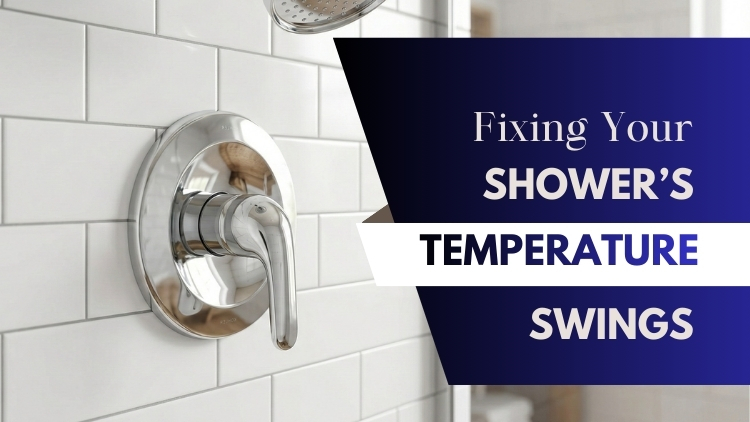
You turn on the water, step in, and just as you’re starting to relax, someone flushes a toilet and suddenly the temperature spikes or drops. It’s jarring, and it’s not just uncomfortable. Sudden temperature swings can be a real safety hazard, especially for children and older adults.
The fix? Replace your pressure-balancing valve and install new trim. This is the most effective and lasting solution for stopping temperature fluctuations caused by pressure drops in your home’s plumbing. When the valve is worn out, faulty, or simply outdated, no amount of adjusting the handle will hold a steady temperature. A proper replacement addresses the root cause directly.
This is not a surface-level repair. It involves working behind the wall, handling live plumbing connections, and calibrating the valve correctly—which is why it’s best left to a professional. In this blog, we’ll walk you through exactly how the experts at Handyman Connection in Kitchener handle pressure-balancing valve replacement and new trim installation, step by step.
The most reliable way to fix shower water temperature fluctuation is to replace the pressure-balancing valve. This component sits behind the wall, inside the valve body, and is responsible for automatically adjusting the ratio of hot and cold water when pressure changes in your home’s plumbing.
When someone runs a tap, starts the dishwasher, or flushes a toilet, water pressure in one supply line shifts. An old or damaged valve can’t compensate fast enough—or at all—so the temperature changes suddenly. A new pressure-balancing valve responds automatically to these shifts, keeping the temperature steady without any manual input.
If fluctuations continue after a new valve is installed, the cause is often a faulty cartridge, debris caught in the line, or an improperly adjusted rotational limit stop. These are all issues a professional can identify and correct during the replacement process.
A pressure-balancing valve does one essential job: it keeps your water temperature consistent, even when other fixtures in your home are being used at the same time. Over time, valves wear out. The internal cartridge degrades, mineral deposits build up, and the valve loses its ability to regulate properly.
Here are the most common signs that your valve needs to be replaced:
Beyond comfort, replacing a faulty valve is also a safety measure. Scalding injuries from hot water spikes are a real risk, particularly for young children and elderly household members. A properly functioning pressure-balancing valve keeps the temperature from exceeding safe limits, giving your whole household better protection every time the water runs.
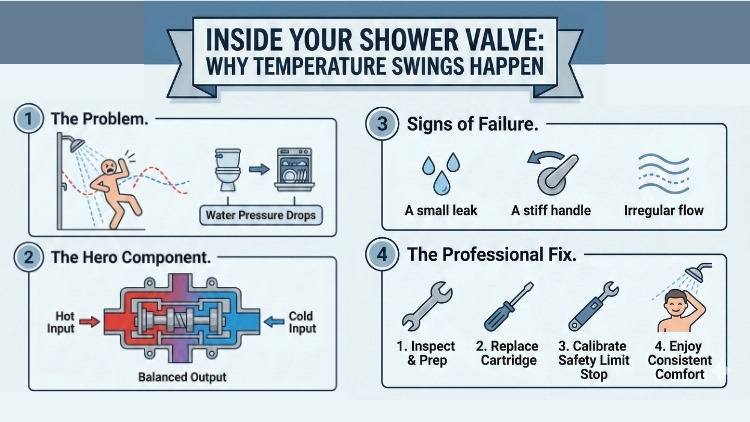
Before any plumbing work begins, the water must be turned off completely. This step is not optional. If the water is not shut off the right way, it can lead to leaks or even flooding. Water damage inside your walls can quickly become an expensive problem.
A trained professional will find the correct shutoff valve before starting the job. Sometimes there is a shutoff just for the bathroom. Other times, the main water supply to the house must be turned off. The plumber will also make sure the pipes are fully depressurized so no water is left in the lines.
Taking these steps keeps your home safe during the repair. It also makes sure the work area stays dry and controlled. At Handyman Connection, we follow this process carefully every time. Proper preparation helps prevent damage and keeps the project on track.
With the water turned off, the next step is removing the old trim. This part must be done carefully to avoid damage. The trim includes the handle and the escutcheon plate. Both pieces need to come off to reach the valve underneath.
The handle is usually unscrewed and gently pulled away from the valve stem. The escutcheon plate, which is the flat cover against the wall, is then removed. This exposes the valve cartridge inside the wall. Taking your time during this step helps prevent cracks or chips in the surrounding tile or drywall.
A professional makes sure the wall surface stays in good shape, especially if the new trim is a different size or style. Small mistakes here can lead to gaps or uneven finishes later. Careful removal sets the stage for a clean and polished final result.
Once the trim is off, the old cartridge can be extracted from the valve body. This is often the most technically involved part of the process. Cartridges can be stuck in place due to mineral buildup, corrosion, or years of pressure and use.
A professional has the right tools to remove the cartridge without damaging the valve body itself. They’ll also:
This is the stage where hidden problems often surface. Having a skilled professional handle it means those issues get caught and dealt with—not covered back up behind the wall.
With the valve body clean and inspected, the new pressure-balancing cartridge goes in. Proper alignment is critical here. A cartridge that’s even slightly off can result in poor temperature control, leaks, or a handle that doesn’t turn smoothly.
Popular and reliable options our professionals work with include:
Once the cartridge is seated and secured, the professional will verify that it’s properly locked in before moving on. This step directly determines how well the valve performs for years to come.
The final stage is installing the new trim kit and testing the completed system. New trim does two things at once: it gives the bathroom a refreshed, updated look, and it houses the controls that allow you to adjust water temperature comfortably.
During this stage, the professional will also:
A well-installed pressure-balancing valve with new trim not only solves temperature fluctuation—it also adds a polished, modern touch to the look of your bathroom without requiring a full renovation.
Plumbing installations in Kitchener often need to address unique challenges presented by the local climate and regulations. The region’s cold winters require plumbing systems to be properly insulated to prevent pipes from freezing and bursting. Pressure-balancing valves, in particular, are critical for maintaining steady water pressure and temperature during seasonal changes when water systems may be under strain.
Local building styles, characterized by a mix of older homes and modern builds, can also create diverse plumbing needs. Older homes may require retrofitting or adjustments to bring their systems up to modern standards, while newer construction often seeks more efficient and eco-friendly solutions. Adhering to regional regulations is essential, as these codes ensure safety and compliance with water conservation efforts, which are increasingly important for the area.
Common issues in the region include fluctuating water pressure, outdated piping materials, and challenges with hard water, which can cause mineral build-up in fixtures and systems. By understanding the specific needs of Kitchener, professional installers can create long-lasting plumbing solutions tailored to local conditions. This localized expertise enhances functionality, ensures compliance, and extends the lifespan of plumbing components.
These region-specific insights not only help residents make informed decisions but also ensure reliable service aligned with the unique demands of the area, solidifying trust and expertise in the local community.
Most pressure-balancing valves last between 10 and 20 years, depending on water quality and usage. Hard water, which is common in the Kitchener-Waterloo region, can accelerate wear on internal components and shorten their lifespan.
Yes. Even a relatively new valve can have temperature issues if the cartridge is defective, improperly installed, or clogged with debris. Replacing just the cartridge sometimes resolves the problem without needing a full valve replacement.
In most cases, the valve cartridge and trim can be replaced without opening the wall, as long as the valve body is in good condition. However, if there’s evidence of a leak behind the wall or the valve body itself needs replacing, some wall access may be required.
The water supply will be shut off during the replacement, so the bathroom won’t be usable until the work is complete and the water is restored. Most professional installations are completed in a single visit.
A pressure-balancing valve responds to changes in water pressure to maintain a consistent temperature ratio. A thermostatic valve goes a step further—it maintains a precise, pre-set temperature regardless of pressure or flow changes. Thermostatic valves are more advanced and are often found in higher-end bathroom setups.
Yes. In Ontario, plumbing codes require pressure-balancing or thermostatic valves for new shower installations and major renovations. This requirement exists specifically to reduce scalding risks and improve water safety in residential bathrooms.
Dealing with water that suddenly turns too hot or too cold is more than just frustrating. It can be unsafe, especially for children and older adults. A properly installed pressure-balancing valve keeps your water temperature steady, even when someone uses a sink or flushes a toilet. That means no more sudden temperature shocks while you’re trying to relax.
At Handyman Connection in Kitchener, we handle everything from valve replacement to trim installation with care and precision. Our team makes sure each part is installed correctly and works the way it should. We focus on long-term results, so you don’t have to worry about the same problem coming back. When the job is done, your shower will feel smooth, safe, and reliable.
You deserve a bathroom that works properly every day. No more guessing. No more quick jumps out of the water. Contact Handyman Connection today to request an estimate and take the first step toward a safer, more comfortable shower experience.

6 Hoffman St #1
Kitchener, ON N2M 3M4
License # 24 132140 PCTR

© Handyman Connection 2026 | Privacy Policy


 519-579-9523