We offer a wide range of services for that fresh look, or just maintenance or updates to keep your home functioning and safe. Regardless of the size of the job, we have a craftsman that can tackle it. We offer a wide range of services for that fresh look, or just maintenance or updates to keep your home functioning and safe. Regardless of the size of the job, we have a craftsman that can tackle it.

Drywall / November 12, 2025
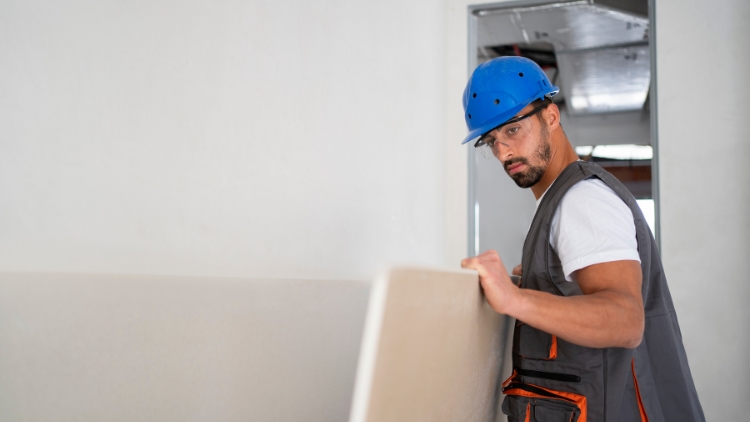
Finishing a basement is one of the best ways to add valuable living space to your home—whether you’re creating a cozy family room, a home office, or a private guest suite. But before you start picking paint colours or flooring, there’s one crucial detail that can make or break your renovation: choosing the right drywall.
Basements naturally deal with higher humidity and the occasional moisture issue, which means standard drywall just won’t hold up. Without proper protection, even the nicest finishes can quickly lead to mould, mildew, and costly repairs. That’s where moisture-resistant drywall comes in—it’s specifically designed to handle the unique challenges of below-ground spaces while keeping your walls looking great for years to come.
At Handyman Connection, we’ve helped countless Brantford homeowners turn damp, underused basements into dry, comfortable living areas that add real value to their homes. With the right materials and professional installation, you can enjoy a basement that’s both beautiful and built to last.
Basements are inherently more susceptible to moisture problems due to their below-grade location. This unique positioning presents a host of challenges that make standard building materials unsuitable:
These conditions make it clear why standard drywall, with its paper-facing and gypsum core, is not an appropriate choice for basement walls. The paper facing on regular drywall provides a perfect food source for mould. Once mould establishes itself, it spreads quickly and can cause health problems such as respiratory issues, allergies, and skin irritation—not to mention costly remediation bills.
To mitigate these moisture risks, homeowners must consider drywall alternatives designed specifically for wet or humid environments. Several types of moisture-resistant drywall are available, each offering varying levels of protection:
Often used as an entry-level waterproof drywall option, greenboard has a green-tinted paper facing that is more water-resistant than standard drywall. It features:
Greenboard is commonly used in spaces like media rooms, craft rooms, or play areas—provided that the basement has been properly waterproofed and humidity is under control.

Purple drywall offers an upgrade over greenboard and is widely recognized for its enhanced performance in moist environments. It features:
This type of drywall is ideal for bathrooms, laundry areas, and walls near exterior basement doors or windows where moisture exposure is more consistent.
Cement board is often used as a backer for tile installation and is highly suitable for basement environments where moisture levels are extreme. Its advantages include:
Basement showers, wet bars, and utility sinks benefit greatly from cement board’s resilience and water resistance.
A modern solution for basement renovations, paperless drywall replaces the traditional paper surface with a fibreglass mat. This design makes it far more mould-resistant because:
For whole-basement applications where long-term moisture resistance is critical, paperless drywall offers comprehensive protection and peace of mind.
Many homeowners make the mistake of believing that moisture-resistant drywall alone is enough to prevent water damage. In reality, no material can perform optimally without proper installation. At Handyman Connection, we emphasize that installation is just as important as material selection.
Here are some key aspects of correct drywall installation in basements:
A continuous vapour barrier between the concrete foundation and interior framing helps stop moisture from migrating into the drywall. We ensure:
Drywall seams and joints are vulnerable points that must be properly sealed using:
Leaving a small gap between the bottom edge of the drywall and the basement floor prevents it from wicking up moisture in the event of minor flooding. This gap is easily concealed with baseboards once the finishing work is complete.
We use corrosion-resistant screws to prevent rust streaks and material degradation. Correct screw spacing and reinforcement ensure long-term structural integrity even in fluctuating humidity conditions.
Installing moisture-resistant drywall is just one part of a comprehensive basement renovation strategy. To ensure the space remains dry and safe, additional measures are often necessary:
Before drywall goes up, the foundation must be inspected and prepped. This includes:
These foundational repairs are critical for a successful renovation.
Moisture control doesn’t end after construction. To protect your investment long term, we recommend:
These ongoing efforts will extend the life of your renovation and reduce the risk of mould development.
Renovating your basement is an exciting opportunity to expand your home’s usable space, increase its resale value, and improve everyday living. But without proper planning and material selection—particularly when it comes to moisture control—the project can become a costly setback.
At Handyman Connection Brantford, we offer more than just installation services—we bring a comprehensive, expert-led approach to every project. From assessing your basement’s current condition to selecting the ideal moisture-resistant drywall and ensuring meticulous installation, we take every step needed to guarantee a successful and lasting transformation.
If you’re ready to start your basement renovation with confidence, Handyman Connection is here to help. Our experienced professionals are ready to provide expert advice, quality craftsmanship, and long-term peace of mind. Contact us today to schedule a free consultation and let us help you bring your dream basement to life—dry, safe, and beautiful for years to come.

Brantford, ON N3R 7X3
License # 24 132140 PCTR

© Handyman Connection 2025 | Privacy Policy


 519-752-7774