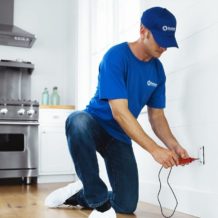
We are excited to announce that a long time Master Craftsman of our business is now the proud new owner; please join us in congratulating Earl Swader as the new owner of Handyman Connection of Blue Ash. Earl has previous business ownership already under his belt and is looking forward to continuing to serve the Blue Ash community as the proud owner.

Electrical / July 27, 2026

Owning an electric vehicle is no longer a niche choice reserved for early adopters. EVs have moved firmly into the mainstream, driven by better vehicle range, stronger environmental awareness, and the simple reality that transport is changing. But while much of the conversation focuses on the cars themselves—the battery size, the range figures, the software features—the real day-to-day experience of ownership often comes down to something less glamorous and far more important: charging.
That may sound obvious, yet it is still one of the most misunderstood parts of EV ownership. People tend to think of charging as a minor practical detail, similar to topping up a fuel tank. In reality, charging shapes how convenient, affordable, and efficient an EV is to live with. Get it right, and owning an electric car feels seamless. Get it wrong, and even the best vehicle can become frustrating.
The biggest shift when moving from petrol or diesel to electric is not the vehicle itself. It is the change in habit. Instead of making dedicated trips to a forecourt, many EV drivers build charging into everyday life. The car charges while they sleep, while they work, or while they shop. That changes the rhythm of ownership in a meaningful way.
For most drivers, home charging is what makes an EV truly practical. A vehicle that begins each morning with a healthy battery removes the need to think about weekly refuelling stops. It also reduces dependence on public infrastructure, which can vary in cost, speed, and availability depending on location.
This matters because convenience is one of the strongest predictors of long-term satisfaction. Range figures make headlines, but charging access determines whether that range is useful in daily life. A driver covering 30 miles a day with reliable home charging may have a smoother experience than someone with a longer-range vehicle but no dependable place to plug in.
Charging also gives drivers more control over energy costs. Time-of-use tariffs, smart charging features, and scheduled charging windows allow owners to take advantage of cheaper electricity rates, often overnight. Over time, that can make a noticeable difference to running costs.
It is also why many households are taking a more strategic view of their setup. Rather than seeing a charger as a simple add-on, they are thinking about future vehicle needs, installation quality, and compatibility with broader home energy systems. Understanding the different types of electric vehicle EV charging solutions can help owners plan for that bigger picture, especially as more families move toward multi-EV households or combine charging with solar and battery storage.
Ask new EV drivers what they worry about most, and range anxiety still comes up. But in many cases, it is really charging anxiety in disguise. Drivers are not always worried that the battery will run out; they are worried they will not find a charger when they need one, or that the available charger will be occupied, out of order, or too slow.
That distinction matters. The solution is not only larger batteries. It is better access to charging in the right places and a more realistic understanding of how most journeys work.
Home charging may carry the greatest weight in day-to-day ownership, but public infrastructure remains essential. It enables long-distance travel, supports drivers without off-street parking, and gives flexibility when plans change. The maturing public charging network is one of the clearest signs that EV ownership is becoming normal rather than exceptional.
Still, public charging works best as part of a broader ecosystem, not as the only option. Drivers who rely entirely on public chargers often face higher costs and more planning. Those with a dependable home or workplace setup tend to use public charging strategically instead of constantly.
Charging is not only about availability. It is also about how and when you charge. That can affect both operating costs and long-term battery condition.
A sensible charging approach usually includes:
None of this needs to become complicated. In fact, one of the strengths of modern EV ownership is that once a charging routine is established, it becomes almost automatic. The car is plugged in, the charger does the rest, and energy use fits around daily life rather than interrupting it.
There is a wider benefit here, too. Smart charging helps balance demand across the electricity network by shifting usage away from peak times. As EV adoption grows, this becomes increasingly important. Charging technology is no longer just about powering individual cars; it is part of a larger conversation about energy efficiency, grid resilience, and sustainable infrastructure.
The next phase of EV growth will not be driven by enthusiasts. It will be driven by ordinary motorists who want transport to be simple, dependable, and cost-effective. For that audience, charging must feel easy. Not perfect, perhaps, but predictable.
That means quality matters. Charger reliability, installation standards, software usability, and support all shape whether the experience feels smooth or unnecessarily awkward. A poorly planned setup can create daily friction. A well-designed one disappears into the background, which is exactly what good infrastructure should do.
There is also a cultural shift underway. Charging is increasingly seen as part of the modern home, much like broadband, insulation, or energy-efficient heating. It is not merely an accessory for a specific car. It is part of a household’s wider energy capability and future readiness.
That perspective is useful because it frames EV charging not as a short-term trend, but as a lasting element of how people will move and use electricity in the years ahead.
Modern electric vehicle ownership is about more than buying a car with a battery. It is about creating a charging routine that supports real life—reliably, affordably, and with as little friction as possible. That is why charging is not a side issue. It is the foundation of the entire experience.
As EVs continue to become more common, the quality of charging access will play a major role in determining whether ownership feels liberating or limiting. The drivers who understand that early are often the ones who get the most value, confidence, and convenience from making the switch.

11115 Kenwood Rd.
Blue Ash, OH 45242

© Handyman Connection 2026 | Privacy Policy

 (513) 771-3950