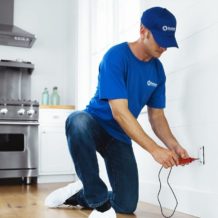
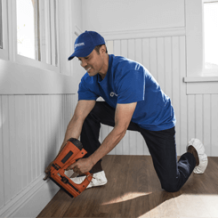
We are excited to announce that a long time Master Craftsman of our business is now the proud new owner; please join us in congratulating Earl Swader as the new owner of Handyman Connection of Blue Ash. Earl has previous business ownership already under his belt and is looking forward to continuing to serve the Blue Ash community as the proud owner.

Repairs / April 4, 2026

A contractor falls off a ladder while repairing your roof. Ambulances arrive, medical bills pile up, and suddenly you are wondering if you are the one who has to pay! Yes, home-improvement projects can turn stressful fast when someone gets hurt.
Liability depends on who the worker is, what went wrong, and whether proper insurance is in place. Understanding how the law handles these injuries can protect both your home and your finances.
In most cases, the contractor’s own workers’ compensation insurance pays for medical bills and lost wages. Licensed contractors are generally required to carry this coverage if they have employees.
According to research by Coverage Criteria, contractors and subcontractors are typically expected to maintain both general liability and workers’ compensation insurance. Hiring an insured professional usually means those policies shield you from direct financial responsibility.
Problems start when the contractor is uninsured, underinsured, or misclassified as an independent contractor. In those situations, a homeowner’s insurance policy may come into play, but only under certain conditions.
Employees are usually covered by their employer’s workers’ compensation policy. Independent contractors who truly work for themselves are responsible for their own coverage.
Confusion often arises when someone claims to be independent but works under tight supervision or without proper licensing. Courts may look at how much control the homeowner had over the project to decide who is legally responsible.
Homeowners are not automatically off the hook. Liability can shift if negligence played a role in the injury.
Those homeowners who exert significant control over a construction project may increase their exposure to personal liability. Giving detailed instructions, supplying faulty equipment, or ignoring obvious hazards can create legal risk.
Imagine you knew your deck railing was unstable but failed to mention it before the contractor leaned on it and fell, for instance. A court could find that the unsafe condition contributed to the injury.
Common scenarios that increase homeowner risk include:
Each situation depends on the specific facts. So, small details matter.
Most homeowner policies include personal liability coverage. Coverage may apply if the homeowner’s negligence caused the injury.
Insurance policies can cover contractor injuries when the homeowner is legally responsible, but they do not replace workers’ compensation. Policy limits also apply, which means serious injuries can exceed coverage.
Reviewing your policy before a major remodel can help you avoid surprises. Some insurers even recommend umbrella policies for higher-risk projects.
Uninsured contractors create the biggest financial danger for homeowners. Some states impose heavy penalties on contractors who fail to carry required workers’ compensation coverage.
Hiring someone without insurance could leave you facing:
Verifying insurance takes minutes. But it can potentially save you years of legal trouble.
Stay calm and prioritize medical care. Emergency services should always come first.
Document what happened as soon as possible. Take photos, gather witness information, and request copies of incident reports. And notify your insurance carrier promptly, since delayed reporting can complicate coverage.
Legal disputes sometimes arise over whether workers’ compensation, a homeowner’s policy, or a third party must pay.
Legal professionals like those at West Coast injury firm may review the facts, determine liability, and explain your options. Early legal guidance can prevent mistakes and clarify who is responsible.
Delays can make a stressful situation worse. Insurance companies begin investigating immediately, and statements made in the first few days after an injury can affect how liability is assigned.
Medical bills, lost wages, and legal demands can escalate quickly if responsibility is unclear. Early clarification of who pays when a contractor is injured at home helps prevent missteps that could increase your personal exposure.
Homeowners sometimes assume insurance will automatically handle everything. Policies, exclusions, and coverage limits often require careful review before any claim is resolved.
Taking a proactive approach can help you:
Clear documentation and timely communication with insurers can prevent disputes from growing into lawsuits. Acting early also gives you time to explore your legal options before financial pressure builds.
Home improvement projects should increase your property value, not your legal stress! Who pays when a contractor is injured at home depends on insurance coverage, control over the work, and whether negligence played a role.
Verifying coverage, maintaining a safe property, and using clear contracts reduce your exposure significantly.
If you are unsure about your rights or facing a claim, consider speaking to the lawyers at West Coast injury firm to discuss your situation. And if this post was helpful, take a look at our other informative articles!

11115 Kenwood Rd.
Blue Ash, OH 45242

© Handyman Connection 2026 | Privacy Policy

 (513) 771-3950