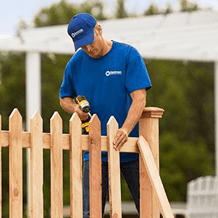
We are excited to announce that a long time Master Craftsman of our business is now the proud new owner; please join us in congratulating Earl Swader as the new owner of Handyman Connection of Blue Ash. Earl has previous business ownership already under his belt and is looking forward to continuing to serve the Blue Ash community as the proud owner.

Outdoors / July 23, 2026

A free weekend and a full toolbox make almost any backyard project feel doable. Some genuinely are. Others quietly turn into months of stress and a bigger bill than a pro would have charged.
The trick is knowing which is which before you start. Homeowners across New Hampshire and northern Massachusetts often bring in design-build specialists such as Stone Ridge Outdoor Experiences once a project crosses into pools, structures, or utilities. Matching the job to the right hands saves time, money, and regret.
This guide is not about talking anyone out of a rewarding weekend build. It is about drawing the line where safety, permits, and real money enter the picture. Cross that line, and a professional almost always pays for itself.
Plenty of upgrades reward a capable weekend warrior. These are usually low-risk, reversible, and free of permits or heavy machinery.
Painting a fence, planting beds, and refreshing a small patio all fit the bill. So do simple repairs like replacing a few deck boards or cleaning and sealing surfaces. The downside of a mistake is small and easily fixed.
The common thread is scale and safety. If a slip means a redo rather than an injury or a code violation, DIY is fair game. Start there and build confidence before tackling bigger work.
Be honest about tools and time, too. A project that needs specialized equipment you would rent once rarely pays off as a DIY. The same goes for jobs that would eat a dozen weekends you do not have.
Photo by Héctor Emilio Gonzalez on Unsplash
Some jobs carry risks that outweigh the savings. A short list signals it is time to call a pro.
The contractor you choose shapes the whole experience. A good one protects your budget, your timeline, and your property. A bad one can leave a half-finished yard and a legal mess.
Home-improvement scams are common enough that regulators warn about them directly. Guidance on how to avoid home improvement scams stresses using licensed, insured contractors and never paying the full price up front. A little diligence prevents most horror stories.
Documentation protects both sides. A change order is a written record of any mid-project change to scope or cost. Insisting on them keeps surprises off the final invoice.
The cost of a bad hire is rarely just money. A botched pool or deck can mean tearing out finished work, missing a whole summer of use, and paying a second contractor to fix the first. Vetting up front is far cheaper than repairs later.
Vetting is where good projects are won or lost. A simple checklist filters out the risky operators fast.
Public checklists help here too. A state contractor hiring checklist walks homeowners through the same questions professionals expect. Treat any pushback on these basics as a warning sign.
For larger outdoor visions, one team beats many. A design-build firm handles both the plan and the construction under a single contract. That removes the finger-pointing that happens when a designer and a separate crew disagree.
The benefits are practical. Coordination is tighter, timelines are shorter, and there is one point of accountability. For a project that blends a pool, patio, and fresh deck designs, that unity keeps the result cohesive.
It also protects the budget. A single team prices the whole set of backyard remodeling ideas up front, so trade-offs are visible early. That beats discovering a shortfall halfway through.
The smartest outdoor budgets spend DIY effort where it is safe and hire out where it counts. Match the project to the right hands, vet any contractor properly, and insist on everything in writing. Do that, and the backyard you picture is the one you actually get.
Often, yes, especially for pools, large decks, and anything electrical or plumbed. Rules vary by town, so check with your local building office first. A licensed contractor usually handles permits for you.
Aim for at least 3 detailed written estimates for any significant project. Comparing them reveals the fair price and exposes outliers. Be wary of a bid far below the rest, since it often signals cut corners or a missing line item you will pay for later.
Not necessarily. Bundling design and construction can reduce coordination costs and costly mid-project changes. You often pay for efficiency and a single point of accountability.
Pressure to pay the full amount up front is a classic warning sign. So is a contractor who resists putting details in writing. Reputable pros expect licenses, contracts, and references.

11115 Kenwood Rd.
Blue Ash, OH 45242

© Handyman Connection 2026 | Privacy Policy

 (513) 771-3950