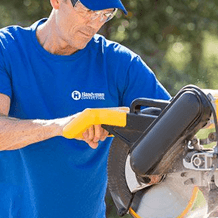
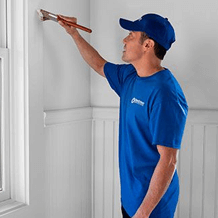
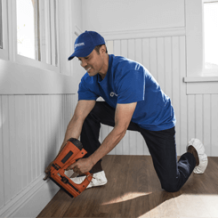
We are excited to announce that a long time Master Craftsman of our business is now the proud new owner; please join us in congratulating Earl Swader as the new owner of Handyman Connection of Blue Ash. Earl has previous business ownership already under his belt and is looking forward to continuing to serve the Blue Ash community as the proud owner.

Doors / August 31, 2026

The work at the door is usually quick. Deciding which openings need it, and whether the existing hardware is worth keeping, is the part homeowners get wrong. All Hour Locksmith, a Salt Lake City based locksmith, treats changing door locks in Salt Lake City as routine work for homes and businesses. The same mobile visit can take in rekeying, lock repair, or an emergency lockout, and the company offers a free consultation on choosing residential locks.
A lock that turns roughly is often telling you about the door, not the cylinder. Genuine wear inside the mechanism happens, but misalignment causes far more sticking than worn pins do.
Replacement is the better answer when any of the following is true:
That last point matters most and gets ignored most. Keys copy quietly, and no household tracks every duplicate made across twenty years of ownership.
Rekeying changes the pin stack inside an existing cylinder so older keys no longer turn it. Replacement swaps the whole assembly for new hardware. They solve different problems and cost different amounts of disruption.
Rekeying suits hardware that is mechanically sound and visually acceptable. It is fast, it keeps a matched finish across the house, and it can put every exterior opening on a single key.
Replacement earns its keep when hardware is failing, when a door has no deadbolt at all, or when a keypad is going in. Before booking anyone, it is worth checking a technician against locksmith credentialing standards rather than a search ranking.
Front doors absorb all the attention. The openings that quietly get missed are more predictable than most people expect.
Hardware is only part of the picture. Lighting, sightlines, and home and neighborhood safety habits shape how a property reads from the sidewalk. Cameras and fencing belong in the same conversation, which is why a wider run at home privacy improvements tends to pay off better than one new deadbolt.
Three measurements decide what will actually fit. Getting one wrong turns a quick swap into a second trip to the store.
Measure before buying. A mismatch on any of the three sends the hardware straight back.
Sagging doors are the other constraint. If the bolt no longer meets the strike plate squarely, new hardware binds exactly the way the old set did. Hinges and frame come first, hardware second.
The strike plate is where most residential doors give way. A bolt is only as strong as the wood holding that plate, and the 3/4-inch screws in the box bite into jamb trim rather than framing.
Swapping them for 3-inch screws carries the load into the structure of the house. Reinforced plates spread that force across a wider span of jamb. Both upgrades cost very little, and both get skipped almost every time.
A good deal of this is ordinary handyman territory. Like-for-like hardware swaps, adding a deadbolt to a door already prepped for one, correcting a sag, and reinforcing strike plates all sit comfortably there. Choosing what goes back on the door is as much a design call as a security one, so door hardware replacement is worth settling before anyone buys parts.
A locksmith belongs on the rest. That means cutting a fresh bore into an unprepped slab, keying several cylinders alike, safes, and commercial-grade hardware. It also means any job where the key history is unknown and the work has to happen today.
Scheduling matters more than it looks. One visit that touches every exterior opening costs far less disruption than four separate afternoons, and every key in the building gets accounted for at once.
Write down what was done. Which doors were changed, which were rekeyed alike, how many keys were issued, and to whom. That short list is exactly what you will want two years later when somebody asks whether the shed key still opens the back door.
Yes, provided the existing lock is sound. Rekeying resets the pin combination, so previous keys stop working entirely. What it cannot do is improve a weak cylinder, a hollow door, or a badly anchored strike plate.
Usually. Cylinders sharing a manufacturer and keyway can be keyed alike during either a rekey or a replacement. A house with mixed brands sometimes ends up with one or two exceptions.
Count the keys issued against the keys returned. If the numbers do not match, rekey. Keypad codes and garage remotes deserve the same treatment on the same day.
A single-cylinder deadbolt above the existing knob set is the standard answer. Fitting one needs a second bore through the slab and a matching strike in the jamb. On metal and fiberglass slabs, check the manufacturer boring template before any drilling starts.

11115 Kenwood Rd.
Blue Ash, OH 45242

© Handyman Connection 2026 | Privacy Policy

 (513) 771-3950