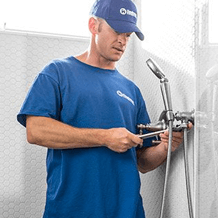
We are excited to announce that a long time Master Craftsman of our business is now the proud new owner; please join us in congratulating Earl Swader as the new owner of Handyman Connection of Blue Ash. Earl has previous business ownership already under his belt and is looking forward to continuing to serve the Blue Ash community as the proud owner.

Uncategorized / January 12, 2026

Industrial fuel storage tanks sit at the center of safety, uptime, and compliance. Their designs are shaped by a web of codes that work together to manage fire risks, leaks, and human error.
If you understand which standards apply and why, you can plan tanks that pass inspections and perform reliably.
Most industrial tanks serve one of two roles: storing flammable or combustible liquids, or feeding equipment that uses those liquids.
Those jobs trigger safety requirements that touch the tank body, vents, gauges, distance from buildings, and more. Different standards fill different gaps, so designers combine them to cover construction, operations, and emergency features.
A national fire code sets the backbone for liquid storage. Updates to that code can add new protective options or clarify how to reduce hazards.
One recent change approved a path that lets facilities lower combustible concentrations using recognized explosion prevention methods, which encourages layered protection rather than a single control.
Not every container on a site is a tank, and not every tank is treated the same. Shop-built aboveground tanks, field-erected tanks, day tanks, and portable units can fall under separate chapters and test standards.
This is why predesign scoping matters – it informs which construction rules, venting sizes, and inspection plans apply from day one. Many operators prefer flexible capacity to match seasonal or project work, and nationwide fuel tank rentals can simplify right-sizing without long lead times. With the category defined, engineers can pick the right build standard and plan for containment, alarms, and spacing.
Portable or temporary tanks still need solid safety features. Even if the tank is on site for a short project, it must fit within containment and follow siting rules. Short stays do not remove the duty to protect soil, water, and people.
Several design standards spell out how an aboveground atmospheric tank must be built and labeled. One widely used standard recognizes designs for atmospheric tanks with specific fire resistance and structural tests.
A technical resource from that organization explains how these tanks align with national fire codes and when facilities should select insulated or protected tank types for added fire exposure resistance.
These tank listings are not just labels. They verify that shell thickness, joints, emergency vents, and fire performance meet minimums that local code officials can accept.
When projects specify listed tanks, they reduce approval friction and help guarantee consistent safety features across sites.
Even a small leak can cause big problems if it reaches soil or stormwater. Federal oil pollution rules require facilities over certain thresholds to plan for containment or diversion so spilled liquid does not reach navigable waters or shorelines.
In practice, that means dikes, double-wall tanks, sumps, or portable berms sized for the largest single tank plus rain.
Common secondary containment options include:
Plans should show valves, drain paths, and how rainwater is tested or treated before release. Designers account for vehicle access and firefighting approach routes inside the containment area.
A recent EPA guidance reminds facilities that aboveground tanks storing oils can fall under spill prevention rules, and plans must outline how containment and diversion will work on the site.
Overfills damage equipment, waste fuel, and can spark fires. A modern overfill prevention system uses levels, alarms, and human procedures that work together.
An industry standard on overfill prevention sets minimum response times, alarm set points, independent high-level sensors, and management programs that define who does what when an alarm sounds.
The latest edition places a stronger focus on human factors and faster reaction to alarms, which is critical during high-rate transfers.
To make the system practical, engineers map each alarm to a clear action: slow, stop, verify, or shut down.
They verify that gauge calibrations match tank geometry, that alarms are independent of control sensors, and that fill lines and vents can handle the highest transfer rates without pressure spikes.
Bulletproof overfill control is not just hardware. Training, pre-transfer checklists, and proof tests keep people ready and sensors trustworthy. When you combine procedures with reliable instruments, you cut spill risk sharply.
Design is step one; condition over time is what inspectors and insurers want to see. A widely used inspection standard for shop-built aboveground tanks sets out periodic internal and external checks and tightness tests scaled to tank size and risk.
The most recent edition, released in early 2024, refreshed inspection categories and frequencies, which helps owners plan budgets and outages with fewer surprises.
Good inspection programs track corrosion, settle alarms and vents, verify leak detection on double-wall tanks, and inspect containment integrity.
Facilities document repairs, coating condition, and any weld work, then adjust intervals based on findings. That record becomes a powerful tool when regulators or fire officials ask for proof of diligence.
Large vertical field-erected tanks follow a different build playbook. A recognized construction standard sets minimum requirements for materials, design, fabrication, erection, and inspection for welded tanks operating at near-atmospheric pressure.
This covers shell courses, roofs, foundations, weld qualifications, and hydrostatic testing so the finished tank performs as designed.
Shop-built tanks may use different construction standards, but the goals align: stable support, suitable steel, quality welds, and verifiable testing. Clear material specs and qualified fabricators keep projects on schedule and reduce rework.
Vents must safely relieve vapor and emergency pressure. Workplace safety rules require vent discharges to terminate outdoors at safe heights and away from ignition sources.
Those rules drive spacing from buildings and property lines so heat and radiant energy do not escalate a small fire into a larger event.
A national fire code update recently recognized combustible concentration reduction methods, giving facilities another tool to manage explosion hazards when designed correctly.
Designers should size normal and emergency vents for the worst credible case, account for flashback protection where needed, and guarantee vent outlets clear nearby structures.
A quick siting checklist can help:
Engineers confirm that nearby equipment will not direct flames or high heat toward the tank shell. The best layout pairs good spacing with routes that let responders approach from multiple sides.
Safety standards are not red tape – they are the blueprint for tanks that work as promised. When you align design, prevention controls, and inspection with the right mix of codes, your site runs cleaner and safer.
As rules evolve, small updates to vents, alarms, and containment can lock in big risk reductions without slowing operations.

11115 Kenwood Rd.
Blue Ash, OH 45242

© Handyman Connection 2026 | Privacy Policy

 (513) 771-3950