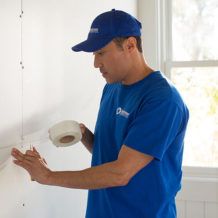
We are excited to announce that a long time Master Craftsman of our business is now the proud new owner; please join us in congratulating Earl Swader as the new owner of Handyman Connection of Blue Ash. Earl has previous business ownership already under his belt and is looking forward to continuing to serve the Blue Ash community as the proud owner.

Drywall / August 25, 2026

Water damage is a race against the clock. The leak or spill is only the first problem; what grows afterward is often the bigger one. Mold can take hold within a day or two of materials getting wet.
That short window is why speed matters so much. Dry things out fast and you may avoid mold entirely. Wait too long, and calling NYC Mold Removal becomes the difference between a quick fix and a gut renovation. Here is how to respond the right way.
Mold spores are always in the air, waiting for moisture. When water soaks into drywall, wood, or carpet, it hands them everything they need. Growth can begin in as little as 24 to 48 hours.
The materials in a typical home are ideal food. Paper-faced drywall, in particular, absorbs water and feeds mold at the same time. Once it is wet, the clock is already running.
Hidden water is the real danger. Moisture that seeps behind walls or under floors dries slowly and out of sight. By the time a stain or smell appears, mold has often had a head start.
Temperature plays a part as well. Most homes sit in the warm range mold loves, so there is rarely a natural brake on growth. Only removing the moisture reliably stops it.
The first two days decide the outcome. Fast, decisive action can stop mold before it starts. Move quickly through these steps.
Move fast on all five. University extension guidance on preventing mold stresses that drying within 48 hours is the single most effective step you can take.
Not everything survives a soaking, and guessing wrong is costly. Some materials dry out fine; others must go. Knowing the difference guides the whole repair.
Non-porous items usually recover. Metal, tile, and sealed hardwood can often be dried and cleaned without any lasting harm. Prompt drying is the deciding factor between saving a surface and replacing it.
Porous materials are the problem. Saturated drywall, insulation, and carpet padding trap moisture and mold deep inside. That kind of water damage usually means removal, not rescue, because you can rarely dry the core fast enough to matter.
When in doubt, cut it out. Replacing a section of drywall is far cheaper than treating the mold that grows behind it. The saved material is never worth the risk it carries.
Sometimes the water is gone but mold is quietly setting in. A few signs give it away. Catching them early keeps a small job small.
The nose often knows first. A persistent musty smell is a classic early warning, even with nothing visible. Trust it and investigate, because that odor usually means active growth somewhere close by.
Look for the subtle clues, too. Signs of moisture damage like discoloration, bubbling paint, or soft spots often mark mold’s arrival. Any recurring basement leak deserves a close look, since basements hide moisture well.
Some jobs are within reach, and some are not. Knowing your limit protects both your home and your health. The scale and location of the problem decide it.
Small, freshly wet areas are often a manageable job. If you dry them fast and no mold appears, a careful repair may be all you need. Speed is on your side, and a clean, dry patch rarely turns into a bigger problem later.
Bigger or older problems are different. Extensive water damage, hidden mold, or anything left wet for days calls for professionals. Confirming a clean result sometimes needs mold testing, which specialists are equipped to handle. When in doubt, bring in expert help.
Water damage does not have to mean mold, but only if you move fast. The homes that stay healthy are the ones dried out within that first critical window. Act quickly, remove what cannot be saved, and call in a professional when the job outgrows a shop vac and a fan.
Mold can begin growing within 24 to 48 hours of materials getting wet. That is why fast drying is so important. Beyond that window, the risk rises sharply.
Sometimes, if it dried quickly and shows no swelling or staining. Saturated, paper-faced drywall usually has to be removed. When in doubt, cutting it out is safer than risking hidden mold.
A persistent musty smell is often the first clue, even with nothing visible. Watch for staining, bubbling paint, and soft spots. Hidden areas like behind walls and under floors are common sites.
Call one for large areas, hidden growth, or anything left wet for days. Professionals can find, remove, and verify mold safely. For a small, freshly dried spot, careful DIY may be enough.

11115 Kenwood Rd.
Blue Ash, OH 45242

© Handyman Connection 2026 | Privacy Policy

 (513) 771-3950