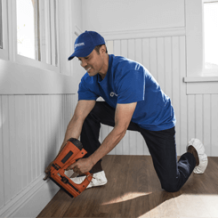
We are excited to announce that a long time Master Craftsman of our business is now the proud new owner; please join us in congratulating Earl Swader as the new owner of Handyman Connection of Blue Ash. Earl has previous business ownership already under his belt and is looking forward to continuing to serve the Blue Ash community as the proud owner.

Maintenance / June 18, 2026

The outside of a home does more work than most people give it credit for. It stands between everything you own and the weather, day after day, with no break. When that barrier is cared for, it quietly does its job. When it is ignored, the consequences rarely stay small for long. Exterior maintenance is one of those responsibilities that feels easy to postpone, because the damage tends to build slowly and out of sight. Yet the cost of waiting almost always grows larger than the cost of acting. This article looks at what that neglect really adds up to, and why steady upkeep pays for itself in the end.
Exterior maintenance is broader than a fresh coat of paint. It includes the roof, the siding, the gutters, the foundation, the windows, the trim, and every seam where one material meets another. Each piece has a job. Each piece wears down at its own pace.
Some tasks are seasonal. Others come around once a year, or once every few years. The point is not to do everything at once. The point is to keep an eye on the whole system so that nothing fails without warning. A home is a set of connected parts, and a weak spot in one area tends to put pressure on the rest. Treat the exterior as a single working unit, and the maintenance load suddenly feels far more manageable.
Small problems are cheap. Large ones are not. That simple truth sits at the center of every maintenance decision a homeowner makes.
A loose shingle costs little to secure. A clogged gutter takes an hour to clear. But left alone, water finds its way in, and water is patient. It travels along beams, soaks into insulation, and settles into places no one checks until the ceiling shows a stain. By then the repair is no longer about a shingle or a gutter. It is about framing, drywall, and sometimes mold.
This is the hidden math of deferred maintenance. The bill does not just sit and wait. It compounds. Materials degrade faster once they are exposed, and labor costs climb as the scope of the work expands. What might have been a modest fix becomes a project that disrupts your week and drains your savings. The longer the delay, the steeper the curve.
Of all the parts that make up a home’s exterior, the roof takes the most punishment. It absorbs sun, rain, wind, and snow, along with the steady cycle of heating and cooling that loosens fasteners and dries out seals over time. A sound roof protects everything beneath it. A failing one threatens the entire structure.
That is why roof care deserves a place near the top of any maintenance list. Catching a problem early — a cracked seal, a lifted edge, a patch of worn granules — is far less expensive than replacing water-damaged decking later. Regular inspection is the difference between a planned repair and an emergency one.
Roofing is not a guessing game, and it is rarely a safe do-it-yourself project. Finding a qualified professional who understands your area’s climate and building codes is worth the effort. A local crew knows how the weather behaves where you live, which matters more than many homeowners realize. If you are searching for roof repair in Cleveland, OH, for example, working with an established local team means faster response times, familiar materials, and a level of accountability that an out-of-town contractor cannot match. The right expert inspects honestly, explains clearly, and fixes the cause rather than the symptom. That kind of relationship saves money over the life of the home, because problems get solved before they have a chance to spread.
Exterior neglect shows up in places beyond repair invoices. It shows up on your utility bill, month after month, in amounts small enough to ignore and large enough to matter.
Gaps in siding, worn weatherstripping, and thin insulation all let conditioned air escape. Your heating and cooling systems then work harder to make up the difference. The waste is gradual, so it slips by unnoticed, but it adds up across a full year. The U.S. Department of Energy points out that sealing and weatherizing a home is one of the most reliable ways to lower energy use and improve everyday comfort. In other words, a well-kept exterior is not only about avoiding damage. It is about spending less to live in the home you already own.
A home’s exterior is the first thing anyone sees. It shapes how the property is judged — by neighbors, by guests, and especially by buyers.
Peeling paint, sagging gutters, and tired siding all send the same message: maintenance has slipped. That impression carries weight. When a home goes on the market, visible wear gives buyers a reason to negotiate the price down, and appraisers take careful note of condition. The reverse is just as true. A clean, well-maintained exterior signals that the home has been looked after, which builds confidence and supports its value.
Standing still has a price of its own. Even if you never plan to sell, the slow decline of the exterior chips away at what the property is worth. Maintenance is one of the few expenses that protects an asset while you continue to enjoy living in it.
The good news is that prevention does not demand much. It demands consistency.
Walk the perimeter of your home a few times a year. Look up at the roofline. Check the gutters after heavy weather. Note any paint that is failing or any caulk that has pulled away from its seam. Write down what you see, then address the small items before they grow into large ones. A short seasonal checklist, kept somewhere you will actually use it, turns vague worry into a handful of manageable tasks. Government resources such as Ready.gov also offer practical guidance on protecting a home against severe weather.
When a task moves beyond your tools or comfort, bring in a professional. There is no shame in it, and the cost of skilled help is almost always lower than the cost of a job that has to be done twice. The goal is steady attention, not perfection. A home that is checked often rarely surprises its owner.
Ignoring exterior maintenance never makes a problem disappear. It only delays the moment you have to face it, usually at a higher price than before. The exterior of a home is its shield, and a shield works only when it is kept in good repair. Each small task you finish on time is a cost you avoid later, often many times over. Treating upkeep as a routine rather than a reaction is the most practical way to protect both your home and your budget. The expense of caring for a home is real, but it is predictable. The expense of neglect is neither. Between the two, choose the one you can plan for.

11115 Kenwood Rd.
Blue Ash, OH 45242

© Handyman Connection 2026 | Privacy Policy

 (513) 771-3950