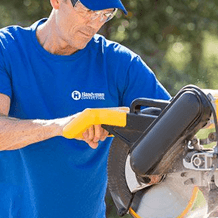
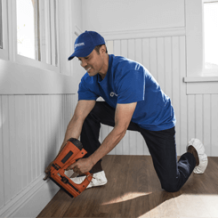
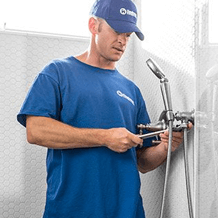
We are excited to announce that a long time Master Craftsman of our business is now the proud new owner; please join us in congratulating Earl Swader as the new owner of Handyman Connection of Blue Ash. Earl has previous business ownership already under his belt and is looking forward to continuing to serve the Blue Ash community as the proud owner.

Carpentry / April 13, 2026

Think about the sheer amount of drywall dust, silica, paint splatters, and insulation debris left over from a remodel. Once they’ve settled into your carpet, these particles can damage fibers and produce indoor allergens.
Viewing post-construction carpet recovery as part of the complete remodeling process ensures every speck of sawdust is removed. This means you need a meticulous checklist that includes safety assessments, HEPA vacuuming, spot removal, and deep restorative cleaning.
Add the following items to your post-remodel cleanup checklist.
Construction particles are not your typical household dust bunnies. These particles may contain everything from fine metal shavings to volatile organic compounds (VOCs) from interior paint and adhesives.
Silica, for instance, is a common compound in drywall. However, inhaling silica particles can cause respiratory issues or even a serious lung disease called Silicosis. You also need to wear an N95 mask or respirator when removing silica from your carpet.
You may notice excess wet drywall mud on the carpet. As a rule of thumb, leave wet drywall alone.
Scrubbing the mud can push the gypsum and binders deep into the carpet fibers, which makes it nearly impossible to remove once it dries. Wait for the mud to dry (and become brittle) on the surface before removing it.
Remember to turn off your HVAC system before cleaning. Otherwise, particles will get suck into the vents, coating the ductwork. If you don’t clean your filters, your HVAC system could recirculate hazardous particles for months.
Seal the vents with plastic wrap or painter’s tape after shutting off your HVAC system. Once you’re finished, replace furnace and AC filters to catch any stray particles.
When cleaning carpet after a remodel, never start with water; vacuum first. Dust and debris will come in contact with the water, leaving a muddy mess.
However, a regular household vacuum will not suffice, as its filters are too porous to capture finer construction particles. You need a commercial-grade vacuum with an HEPA filter designed to catch microscopic particles, without leaking pollutants out of the vacuum.
Vacuum slowly in a crisscross pattern to lift dust and debris trapped in the carpet fibers. Pay attention to the tack strip area where the carpet meets the wall; that’s where construction debris settles.
Shatter and loosen any dried clumps of drywall with a rubber mallet and putty knife. Immediately vacuum up the debris.
After removing the dust from your carpet, focus on paint and adhesives. Patch test any chemical cleaners to avoid large bleach spots or fiber damage.
Blot wet latex paint spots with a damp cloth. Never rub wet paint with water, as this will cause the pigment to spread. Gently soften dried paint with a mixture of dish soap and warm water, blotting until the color lifts.
Remember, when removing a spot, work from the outside in to prevent the stain from spreading.
Construction adhesives can be a bit more stubborn. Dampen a cloth with simple rubbing alcohol (or a commercial glue remover) and press it into the residue.
Be careful with soap. It can attract future dirt if you don’t thoroughly remove it from the carpet. Rinse treated spots with a mixture of equal parts water and white vinegar, blot-drying with a clean towel.
Are you ready for the final deep clean?
For long-lasting results, research local cleaning services that provide steam cleaning to loosen any remaining grime, stains, and allergens. This should be followed by a second round of vacuuming to extract the remaining hot water and any leftover dirt and debris.
Rinsing solutions with pH-balanced agents may also be used to remove any sticky alkaline residue, especially for carpets with soft textures.
Wet carpets can attract mold, mildew, and musty odors within 24 hours. Professional services also speed up the drying time, leaving your carpet clean and dry in under three hours.
Open the windows and use floor fans to circulate more airflow around the area. If the weather is humid, use a dehumidifier to pull moisture from the air.
Humidity also raises a good point about timing. Square your remodeling projects out of the way in the spring before those humid summers hit.
Once your carpet is completely dry, use a carpet rake to restore its fluffiness. If you do notice any irreversible damage, you can call a professional carpet repair service or temporarily fix the damaged area with a temporary carpet piece.
Why leave your post-remodel carpet cleaning to the last minute?
Make it a part of your entire remodeling plan, starting with an assessment for hazardous debris and HVAC safety. Follow this up with commercial-grade vacuuming, spot removal, and professional deep cleaning.
Keep up the good work by following the latest tips and tricks for home improvement projects. Bookmark our blog to stay connected!

11115 Kenwood Rd.
Blue Ash, OH 45242

© Handyman Connection 2026 | Privacy Policy

 (513) 771-3950