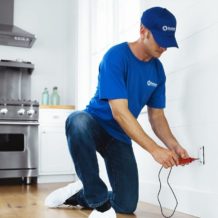
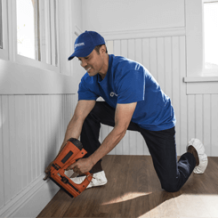
We are excited to announce that a long time Master Craftsman of our business is now the proud new owner; please join us in congratulating Earl Swader as the new owner of Handyman Connection of Blue Ash. Earl has previous business ownership already under his belt and is looking forward to continuing to serve the Blue Ash community as the proud owner.

Doors / April 21, 2026

Technology trends in HOAs: 5 tools for automation, online communication, and effective community management. Learn how to improve efficiency and optimize HOA operations
For years, HOA technology meant a resident portal, an online payment option and maybe a gate app. That era is over. Community associations now make up more than one-third of U.S. housing, with about 373,000 associations and 78.1 million residents, according to the Foundation for Community Association Research. At the same time, CAI says it tracked more than 2,000 state bills in 2025 that affected community associations, with more than 500 directly impacting them. That is the clearest sign that the operating environment is getting more digital, more regulated and less forgiving of manual workarounds. For self-managed HOAs and community association management companies, technology is no longer a side project. It is core infrastructure.
From a real estate perspective, that matters beyond the boardroom. Community tech readiness increasingly shapes how a property is experienced, maintained and understood during a sale. Access systems, charging readiness, digital records, security standards and response times all influence how modern communities function. The communities that stay ahead will not be the ones chasing every shiny object. They will be the ones adopting the right systems in the right order.
4 technology trends reshaping HOAs
1. AI and automation are moving from novelty to workflow
AI is finally becoming useful in the places where HOAs and management companies feel the most pressure: repetitive communication, document retrieval, routine resident questions, maintenance triage, collections reminders and reporting support. NIST’s AI Risk Management Framework and companion playbook were created to help organizations use AI more responsibly, with a focus on trustworthiness and the four operating functions of Govern, Map, Measure and Manage. In HOA terms, that means using AI where it reduces friction, while keeping people in charge of policy decisions, exceptions and anything with legal consequences.
For self-managed associations, that can translate into less volunteer burnout. For management companies, it can mean a better manager-to-door ratio without sacrificing service. The strongest use case is not “AI replacing managers.” It is AI handling repetition so humans can spend more time on judgment, resident relationships and vendor oversight.
2. Sustainability is becoming a governance issue
Sustainability in HOA communities used to live mostly in marketing language. Today, it sits much closer to capital planning, architecture review and resident expectations. The U.S. Department of Energy says many states and territories have enacted solar access laws that prevent HOAs from prohibiting or unreasonably restricting solar installations. DOE also tracks about 7.87 GW of community solar in operation in the U.S. as of June 2024, spread across 44 states and localities. In other words, this is no longer a fringe issue. Communities are being pushed to think seriously about solar, shared energy strategy and electrification.
The operational shift is the real story. Boards and managers need standards that can accommodate change without turning every solar request or infrastructure upgrade into a custom debate. The challenge is not simply adopting green technology. It is building a repeatable framework to evaluate and implement it.
3. Security is now both physical and digital
In community associations, security used to mean locks, fobs, cameras and call boxes. Those tools still matter, but today they sit inside a much larger conversation about data, credentials, permissions and audit trails. NIST’s Cybersecurity Framework 2.0 is designed for organizations of all sizes to manage cyber risk, and the FTC recommends basics such as multifactor authentication, limiting access to sensitive assets, software updates, encryption, backups and monitoring for unauthorized access. NIST’s log management guidance also notes that modern security platforms often collect data from physical security control devices such as badge readers. In practice, that means community security is becoming one connected system: doors, devices, credentials and logs.
For self-managed HOAs, that raises the bar on vendor selection. For management companies, it raises the bar on portfolio standards. The question is no longer whether a property has access control. The question is whether that access control is secure, traceable and easy to manage when staff changes, residents move or an incident needs to be investigated.
4. Compliance is turning into a daily operations problem
Community association compliance is getting harder to manage with email chains, shared drives and tribal knowledge. CAI’s 2025 legislative roundup says it tracked more than 2,000 state bills affecting community associations, with more than 500 directly impacting them, including legislation touching reserve studies, meeting procedures, solar energy, rentals, disclosures and board regulation. CAI also notes that many states have enacted legislation dealing with association reserve and operating funds, and more states may follow. That is one reason spreadsheets and disconnected filing systems are starting to break down under real-world pressure.
When rules vary by state and keep changing, the associations that stay ahead will be the ones that can find records fast, document decisions, standardize notices and prove that a process was followed. Compliance is no longer just legal review at the end. It starts with how information is stored, shared and acted on every day.
5 technologies worth prioritizing now
1. Access control systems
Access control has become one of the most practical technologies an HOA can adopt because it affects security, convenience and operations all at once. Modern systems can support mobile credentials, visitor workflows, delivery access, role-based permissions and event logs. That matters because NIST’s log management guidance specifically points to physical security control devices such as badge readers as part of broader security logging, while the FTC emphasizes controlling access, using multifactor authentication and monitoring for unauthorized use. In other words, access control is no longer just a front-gate feature. It is part of the community’s operating record.
For self-managed communities, the biggest advantage is control without chaos. For management companies, the advantage is standardization. A consistent access-control strategy across multiple properties is easier to train on, easier to support and easier to audit.
2. AI-powered HOA software platforms
This is where the category is getting far more interesting. The old model of community management was fragmented: one system for payments, another for documents, a newsletter tool, a maintenance inbox, spreadsheets for approvals and a shared email address that no one wanted to own. That patchwork can work for a while, but it does not scale. The next generation of platforms is trying to solve that by combining resident communication, self-service, searchable records, payments and workflow automation into one operating layer. Platforms such as Condo Control reflect that shift, packaging AI-assisted resident support, payments, notices and recordkeeping into a single system rather than another disconnected point solution. Condo Control’s HOA page says its AI assistant and searchable knowledge tools help answer routine questions at first contact, while records for minutes, notices and elections stay organized and audit-ready.
For self-managed boards, that means fewer emails and less volunteer fatigue. For management companies, the same category of software is increasingly being built around portfolio-wide standardization, reusable workflows and audit-ready records instead of simple resident portals. The real signal to watch is not AI as a gimmick. It is AI embedded inside the operating system of the community.
3. Digital compliance and records management tools
This is the quiet technology that often delivers the biggest return. Every association needs a clean system for storing and retrieving minutes, notices, elections, governing documents, architectural requests, contracts, reserve documents, invoices, violation records and policy changes. That matters even more in an environment where CAI is tracking hundreds of directly relevant bills in a single legislative cycle and reserve requirements continue to evolve across states. Organized digital records are not glamorous, but they are increasingly the difference between a smooth handoff and a stressful scramble.
A strong digital records system does not need to be flashy. It needs to be structured, searchable and secure. Version history matters. Permissions matter. Audit readiness matters. For self-managed HOAs, this reduces dependency on one long-serving volunteer who “knows where everything is.” For management companies, it creates continuity across teams and communities.
4. Solar panels
Solar is no longer a niche upgrade in HOA communities. It is becoming part of the broader conversation around infrastructure readiness. DOE says many states and territories have solar access laws limiting how far HOAs can go in restricting installations, and it notes that building-integrated photovoltaics can help address aesthetic concerns by better matching the surrounding design. Community solar is expanding as well, giving associations another lens on shared-energy planning even when rooftop installs are not the right fit.
The real opportunity is not just lower energy costs. It is operational clarity. Communities that create thoughtful solar policies early are better positioned to respond consistently as adoption grows. For management companies, that means building repeatable review criteria and trusted vendor relationships. For self-managed boards, it means reducing conflict by having the rules in place before the requests pile up.
5. EV chargers
EV charging is quickly moving from perk to expected infrastructure, especially in condo, townhome and mixed-use communities. DOE’s Alternative Fuels Data Center says multifamily housing should consider Level 1 and Level 2 charging, while DOE’s home charging guidance notes that Level 2 equipment offers faster charging and that more advanced smart chargers can provide data collection, communication features and user interfaces. DOE also notes that networked charging can support utilization monitoring, payment and customer support, and that open standards such as OCPP can reduce the risk of stranded assets if a site host changes networks later.
For boards and management companies, the mistake is treating EV charging like a one-off amenity. It is an electrical, budgeting, parking, access and policy issue all at once. The best rollout plans start with a capacity assessment, utility conversations, future expansion assumptions and a decision about who owns the equipment and the data. DOE also notes that incentives may be available in some cases to help offset equipment and installation costs.
The real takeaway
The next phase of HOA technology will not be defined by who buys the most software or installs the most hardware. It will be defined by who builds the most resilient operating model. AI and automation can reduce administrative drag. Sustainability tools can help communities prepare for changing resident expectations. Security platforms can connect physical access with digital accountability. Compliance systems can help boards and managers stay organized in a more demanding legal environment.
For real estate professionals, that makes community tech readiness a meaningful part of the value conversation. A well-run association increasingly depends on the same thing every modern business depends on: systems that are secure, searchable, auditable and built to scale. The communities that understand that early will not just run better. They will communicate better, adapt faster and remain more attractive over time.
11115 Kenwood Rd.
Blue Ash, OH 45242

© Handyman Connection 2026 | Privacy Policy

 (513) 771-3950