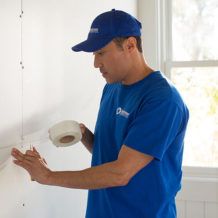
We are excited to announce that a long time Master Craftsman of our business is now the proud new owner; please join us in congratulating Earl Swader as the new owner of Handyman Connection of Blue Ash. Earl has previous business ownership already under his belt and is looking forward to continuing to serve the Blue Ash community as the proud owner.

Uncategorized / May 6, 2026

Moving into a new home comes with a long to-do list, but not every item on it requires a contractor, a big budget, or a full weekend. In Boston especially, where older triple-deckers and brownstones often carry decades of mismatched finishes and hardware styles, the smallest updates can shift how a space feels almost immediately. Knowing which fixes to prioritize, the ones you’ll notice every single day, makes settling in feel less overwhelming and more like genuine progress.
The highest-impact small fixes tend to fall into three categories: hardware, switch plates, and lighting consistency. These are the details that register subconsciously every time you walk through a room, and they’re also among the easiest to address without professional help or a significant budget. Once furniture is in place and the initial chaos of moving settles, these are the things that start to stand out.
That’s actually a pattern worth paying attention to. After working with Boston movers to get everything through the door and into position, many new homeowners find that the furniture arrangement itself reveals which details feel off. Mismatched hardware, harsh bulbs, and dated switch plates become much more noticeable once the room is actually furnished and you’re living in it day to day.
Switch plates, outlet covers, door handles, and cabinet hardware are easy to overlook during a walkthrough, but they become surprisingly visible once you’re actually living in the space. When these elements don’t match across rooms, the whole home can feel disjointed even if the paint is fresh and the furniture is beautiful. Swapping them out for a consistent finish, whether brushed nickel, matte black, or oil-rubbed bronze, is one of the fastest ways to create visual cohesion without touching a single wall.
Most of these swaps take under ten minutes each and require nothing more than a screwdriver. For anything more involved, like replacing door hardware on older frames or updating cabinet pulls throughout a full kitchen, professional maintenance and installation support can save a lot of time and frustration.
Lighting is one of the most underestimated variables in how a home feels day to day. Mismatched bulb temperatures, where one room reads warm and the next reads cool white, can make even a well-decorated space feel off. Standardizing bulb color temperature throughout the home, typically around 2700K to 3000K for a warm, welcoming tone, is a low-cost fix with noticeable results.
Natural light is also worth considering early in the process. Swapping out heavy or outdated window treatments can dramatically brighten rooms that feel dim, and it costs far less than any structural change. Together, these two lighting adjustments, bulb temperature and window treatments, do more for a room’s atmosphere than most people expect.
Kitchens and bathrooms tend to age the fastest in Boston homes, and they’re usually the rooms that feel most dated when you first move in. In older condos, triple-deckers, and brownstones especially, dated tile and mismatched hardware are practically a given. The good news is that a full remodel isn’t necessary to make them feel current. A handful of targeted swaps can change the entire impression of a space without touching the plumbing or the structure.
Faucets are one of the first things a person notices in both rooms, and an outdated brass or chrome fixture can pull the whole aesthetic backward. Replacing a faucet with something in a more current finish, such as matte black, brushed gold, or polished nickel, is a relatively affordable swap that has an outsized visual effect.
Cabinet hardware follows the same logic. Swapping old knobs and pulls for something consistent across both the kitchen and bathroom creates a sense of intentional design without any renovation work. Mirrors, curtain rods, and bathroom textiles like towels and bath mats round out the update, and together these changes can make a bathroom feel noticeably fresher.
For backsplashes or small accent walls, peel-and-stick tiles offer an accessible way to add visual interest without permanent commitment. They work especially well in rental-era kitchens where the existing backsplash feels tired but full replacement isn’t practical.
Before assuming tile needs to go, it’s worth looking closely at the grout. In older Boston homes, grout that has darkened or cracked is often the real source of a bathroom looking worn. Cleaning and regrouting around an existing tile installation can restore the look of the space at a fraction of the cost of new tile.
Grout refresh products are widely available and straightforward to apply, making this one of the more satisfying low-effort updates available to new homeowners working through a room-by-room improvement plan. It’s a small fix, but the before-and-after difference is hard to miss.
Empty rooms tend to feel cold and temporary, even after the boxes are gone. A few well-chosen additions can shift that feeling quickly, and none of them require a renovation budget or a full weekend of work. In Boston’s smaller layouts, where rooms can feel tight or oddly proportioned, the right additions make a real difference.
Rugs are one of the fastest ways to make a bare room feel grounded. In Boston homes with hardwood or older flooring, a rug does double duty: it adds warmth underfoot and absorbs sound that would otherwise bounce off hard surfaces. Layering in curtains, throw blankets, and cushions continues that softening effect without requiring much planning or cost.
Textiles also help define zones in open-plan spaces. A rug can anchor a seating area, while curtains frame a window and add a sense of scale, especially in rooms where the ceiling feels too high or the walls feel too bare.
A few pieces of art hung at eye level, rather than scattered randomly, immediately make a room feel more intentional. Mirrors are worth adding early too, since they reflect natural light and make smaller rooms read as larger than they are.
Houseplants bring color and softness without taking up much visual space. A single plant on a shelf or near a window can make a room feel lived in rather than staged. The goal at this stage isn’t to fully decorate, but to add a handful of meaningful touches that make the space feel personal before everything else is sorted.
The inside of a new home tends to get all the attention, but the exterior is the first thing seen every day, by the homeowner and the neighbors alike. In Boston, where row houses and triple-deckers sit close together and front entries are highly visible, even minor neglect can make a home feel unfinished.
The good news is that exterior touch-ups don’t need to be large to be effective. Tidying the entryway, replacing tarnished or mismatched house numbers, and touching up the front door with a fresh coat of paint can shift the first impression of a home considerably. Cleaning or replacing outdated light fixtures near the entry adds another layer of polish that reads as intentional rather than purely cosmetic.
These fixes also matter beyond aesthetics. According to the NAR remodeling report, outdoor improvements consistently rank among the projects that generate the strongest sense of satisfaction for homeowners. For city homes with limited yard space, curb appeal comes down almost entirely to the entry zone: the door, the hardware, the lighting, and the landing. Keeping the scope small and targeted makes these updates manageable, and the results tend to be some of the most visible improvements made during the entire settling-in process.
Settling into a new home doesn’t require doing everything at once. The fixes that matter most in those first weeks are the ones that improve daily life in small but noticeable ways: unified cabinet hardware, a rug that makes a bare room feel grounded, and a fresh coat of paint on a front door.Quick wins build momentum, and momentum makes the whole process feel manageable rather than endless. Getting familiar with routine upkeep tasks every homeowner should tackle helps keep that progress going well beyond the first month.

11115 Kenwood Rd.
Blue Ash, OH 45242

© Handyman Connection 2026 | Privacy Policy

 (513) 771-3950