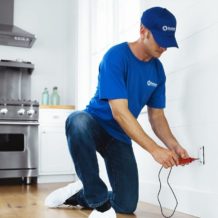
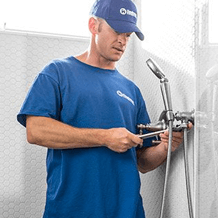
We are excited to announce that a long time Master Craftsman of our business is now the proud new owner; please join us in congratulating Earl Swader as the new owner of Handyman Connection of Blue Ash. Earl has previous business ownership already under his belt and is looking forward to continuing to serve the Blue Ash community as the proud owner.

Electrical / March 16, 2026

Modern offices are changing fast. Tech is no longer just about faster internet or better laptops. It now includes the very walls and ceilings of the workspace. Sensors help manage how people move and how buildings breathe.
Smart tools focus on three main areas: comfort, security, and efficiency. When different elements work together, the office becomes a better place to spend the day. You can see the difference in everything from the temperature of a room to the way the front door stays locked.
Lighting is one of the easiest ways to see sensors in action. Many rooms stay lit even when nobody is inside. It wastes a lot of money and energy over a long year. Motion sensors solve this by turning lights off automatically when a space is empty.
Some systems go a step further by measuring natural light from windows. If the sun is bright, the overhead lights dim down to save power. It keeps the room at a steady brightness without wasting electricity.
A report by Office Technology Magazine explained how AI policies are creating a blueprint for success in modern office deployments. Rules help companies set up automated systems that actually work for the employees. Instead of lights flickering off during a meeting, the tech learns to stay active when it counts.
The air inside an office can get stale when many people share a small space. High levels of carbon dioxide often cause headaches or loss of focus. Sensors now monitor levels in real time to keep everyone feeling sharp.
When the air quality drops, the ventilation system kicks into high gear. It pulls in fresh air until the levels return to a healthy range. This happens without anyone having to touch a thermostat or open a window. It creates a seamless environment where the focus stays on the work.
Managers can track patterns over weeks or months. They might notice that certain conference rooms get stuffy every Tuesday afternoon.
Security is about more than just having a guard at the front desk. By choosing a multi sensor camera for these spots, a business can monitor parking lots or large lobbies without gaps. Devices offer a wide view and maintain high resolution across the entire scene.
Modern systems use high-tech cameras to watch over every corner of the property. Tools can spot unusual activity and alert the right people instantly. They reduce the total number of individual devices needed for full coverage.
An article in Technology Magazine noted that agentic AI is moving from digital screens to physical environments to help transform how offices operate.
Finding an open meeting room can be frustrating in a busy office. Sensors can tell if a room is actually being used or if someone just forgot to cancel a booking. Real-time data shows up on a digital map for everyone to see.
If a room remains empty for 10 minutes after a meeting was scheduled to start, the system releases the room. It makes the office more efficient and prevents wasted space. Employees can find a place to collaborate without having to walk from floor to floor.
Data helps leaders make decisions about the office’s future. If the data shows that 4-person rooms are always full but 20-person rooms are empty, they can remodel. It turns guesswork into a science based on how people really use the building.
Temperature is a common cause of office arguments. Some people are always too cold, while others feel too hot. Sensors can help find a middle ground by tracking occupancy and sunlight.
In a room full of people, the temperature naturally rises. Smart thermostats detect this heat and adjust the cooling before it gets uncomfortable. It keeps the environment steady regardless of how many people are in the room.
Systems save money by not cooling empty zones. If an entire wing of the building is empty on a Friday, the sensors tell the HVAC system to power down. It prevents the company from spending 100s of dollars on air conditioning for empty desks.
Technology does more than just react; it predicts. Sensors on elevators or large machines can detect vibrations that suggest a part is about to fail. This allows the office to fix the issue before the machine actually breaks down.
Maintenance teams get an alert on their phones when a sensor sees a problem. They can order the part and schedule the repair for the weekend.
According to Deloitte Insights, new AI systems can coordinate entire fleets of tools to improve travel efficiency and maintenance. This level of coordination ensures that the office runs like a well-oiled machine. It takes the stress out of managing a large facility.
First impressions matter when a client walks into the building. Sensors can trigger a greeting on a digital kiosk or alert a host that their guest has arrived. It makes the check-in process feel modern and professional.
Wayfinding sensors can guide guests to the right office. Lights or digital signs can point the way so visitors do not get lost in a maze of hallways. It creates a welcoming atmosphere from the moment they step through the door.
Tech helps with visitor safety. When an emergency happens, the system knows exactly how many guests are in the building. This information is vital for first responders who need to account for everyone on the property.
Some offices are experimenting with wearable sensors for their staff. Badges can help people find their coworkers or open doors without touching a handle. It is a touchless way to navigate the physical world.
Badges can track how much time people spend standing versus sitting. If the goal is a healthy workplace, the system can send a gentle reminder to take a walk. It focuses on the well-being of the individual employee.
Privacy is always a priority when using this kind of tech. Companies must be clear about what data they collect and why. When used correctly, tools make the workday smoother and help people stay healthy.
Office sensors are more than just gadgets on the wall. They represent a new way of thinking about where we work. By paying attention to the environment, we can build spaces that support our goals and our health.
The future of the office is bright and efficient. As technologies continue to grow, the workplace will become even more responsive. It is an exciting time to see how tech can make our daily lives a little bit easier.

11115 Kenwood Rd.
Blue Ash, OH 45242

© Handyman Connection 2026 | Privacy Policy

 (513) 771-3950