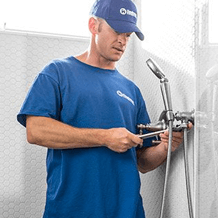
We are excited to announce that a long time Master Craftsman of our business is now the proud new owner; please join us in congratulating Earl Swader as the new owner of Handyman Connection of Blue Ash. Earl has previous business ownership already under his belt and is looking forward to continuing to serve the Blue Ash community as the proud owner.

Roofing / August 25, 2026

Tradespeople and handy homeowners approach a battery installation differently than someone hiring everything out completely, since there is real value in understanding the mechanical side of the job even when the electrical connection needs a licensed professional. Browsing a range of residential solar batteries reveals a surprising amount of variation in size, mounting style and physical requirements between brands, and that variation matters just as much for a trade minded buyer as the electrical specifications do. This guide focuses on the practical, hands on side of choosing and living with a residential battery system.
Battery units differ considerably in weight, footprint and mounting hardware, and these physical details affect what kind of wall or pad can actually support one safely. Some units are designed for direct wall mounting on masonry or reinforced stud walls, while heavier units may require a floor mounted pad or bracket system instead. Checking the manufacturer’s mounting specifications before assuming a particular wall in your home or workshop will work saves a frustrating conversation with an installer later. A handy homeowner can often prepare a compliant mounting surface themselves ahead of the actual installation day, provided they follow the manufacturer’s clearance and structural requirements closely.
Every battery brand specifies minimum clearance distances around the unit for ventilation and safety access, and these rules exist for good reason given how much energy is stored in a relatively compact space. Installing a battery too close to a wall, ceiling or other equipment can restrict airflow and make future servicing far more difficult than it needs to be. Trade experienced buyers tend to appreciate this detail more than most, since it mirrors similar clearance requirements found around other mechanical and electrical equipment in a typical workshop or plant room.
Even if you are not doing the electrical work yourself, understanding what a licensed installer’s job actually involves helps you ask better questions and spot a rushed or careless job. A breakdown of the practical pros and cons of solar battery storage covers common installation considerations including cabling routes, isolator switch placement and how battery systems typically integrate with an existing switchboard. Knowing this vocabulary means you can follow along during a site visit and flag anything that looks inconsistent with how the job was originally quoted.
While the core electrical system should only be serviced by a licensed technician, there is routine maintenance a handy homeowner can reasonably manage. Keeping the area around the unit clear of dust, debris and stored items, checking that ventilation openings remain unobstructed, and periodically reviewing the monitoring app for any warning codes are all sensible habits. Wiping down external casing and keeping garden growth clear of outdoor mounted units also helps avoid moisture and pest related issues that can otherwise go unnoticed for months.
A good working relationship with your installer benefits both sides, particularly if you are comfortable handling some of the preparation work yourself. Discuss upfront which tasks you are able to take on, such as clearing the installation area, preparing conduit runs, or handling any general carpentry needed for a mounting frame. A practical solar power guide for homeowners outlines what a typical installation day looks like from start to finish, which is useful reading even for those planning to leave the electrical work entirely to the professionals, since it sets realistic expectations for how long the process takes.
Think about long term access when planning where a battery will be installed, not just what looks tidy on installation day. Leave enough clearance for a technician to comfortably work with tools during a future service call, and avoid boxing the unit into a corner where a ladder or ramp cannot be positioned safely. Good access planning at the outset saves both time and callout cost if the battery ever needs attention, and it is exactly the kind of practical foresight a trade minded homeowner is well placed to think through before installation day arrives.
Deciding between an indoor location such as a garage and an outdoor wall mounted position involves more than just available space. Outdoor units need to be rated for the temperature range and weather conditions in your area, since extreme heat or cold can affect both performance and long term battery life. Indoor installations are generally more protected but need adequate ventilation and enough clearance from anything flammable stored nearby, which is worth keeping in mind for a busy home workshop or garage. Checking a battery’s official operating temperature range against your local climate is a simple step that is easy to overlook amid everything else involved in choosing a system.
A habit worth adopting from trade work generally is documenting the installation properly once it is complete. Photograph the wiring, isolator switch location, and any labelling on the unit itself, and keep this alongside the compliance certificate and warranty paperwork the installer provides. This kind of record proves genuinely useful years later, whether you are troubleshooting a fault, selling the property, or simply trying to remember which company completed the original installation. A little organisation at the time of installation saves considerable hassle down the track.
Approaching a residential battery purchase with a handyman’s practical mindset, thinking through mounting, clearance, access and ongoing maintenance, results in a system that is easier to live with and service for years after the initial installation is complete.

11115 Kenwood Rd.
Blue Ash, OH 45242

© Handyman Connection 2026 | Privacy Policy

 (513) 771-3950