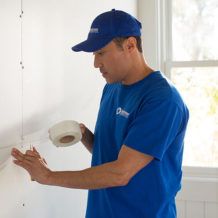
We are excited to announce that a long time Master Craftsman of our business is now the proud new owner; please join us in congratulating Earl Swader as the new owner of Handyman Connection of Blue Ash. Earl has previous business ownership already under his belt and is looking forward to continuing to serve the Blue Ash community as the proud owner.

Remodeling / May 18, 2026

A renovation finish line rarely matches an operational one. The moment contractors hand over the keys, business owners face a different kind of pressure: confirming that the space is actually ready for people to work in, not just ready to photograph.
Preparing newly renovated business spaces for daily operations means looking past paint and fixtures to verify that the environment is safe, functional, and compliant before a single employee walks through the door. Code compliance, restored utilities, working equipment, and cleared emergency exits all need to be confirmed. Staff access credentials, updated floor plans, and any adjusted workflows should be in place before day one.
A project manager or designated operations lead typically owns this transition, coordinating sign-offs across departments rather than assuming the construction closeout covers everything. Business continuity depends on that distinction. The sections that follow break down each readiness area in depth, from safety protocols and cleaning standards to utility checks and system testing, so that reopening feels like a planned transition rather than an improvised one.
Reopening too early is one of the most common mistakes businesses make after construction ends. Before any staff returns, the renovation itself needs to be formally closed out, not just visually finished.
A punch list is a documented record of everything that remains incomplete, damaged, or below the agreed standard at the end of a project. This includes surface finishes, fixture installations, paint touch-ups, flooring seams, and anything else that did not meet the original scope.
The final walkthrough should include the project manager and the general contractor together, moving through every area of the space with the punch list in hand. This is not a casual review. It is a structured inspection where every outstanding item is either resolved on the spot or formally scheduled for correction.
Clear communication between both parties at this stage prevents disagreements later about what was promised versus what was delivered.
Once the physical walkthrough is complete, the paperwork side requires equal attention. Outstanding permits, failed inspections, or unresolved deficiencies can delay legal occupancy even when the space looks finished.
Business owners should confirm that all required inspections have been passed, that the relevant authority has issued final sign-off, and that no open items remain on the deficiency list. Much like repairs and renovations before moving in a residential property, commercial spaces carry documentation obligations that must be satisfied before occupancy begins.
Only once permits are closed and sign-offs are confirmed should the space be considered ready for the next phase of preparation.
Once permits are cleared and the punch list is closed, attention shifts from paperwork to physical performance. A space that looks finished can still contain systems that are not functioning correctly, and discovering those failures after staff has returned is far more disruptive than catching them beforehand.
Each major building system should be tested under real operating conditions, not simply switched on and assumed to be working. HVAC units need to run long enough to confirm that airflow, temperature control, and ventilation are reaching every area of the space.
Electrical systems require a check of every outlet, switch, and lighting circuit. Plumbing fixtures, drains, and restrooms should be run to identify leaks, pressure issues, or slow drainage before they become a problem during a busy workday.
Fire safety components deserve particular attention. Smoke detectors, sprinkler systems, emergency lighting, and alarm panels should all be tested and verified against current code compliance standards. OSHA general requirements outline baseline obligations for safe working environments, and newly renovated spaces are expected to meet those standards from day one.
Signage, accessibility features, and entry points also need a functional check. Emergency exit signs must be visible and lit, accessible routes should be clear and correctly marked, and all entry systems, whether key card, intercom, or manual lock, should operate as intended.
Systems testing and occupancy readiness are closely connected, but cleaning is often treated as an afterthought. Post-construction environments carry fine dust, debris, and residue that standard janitorial work is not equipped to handle.
Engaging post construction cleaning services alongside systems testing, rather than after, ensures that the space reaches safe occupancy conditions before the first staff member arrives. Surfaces, vents, and floors left with construction residue can create safety protocol violations and air quality concerns, even when the building systems themselves are fully operational.
With systems tested and cleaning complete, the space is ready for the final layer of preparation: getting furniture, equipment, and access controls in place so that employees can actually do their jobs from day one. Operational setup at this stage goes well beyond furniture delivery. It involves confirming that every element of the physical environment supports the workflows teams depend on.
Furniture fixtures and equipment should be installed according to the confirmed floor plan, not adjusted on the fly. Changes made during setup without referencing the approved layout can create workflow problems that are difficult to correct once staff has moved in.
Workstations, storage units, and collaborative areas each need to support the daily routines of the teams using them. Meeting rooms should have the right seating capacity, reception areas need to accommodate visitor flow, and common spaces should be arranged to avoid bottlenecks.
Where phasing was part of the renovation, furniture installation should follow the same sequence, completing one zone before moving to the next, to keep the process organized and avoid blocking access to areas that are already operational.
Technology setup often exposes gaps that were not visible during construction. AV systems, internet connectivity, and room booking tools should all be tested under real working conditions, not simply powered on.
Access control systems, including key cards, intercoms, and door hardware, need to be verified at every entry point. Signage should direct staff and visitors clearly through the space, with accessibility routes properly marked throughout.
A few simple fixes that boost a space’s functionality at this stage, like adjusting door clearances or repositioning signage panels, can prevent daily friction once operations begin.
Physical readiness and people readiness are two different things, and both need to be in place before a renovated space can support normal operations. Even when systems are tested and furniture is installed, a poorly planned return can undermine everything that came before it.
Staff reoccupation planning works best when it is treated as a phased process rather than a single reopening event. Not every area of a renovated space will be ready at the same time, and attempting to bring all teams back at once can create congestion, confusion, and gaps in business continuity.
The project manager should coordinate reoccupation in stages, working with department leads, IT, and facilities teams to assign clear responsibilities for each phase. Each group needs to know which areas they are returning to, when access opens, and what changed workflows or safety protocols apply to their zone.
Communication should go out before any return begins, covering updated seating arrangements, entry procedures, and any operational adjustments staff need to follow from day one. Where a full return is not practical, a soft opening that brings back a smaller group first allows the team to identify friction points before the wider workforce arrives.
Phasing the return this way protects daily operations and gives the project manager a controlled window to resolve any remaining issues without disrupting the business as a whole.
A renovated space becomes operationally ready only when completion, code compliance, and usability have all been verified together. No single sign-off covers all three.
That is why a final coordinated review, led by the project manager and supported by facilities, IT, and department leads, matters more than any individual inspection. Business continuity depends on systems working, spaces being clean, staff knowing their workflows, and access controls functioning before normal operations resume.
Clear communication across every team involved in the transition ties those elements together. When each area is confirmed and handed over in sequence, reopening becomes a planned, confident event rather than a reactive one.

11115 Kenwood Rd.
Blue Ash, OH 45242

© Handyman Connection 2026 | Privacy Policy

 (513) 771-3950