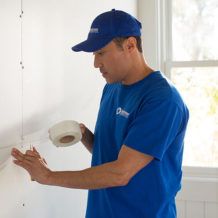
We are excited to announce that a long time Master Craftsman of our business is now the proud new owner; please join us in congratulating Earl Swader as the new owner of Handyman Connection of Blue Ash. Earl has previous business ownership already under his belt and is looking forward to continuing to serve the Blue Ash community as the proud owner.

Electrical / April 16, 2026

Here’s what Utah homeowners should check before the heat arrives.
Utah’s climate is unique. Winters are cold and dry, summers are intensely hot, and the swing between seasons puts real stress on HVAC systems. Your AC unit has been sitting dormant for months, and dust, debris, and wear can all add up to reduced efficiency or a complete breakdown right when you need cooling most.
The good news is that most AC issues are preventable with a bit of attention in April or May. A quick inspection now can save you from a miserable weekend waiting on an emergency technician in the middle of a heat wave.
1. Replace or Clean Your Air Filter
This is the single easiest thing you can do, and it makes a measurable difference. A clogged filter restricts airflow, forces your system to work harder, and drives up your energy bill month after month. Check it now. If it looks gray and packed with dust, replace it before you run the system for the first time this season. Filters are inexpensive, and swapping one out takes less than five minutes.
2. Clear the Outdoor Condenser Unit
Walk around to your outdoor unit and take a look. Over the winter, leaves, dirt, and debris can collect around and inside the condenser. Turn off the power at the disconnect box, then gently clear away any buildup. Make sure there is at least two feet of clearance on all sides to allow for proper airflow. A crowded condenser has to work significantly harder to do its job, which shortens the lifespan of the unit over time.
3. Check Your Thermostat
Switch your thermostat to cool mode and set it a few degrees below room temperature. Listen for the system to kick on within a couple of minutes. If nothing happens, you may have a thermostat issue or something more significant going on with the unit itself. This is also a good time to consider upgrading to a programmable or smart thermostat if you haven’t already. They’re one of the easiest ways to cut cooling costs without sacrificing comfort.
4. Inspect Your Vents and Ductwork
Walk through your home and check that all supply and return vents are open and unobstructed. Furniture, rugs, and storage boxes pushed against vents are a surprisingly common cause of uneven cooling throughout the house. If certain rooms consistently run hotter than others, it may be worth having your ductwork inspected for leaks or gaps. Leaky ducts can account for significant energy loss before conditioned air even reaches the living space.
5. Listen for Warning Signs
When the system does run, pay close attention. Unusual noises like rattling, grinding, or squealing are worth taking seriously. So is a unit that runs constantly without reaching your set temperature, or one that short-cycles by turning on and off in rapid succession. These are signs the system needs professional attention before summer demand peaks and appointment windows get tight.
Some maintenance tasks are straightforward DIY. Others are not. If your system is low on refrigerant, has an electrical issue, or is showing signs of compressor trouble, you will want a licensed technician to take a look. According to the U.S. Department of Energy, a well-maintained central air conditioner can last 15 to 20 years, but only if it receives regular professional service rather than reactive repairs after something breaks.
If your AC is more than 10 to 12 years old and showing problems, it may also be worth a conversation about whether repair or replacement makes more financial sense before the system fails completely. Running an inefficient older unit through a Utah summer can quietly add hundreds of dollars to your energy bill each season.
For homeowners in the Salt Lake City area and across Utah, Utah Heating and Cooling offers professional AC repair and seasonal tune-up services. Getting on their schedule in April or May means shorter wait times and no scrambling when the first triple-digit day arrives.
HVAC technicians fill up fast in June and July. Scheduling a tune-up now means better availability, lower rates than emergency service calls, and the confidence that your system is ready before the season hits hard.
A little time spent this spring saves a lot of discomfort later. Your home’s comfort is worth the prep.

11115 Kenwood Rd.
Blue Ash, OH 45242

© Handyman Connection 2026 | Privacy Policy

 (513) 771-3950