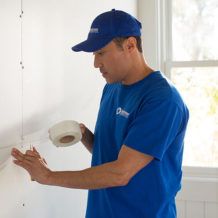
We are excited to announce that a long time Master Craftsman of our business is now the proud new owner; please join us in congratulating Earl Swader as the new owner of Handyman Connection of Blue Ash. Earl has previous business ownership already under his belt and is looking forward to continuing to serve the Blue Ash community as the proud owner.

Remodeling / April 27, 2026

We spend over $540 billion on remodeling each year, and even planning a small home addition requires a “reverse-engineered” strategy where you define your structural limits and legal boundaries before you ever pick up a sledgehammer. Most homeowners fail because they treat an addition like a large-room remodel, but the moment you break the building envelope, you are managing a complex engineering project involving soil stability, moisture barriers, and local zoning laws.
The key to a successful build is identifying the “critical path”, meaning the sequence of events in which a single delay or mistake cascades into a massive budget overrun. You need to verify your property lines, secure financing with a 15% buffer, and determine if your existing electrical panel can actually handle the load of a new climate-controlled space before a single pier is poured.
Those renovation projects that finish on time prioritize the “Outside-In” principle. This means you must secure the structural integrity and the building envelope before you even think about paint colors or flooring. In 2026, building standards mandate that structural integrity and the building envelope are verified to prevent moisture trapping, which is the leading cause of post-addition mold.
Budgeting for a small addition isn’t just about the cost of wood and nails. You have to account for “soft costs” such as permit fees, architectural drawings, and potential utility tap-in fees that cities charge to increase a home’s square footage. In the current market, modern renovation standards suggest a 10 to 15 percent contingency fund specifically for unexpected structural issues in older properties.
If you find that your project requires specialized trade coordination, such as moving a main waste line or upgrading a 100-amp service to 200-amp, it is time to look into professional home services with Redbud to ensure the work meets local codes. Professionals can help you navigate the gap between a DIY weekend project and a full-scale construction site.
You cannot skip the permitting phase just because the addition is “small.” Even a 10×10 bump-out changes the permeable surface area of your lot, which affects local drainage and runoff regulations. In many jurisdictions, permitted development rights allow certain shallow rear extensions without full planning permission, but you still need official oversight to prove you followed the rules.
The timeline for these approvals is often the biggest bottleneck in the planning process. While a contractor can build a small frame in a week, building regulation approval typically takes around 8 weeks, depending on your local council. This wait time is non-negotiable because inspections occur at specific intervals: footer, framing, rough-in, and final.
Before you begin the physical work, ensure you have these documents in hand:
Once the planning and permits are in place, the physical build follows a strict logic. You start with “site prep,” which might involve relocating underground utilities or removing trees. This is followed by excavation and foundation, which are the most critical parts of the project, because if the foundation is off by even an inch, the roofline will never sit straight.
After the foundation cures, the framing moves quickly. This is the stage when the house is “opened up” to the elements, the highest-risk period for weather damage.
Good planners schedule this during dry seasons and have heavy-duty tarps ready to go. The goal is to reach “dried-in” status, where the roof and windows are on as fast as possible.
Once the addition is weather-tight, the interior trades begin the rough-ins. This is your last chance to walk through and ensure outlet placements and lighting fixtures are exactly where you want them. After the inspections pass, the insulation and drywall go up, and the project finally begins to feel like a real part of your home.
After the dust settles and the final inspection is signed off, the job isn’t quite over. New additions settle over the first year, which can lead to small “nail pops” or hairline cracks in the drywall tape. This is a normal part of the process, but it requires a consistent maintenance schedule to ensure the new structure integrates perfectly with the old one over time.
Instead of treating the addition as a separate entity, integrate it into your seasonal home checkups. Keep an eye on the flashing where the new roof meets the old wall, and check the crawlspace or basement for any signs of moisture during the first heavy rains. Building a relationship with a reliable service provider ensures that these minor adjustments don’t turn into major repairs down the road.
Check the latest posts on our site for even more advice on DIY, construction, and remodeling so that your next project runs smoothly.

11115 Kenwood Rd.
Blue Ash, OH 45242

© Handyman Connection 2026 | Privacy Policy

 (513) 771-3950