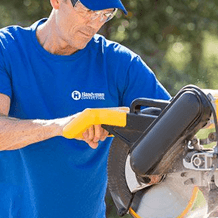
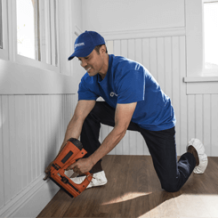
We are excited to announce that a long time Master Craftsman of our business is now the proud new owner; please join us in congratulating Earl Swader as the new owner of Handyman Connection of Blue Ash. Earl has previous business ownership already under his belt and is looking forward to continuing to serve the Blue Ash community as the proud owner.

Home Maintenance / April 14, 2026

Are you a homeowner who tackles weekend repairs, a serious DIYer who builds furniture, or someone doing light fabrication in a small shop? Your goal is to get more accurate, repeatable results from your work. But building an effective workspace is not about buying the biggest or most expensive machine first. Instead, equipment selection should be deliberate and based on your actual needs. What you buy should reflect the type of work you do, the materials you use most often, the space you have available, and the level of accuracy your projects require. You’ll want to choose tools that are reliable, can grow with your skills, and do not fill your garage with cheap machinery that causes headaches. Prioritize quality over quantity. A few well-chosen core tools, combined with a smart layout, can handle a surprisingly wide range of projects. Thoughtful equipment selection is key.
Think about the kinds of tasks that lead to smart equipment decisions versus poor ones. Start with the jobs you actually need to do. Do your projects involve occasional rough construction, or do they require tighter tolerances, cleaner cuts, and more repeatable results? Are you doing continuous home repair, adjusting hardware on welded frames, or light fabrication such as making custom brackets and modifying structural frames?
There are practical nuances here. For example, enclosed metal sections used outdoors may need drain or vent provisions to prevent trapped moisture, but the size and placement should be based on the design and application. If you need to shorten a threaded bolt, one common method is to thread a nut onto it before cutting; after the cut is cleaned up, backing the nut off can help restore the threads. What you have in your inventory should be hugely influenced by these types of low-level practical tasks. Wrong choices are made when pedestrian equipment is bought to do one-off repairs, but really assess what will be queued in, and pick the core functions so that you can handle 80% of what will happen. Identify what quantity of tools will cover processing dimensional lumber, fixing heavy equipment, or fabricating structural tabs and pick from those.
Even the best tools need the right workspace and support. Precision work starts with a solid setup, including a bench height that fits your body to reduce strain and improve handling. A smart layout also helps, with the bench, main tool, and primary storage kept close together to cut wasted movement.
Infrastructure matters too. Many residential garage circuits are not built for heavy bench machines, so power needs should be checked for both running and startup loads. Larger machines may need dedicated circuits and a qualified electrician’s input. Lighting should also match the work: assembly areas usually need less light, while fine woodworking or machining often benefits from brighter overall lighting plus focused task lighting.
A large share of the accuracy you can achieve comes from careful layout, measurement, and setup. Conversely, most low-end fabrication ends up being inaccurate because of poor measuring. Human visual alignment is limited, and simply eyeballing a drill bit over a pencil mark can introduce noticeable error.
Purchase high-quality combination squares, micrometers, calipers, levels, and specialized marking tools. For fine woodworking layout, a marking knife often gives more accurate results than a pencil because it creates a crisp reference line and severs wood fibers cleanly. For a metalworking shop, create templates of gussets and tabs with poster board first before burning through expensive stock. Swap out tape measuring tools with physical setup blocks that can align saw blades and router bits heights. You’ll seriously up the accuracy of all the entry-level tools you own by improving all your measuring tools and layout.
When making equipment purchasing decisions for a shop, group all the buys around cutting and forming, finishing, and joining needs into decision clusters. Utility, project fit, and frequency of use should all be considered.
Basic workshop tools like general hand drills and cutoff tools and compact benchtop equipment are usually enough for the subgroup of light-usage household repair tasks. However, they become limiting fast in the subgroup of daily workflow that consist of highly repeatable cuts, controlled surface formation, accurate hole placement, and refined metalworking. For example, hand drilling is harder to control consistently, and lower-cost drill presses may have more runout, lower rigidity, or less precise alignment than better machines.
In some cases, accurate hole-making becomes a multi-step process: layout and center-punching, drilling, and then finishing by reaming, boring, or another suitable machining operation if tighter size or positional accuracy is required. To achieve this level of accuracy, you may need to introduce more advanced machining equipment. Knee milling machines and other higher precision yet flexible reach capability may be required for a workshop needing greater precision and flexibility for fabrication work.
Safety protocols, PPE, and hazard controls should be planned with the equipment, not added later. Shop tools often operate faster than human reaction time. Grinding can throw sparks, metal fragments, and wheel debris at high speed, so proper guards plus face and eye protection are essential.
Safety glasses may work for lower-risk tasks, while dusty work may require sealed goggles. Heavy grinding often calls for a face shield over primary eye protection. Airborne contaminants also need control. Shop vacuums perform better with proper filters, bags, or a cyclone separator, while higher-quality blast gates and ducting help larger dust-collection systems maintain airflow. Welding fumes are also a serious respiratory hazard, especially with frequent work or poor ventilation, so local exhaust and task-appropriate respiratory protection should be part of the plan.
Physical workflow matters in small shops. Flip-top carts and compact stands help save floor space by letting two machines share one footprint. For clamping, lower-cost bar clamps, F-style clamps, and supports are usually enough, so it often makes more sense to invest more in core equipment.
A staged buying approach can also help. Purchase tools as needed while planning for future upgrades. Sticking to one cordless platform can save on batteries and chargers, and buying enough machine capacity for likely future projects can prevent early replacement without overspending on space or size.
At the end of the day, the best workshop isn’t the one holding the most machines it is the one utilizing the right combination of efficient layout, precise measuring tools, reliable core equipment, and advanced capacity right where it is needed. By having a value-based strategy prioritizing those that can grow alongside your skills, you avoid the frustrations of cheap machinery, and you improve cycle time. The smarter equipment choices and sequences lead to substantially better repair quality, safer daily workspace conditions, and repeatable fidelity of fabrication outcomes. Buy into foundational accuracy and buy strategically; let the high quality of your completed products dictate your next functional equipment upgrade.

11115 Kenwood Rd.
Blue Ash, OH 45242

© Handyman Connection 2026 | Privacy Policy

 (513) 771-3950