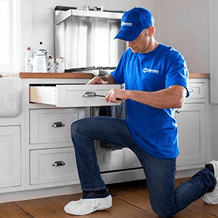
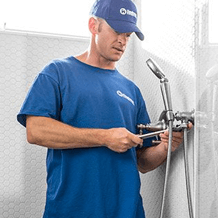
We are excited to announce that a long time Master Craftsman of our business is now the proud new owner; please join us in congratulating Earl Swader as the new owner of Handyman Connection of Blue Ash. Earl has previous business ownership already under his belt and is looking forward to continuing to serve the Blue Ash community as the proud owner.

Plumbing / October 15, 2025

Ceiling and wall access doors play different roles in commercial bathroom maintenance. Each one is as important as the other. Generally, ceiling access doors provide a quick entryway for HVAC and lighting systems above the ceiling, while wall access doors are essential for plumbing access.
Commercial bathrooms hide utilities that need routine care and sometimes emergency fixes. Without reliable access, crews waste hours breaking finished walls and ceilings to reach them. The smarter move is to design with maintenance in mind from the start.
Ceiling and wall access doors help with this. The key lies in matching them with intended service needs, installing them strategically, and choosing designs that blend in.
When Should You Choose a Ceiling Access Door Over a Wall Access Door?
You should choose a ceiling access door whenever the maintenance task involves HVAC components, ventilation lines, or lighting systems. In most commercial restroom designs, duct runs and electrical junctions are often overhead.
These access doors and panels make above-ceiling work easier in a few ways:
However, this accessibility comes with consideration—crews will need ladders or lifts as safety is essential.
Use flush access doors as these entry points virtually disappear into the plane, blending with tiles or painted finishes. This makes them suitable for high-visibility commercial spaces where function and aesthetics matter.
When Is a Wall Access Door More Practical?
A wall access door is practical when crews need to service plumbing shut-off valves, cleanouts, and other water-related fixtures. If a pipe bursts or there’s a leak that could damage finishes, wall-mounted panels provide the fastest route to shut off the flow and prevent water damage.
Plumbing runs usually dictate their placement: behind toilets, near janitor closets, or along walls concealing vertical stacks. Without these panels, crews may need to demolish finished walls to reach a single valve.
The result? Delays and frustrating work that no property owner or plumbing professional wants, especially during an emergency.
Wall access doors also simplify routine inspections. Cleanouts are typically checked on a schedule to ensure drains remain clear. With an accessible wall panel, inspectors can perform the task in minutes rather than hours. This cuts billable labor costs and reduces operational downtime.
Though wall panels are commonly used to access plumbing runs in restrooms, some may conceal smaller junction boxes, fan controls, or low-voltage connections. Similarly, some ceiling panels cover plumbing components like sprinkler systems.
How Do Flush Access Doors Impact Aesthetics and Long-Term Maintenance?
Flush access doors outperform traditional framed models by blending into the wall or ceiling surface. Some benefits of flush designs include:
What Bathroom Access Panel Checklist Should Contractors Follow?
The simplest way to avoid future maintenance headaches is to follow a clear, detailed specification checklist.
1. Choose moisture-resistant panels
Bathrooms are often exposed to high humidity, frequent cleaning, and chemical agents. As such, moisture-resistant panels prevent corrosion, absorption, or premature wear. Popular choices include powder-coated steel or stainless-steel panels that can withstand daily cleaning cycles and steam.
2. Select gasketed or sealed panels.
A gasketed frame prevents air and moisture from leaking through the panel opening, helping contain odors and keeping mold growth in check.
3. Place wall access panels at strategic points.
These include every shut-off valve, cleanout, or drain requiring regular entry. Plumbing emergencies can escalate in minutes. Water damage costs can skyrocket if a technician can’t reach a shut-off valve without tearing through tile. Panels strategically placed near valves, cleanouts, and drains allow immediate response.
4. Place ceiling access doors near important components.
These include where HVAC filters, ducts, or recessed lighting fixtures require periodic service. Commercial restrooms rely on strong ventilation systems. Filters clog, dampers need adjustments, and lighting ballasts eventually fail. Ceiling access doors ensure crews can service these overhead components quickly, without damaging the ceiling finish.
5. Keep panels out of direct sightlines whenever possible.
Panels in prominent sightlines can disrupt the look of tile or drywall finishes. This protects design intent while still meeting maintenance needs. Where visibility is unavoidable, specify flush access doors.
6. Always coordinate panel sizes with mechanical and plumbing trades.
One of the most common specification mistakes is undersized access doors. An opening that’s too small forces crews to cut surrounding finishes to reach equipment, undoing the value of the panel.
7. Ensure panels are fire-rated if installed in rated assemblies.
Commercial restrooms often share walls and ceilings with corridors, storage areas, or other spaces that require fire separation. If an access door penetrates these assemblies, it must match the fire rating of the wall or ceiling for code compliance.
Conclusion
Restroom utility access requires both ceiling and wall access doors. They’re complementary solutions tailored to different service needs. Ceiling panels keep HVAC and lighting maintenance smooth and hidden, while wall panels guarantee plumbing access when it matters most.
Flush access door designs unify both applications, offering clean aesthetics and durability that meet modern commercial standards.
Ultimately, specifying both types strategically is the smartest move. It keeps restrooms functional, attractive, and easy to maintain, protecting property value for years.

11115 Kenwood Rd.
Blue Ash, OH 45242

© Handyman Connection 2026 | Privacy Policy

 (513) 771-3950