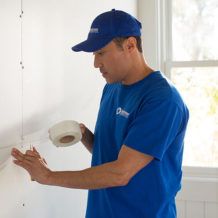
We are excited to announce that a long time Master Craftsman of our business is now the proud new owner; please join us in congratulating Earl Swader as the new owner of Handyman Connection of Blue Ash. Earl has previous business ownership already under his belt and is looking forward to continuing to serve the Blue Ash community as the proud owner.

Roofing / May 16, 2026

Water stains on the ceiling are never “just cosmetic.” By the time you see that brown ring, moisture has already traveled through shingles, underlayment, decking, and insulation. The good news is you can often track down a roof leak early if you know where and how to look.
Let’s walk through a safe, smart leak hunt before small drips turn into major repairs.
Before you climb a ladder, grab a flashlight and head to the attic. Many leaks show themselves from the inside long before they’re obvious on the roof surface.
Look for dark stains, damp insulation, moldy smells, or rusty nail heads. According to research highlighted by This Old House, tracing water marks uphill often leads you close to the entry point since water travels along framing before dripping down. That matters to you because the visible ceiling stain is rarely directly under the leak.
If it’s daytime, turn off the lights and look for daylight poking through the roof boards. Even a pinhole of light can signal a pathway for water.
Roof leaks love weak spots. Instead of inspecting every shingle one by one, focus on the areas most likely to fail.
Pay close attention to:
As noted in guidance from Family Handyman, flashing failures are one of the top causes of roof leaks. For homeowners, that means a loose metal edge or cracked sealant can cause damage that looks far worse inside than it appears outside.
Gutters also deserve attention. When they clog, water backs up under shingles instead of flowing away from your home.
If you can’t spot the leak visually, a targeted hose test can help. This method works best with two people and good communication.
One person stays in the attic with a flashlight while the other sprays sections of the roof with a garden hose. Start low and work upward slowly, soaking one area at a time for several minutes. According to advice shared by Houzz, isolating sections prevents you from misidentifying the source when water travels downhill.
If water appears inside after spraying a specific section, you’ve likely found your trouble spot. Move carefully and avoid pressure washers, which can cause more damage than they reveal.
Once you identify a leak, focus on minimizing interior damage. Place buckets under drips and move valuables out of the way. If water is bulging behind drywall, carefully puncturing the lowest point can relieve pressure and prevent a ceiling collapse.
Take clear photos of stains, wet insulation, and damaged materials. Consumer guidance from Angi emphasizes documentation for insurance claims. That protects you later if structural repairs or mold remediation become necessary.
Temporary tarps can help in an emergency, but they are short-term solutions. Permanent repairs require proper sealing and inspection of surrounding materials.
A homeowner can find obvious leak points, but subtle issues are easy to miss. Small cracks in flashing, hidden deck rot, or ventilation problems often require a trained eye.
After you’ve done your initial checks, it’s wise to schedule a comprehensive evaluation with a team like Blue Nail Roofing. Many homeowners choose Blue Nail Roofing because they combine certified roofing expertise with thorough inspections that look beyond the visible damage. They go beyond simply patching the leak – they assess underlying causes such as compromised flashing, aging shingles, and poor attic airflow that can shorten your roof’s lifespan.
A professional roof inspection gives you a clear scope of work, accurate documentation, and peace of mind. Instead of guessing, you know what needs repair and what can wait.
The best leak repair is the one you never need. Routine roof maintenance and proper attic ventilation dramatically reduce long-term risk.
Building science experts at Fine Homebuilding explain how balanced intake and exhaust ventilation limit moisture buildup in attics. For you, that means less condensation, less wood rot, and fewer surprise leaks after heavy storms.
Add seasonal roof checks to your home maintenance list. Clear gutters, inspect flashing annually, and replace cracked sealant before it fails.
Roof leaks rarely fix themselves. The sooner you investigate stains, musty smells, or missing shingles, the better your chances of avoiding structural repairs.
If your inspection reveals more than a simple fix, reach out for a professional roof inspection from Blue Nail Roofing and get clear answers about your next steps. Acting early protects your home, your investment, and your peace of mind.

11115 Kenwood Rd.
Blue Ash, OH 45242

© Handyman Connection 2026 | Privacy Policy

 (513) 771-3950