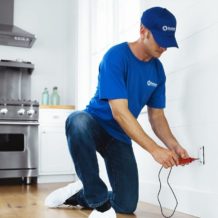
We are excited to announce that a long time Master Craftsman of our business is now the proud new owner; please join us in congratulating Earl Swader as the new owner of Handyman Connection of Blue Ash. Earl has previous business ownership already under his belt and is looking forward to continuing to serve the Blue Ash community as the proud owner.

Maintenance / September 16, 2025

An unexpected spike in energy bills can bring confusion and frustration, especially when daily routines have not changed much. Many households face this problem without realizing that subtle changes in their environment or appliances can quietly drain energy. Small inefficiencies build up over time, and the costs begin to reflect on monthly statements. Understanding where this extra consumption is coming from can create a clearer picture of how to regain control over household energy usage.
Air leaks can silently push heating and cooling systems to work harder than they should. Gaps around windows, doors, vents, or attic spaces can allow treated air to escape while letting outside air creep in. This temperature imbalance forces systems to cycle more often, leading to greater energy consumption. Learning how to detect air leaks at home involves running your hand around window frames on a breezy day, holding a lit stick of incense near potential gaps to see if the smoke wavers, or scheduling a professional blower door test to uncover hidden leaks.
Once identified, sealing those areas with weatherstripping, caulking, or spray foam can prevent further losses and stabilize indoor temperatures. Even small gaps can quietly undermine months of energy-saving habits, so addressing them can produce noticeable results.
Appliances often become less efficient as they age. Refrigerators, washing machines, and dryers may start consuming more power once their internal components wear down or fail to operate at peak performance.
Motors and compressors can struggle to maintain consistent operation, leading to longer run times and greater energy draw. Newer models are built to meet higher energy efficiency standards and use advanced technology to cut down consumption.
If older appliances are still in use, their declining performance might be a major reason for the surge in energy costs. Periodic maintenance, like cleaning refrigerator coils or replacing worn seals, can extend their life but might not match the efficiency of modern alternatives.
Heating and cooling systems are often the largest contributors to a household’s energy consumption, and inefficiencies in these systems can significantly inflate monthly bills. When these systems are outdated or have not been properly maintained, they require more energy to maintain comfortable indoor temperatures.
Dust, dirt, and debris can accumulate inside vents, ducts, and filters, restricting airflow and forcing the system to work harder than necessary. Low refrigerant levels in air conditioning units or poorly calibrated thermostats can also cause uneven cooling or heating, prompting longer run times that increase energy use.
Ductwork that is poorly insulated, leaky, or obstructed can lose large amounts of conditioned air before it reaches the intended rooms, which makes the system cycle more frequently. In addition, homes that rely on single-zone systems may experience temperature imbalances between rooms, causing repeated adjustments to compensate for hot or cold spots.
Seasonal changes, such as extreme heat in summer or freezing winter temperatures, further strain inefficient systems and amplify the energy drain. Regular inspections and servicing can improve performance, but in many cases, older systems may never achieve the efficiency of modern heating and cooling technology.
Even when electronics appear to be off, they may still draw small amounts of power. This phenomenon, often called phantom or standby power, can build up when many devices remain plugged in around the clock. Televisions, game consoles, printers, and phone chargers are common culprits.
Each device might only use a small trickle of energy, but together they can create a substantial drain. Power strips with on/off switches can help cut power to clusters of devices when they are not in use. Unplugging chargers once devices are full can prevent unnecessary consumption.
Over time, these minor changes can stop hidden energy usage from slowly inflating the bill.
Homes with inadequate insulation can lose a surprising amount of energy, and the effects show up clearly on monthly bills. Heat naturally moves from warmer areas to cooler areas, which means that during winter, warm air inside the house escapes through walls, attics, crawl spaces, and ceilings, while cold air finds its way inside. During summer, the opposite occurs as hot outdoor air seeps in and forces air conditioning systems to work harder to maintain comfort.
Gaps around electrical outlets, light fixtures, and plumbing penetrations can become unnoticed pathways for air, contributing to temperature fluctuations and wasted energy. Attics are particularly vulnerable because heat rises, and insufficient or compressed insulation in this area can allow valuable warmth to escape during colder months. In walls, insulation that has settled over time loses effectiveness, reducing its ability to slow thermal transfer. Windows and doors that are not properly sealed compound the problem by creating additional points where heat or cool air can leak out.
Upgrading insulation materials, adding extra layers in critical areas, and sealing these vulnerable points can dramatically improve energy efficiency. Homes with improved insulation experience less strain on heating and cooling systems, which not only lowers energy bills but also extends the life of HVAC equipment by reducing overwork.
The benefits of addressing insulation and thermal loss extend beyond cost savings, creating a more comfortable and consistent indoor environment year-round, minimizing drafts, and reducing the effort needed to maintain desired temperatures.
Lighting may not seem like a major factor, but outdated bulbs can draw far more energy than modern options. Incandescent bulbs, for example, convert much of their energy into heat rather than light, which wastes electricity.
Compact fluorescent lamps (CFLs) and light-emitting diodes (LEDs) consume far less energy and last much longer. Replacing all high-use bulbs in kitchens, living rooms, and exterior fixtures with LED alternatives can quickly lower consumption.
Motion sensors or timers can prevent lights from staying on in unoccupied rooms. Brightness levels and color temperatures can be chosen to match each room’s needs without adding extra load to the power grid.
Rising energy bills often trace back to overlooked inefficiencies rather than sudden lifestyle changes. Air leaks, aging appliances, strained heating and cooling systems, phantom power, weak insulation, and inefficient lighting can all quietly drive up energy use.
Pinpointing and addressing these issues can restore balance to household energy consumption. A careful look at each area can reveal where energy is slipping away and help bring costs back under control, creating a more stable and efficient home environment.

11115 Kenwood Rd.
Blue Ash, OH 45242

© Handyman Connection 2026 | Privacy Policy

 (513) 771-3950