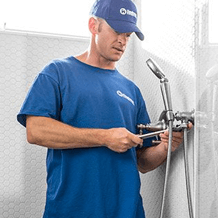
We are excited to announce that a long time Master Craftsman of our business is now the proud new owner; please join us in congratulating Earl Swader as the new owner of Handyman Connection of Blue Ash. Earl has previous business ownership already under his belt and is looking forward to continuing to serve the Blue Ash community as the proud owner.

Carpentry / April 11, 2026

Spotted a spider in your bathtub? A mouse in your pantry?
No matter the pest, seeing one can ruin your entire day, without hesitation.
Your first instinct might be to grab a spray bottle to set a trap, but catching a pest after it enters your home is counterintuitive. It means you’ve already lost the battle.
If you want to win the war, true pest control starts at the perimeter of your house. In fact, many pest problems can be completely prevented with a few simple home fixes. Pests tend to enter homes through overlooked structural gaps, tiny cracks, and weaknesses in your building materials. Bugs and rodents are constantly on the lookout for shelter, food, and water, and when they find an easy access point, they move right in.
In this post, we’ll walk you through some simple, practical, and low-cost structural fixes you can employ to keep the critters outside (where they belong). We’ll focus entirely on physical repairs and improvements that you can tackle this weekend with just a few basic tools and maybe a quick trip to the hardware store.
If you’ve ever heard the telltale creaks as the wind brushes against it in the evening, you probably already know that your home settles over time. This natural settling process creates tiny cracks along your foundation, around your windows, and right where your walls meet different building materials like brick or siding.
A mouse can squeeze through a gap the size of a dime, while ants and spiders need barely a fraction of a millimeter. That’s not a lot of space, which means you need to be extra-vigilant in looking for potential entry points.
Walk around your property and inspect the exterior walls closely. Look for small cracks along the concrete foundation, paying special attention to problem areas like utility pipe entries, outdoor hose bibs, and foundation joints.
Use a high-quality silicone caulk or exterior sealant to close up small gaps. Silicone remains flexible and withstands extreme weather changes without cracking, but for larger gaps, you might need a polyurethane expanding foam. Make sure you scrape away any old, peeling caulk before applying a fresh bead.
Stand inside your home, turn off the lights, and look at your exterior doors during the day. Do you see sunlight peeking through the bottom or the sides? If sunlight can get in, a cockroach or a rat can easily follow.
Exterior doors take a lot of abuse from the elements, and their seals wear out quickly. Inspect all your doors for gaps, replacing any worn weather stripping along the sides and top of the door frame. Self-adhesive weather stripping is extremely cheap and takes only a few minutes to apply.
Next, focus on the bottom of the door. Install a heavy-duty door sweep to block the gap between the door and the threshold. Bristle sweeps work wonderfully for uneven surfaces, while solid rubber sweeps provide a tight seal on smooth floors. Don’t forget to check your garage doors and side doors, as these secondary entrances frequently get overlooked and serve as massive open invitations to pests.
Opening your windows on a cool evening feels fantastic… until a swarm of mosquitoes or June bugs crashes the party, that is. Window and vent screens serve as your primary defense against flying insects, but they only work when they remain perfectly intact.
Examine all your window and vent screens for holes or tiny tears. Pets, severe weather, and normal wear and tear can easily puncture the delicate mesh. You can repair small holes with inexpensive screen patch kits, which feature small squares of mesh with adhesive backing that stick directly over the tear.
For larger holes, you may want to replace the screen mesh entirely. You can buy rolls of fiberglass or aluminum screening at any home improvement store; then, simply pull out the old rubber spline, lay the new mesh over the frame, and press the new spline into the groove with a spline roller tool. Make sure your screens fit tightly in their tracks and lock securely to the window frame.
Your home needs to breathe. Attic vents, crawl space grates, dryer vents, and brick weep holes provide vital airflow to prevent moisture buildup. Unfortunately, these necessary openings look like luxury hotel entrances to rodents, birds, and large insects.
Protect these openings without restricting the airflow. Install fine wire mesh over all exposed vents and grates (hardware cloth featuring a quarter-inch weave works perfectly for this job) The metal wire stops mice and rats from chewing their way inside, while the small gaps keep out stinging insects and birds. Secure the mesh tightly using heavy-duty staples, screws, or construction adhesive.
Plumbers and electricians often drill holes slightly larger than the pipes or cables they install. These gaps where plumbing lines, internet cables, or electrical wires enter your home create perfect hidden highways for pests.
Check under your kitchen and bathroom sinks. Look closely inside your utility closets and your laundry room. You will likely find noticeable gaps around the pipes going into the drywall or the floor. Fill these interior gaps with expanding foam or silicone caulk.
For exterior utility penetrations like outdoor spigots, A/C refrigerant lines, and basement wall pipes, you need a stronger defense against rodents. Take steel wool and pack it tightly into the gap around the pipe. Rats and mice can’t chew through steel wool because it cuts their mouths. Once you pack the gap completely, apply a thick layer of exterior caulk over the steel wool to hold it permanently in place and block out moisture.
Squirrels, bats, wasps, and roof rats actively seek out high entry points along your roofline, which means you need to inspect your roof for loose shingles, cracked tiles, or rotted fascia boards and soffits.
Damaged roofing materials hide easily from view since you rarely look directly at them. Wood rot on your fascia boards turns solid lumber into a soft, spongy material. Pests chew through this weakened wood in a matter of minutes to build nests in your warm, dry attic.
Grab a ladder and carefully inspect your roof edges, probing any suspicious wood with a screwdriver to check for rot. Recommend sealing tiny cracks with roofing cement. If you find rotten fascia boards or severely damaged shingles, replace the compromised materials promptly.
Gutters protect your foundation by moving rainwater safely away from the house, but when gutters clog with leaves and twigs, they create a cascade of problems that practically beg pests to come inside.
Clogged gutters hold standing water, and this stagnant water serves as a premier breeding ground for thousands of mosquitoes. As the water overflows, it runs down the side of your house, leading to severe water damage and wood rot. Moist, rotting wood acts as a powerful magnet for termites, carpenter ants, and other wood-destroying insects.
Clean your gutters thoroughly at least twice a year. Fix any loose brackets and repair rusted sections with gutter sealant, and make sure your downspouts direct water at least three feet away from your foundation walls. You should also consider installing high-quality gutter guards to keep out debris and prevent birds from building nests in the troughs.
Garages and backyard sheds usually lack the tight construction of a primary residence. We tend to store pet food, birdseed, and cardboard boxes in these spaces, making them highly attractive targets for foraging pests.
Inspect your garage and shed doors for glaring gaps, deep cracks, or warped panels that allow easy entry. Garage doors shift over time, creating large gaps at the corners. Tighten the tracks and hinges to align the doors properly and make sure there’s a snug, flush fit against the frame.
Purchase specialized weather stripping and thick threshold seals designed exclusively for garage doors. A heavy rubber bottom seal will compress against the concrete floor when the door closes, cutting off the main entry route for crickets, spiders, and mice. Check the side and top seals as well, replacing any cracked or brittle rubber strips.
If your home features a raised foundation, your crawl space requires a bit of extra attention, since a dark, undisturbed crawl space offers total protection from predators and extreme weather. This makes it the ultimate real estate for skunks, raccoons, possums, and rats.
Walk the perimeter of your house and look for broken, rusted, or completely missing vent covers around the foundation block. Replace any damaged covers with reinforced vent screens that resist heavy intrusion while still allowing necessary airflow.
Check your crawl space access doors for a tight, secure fit. Over time, wooden doors warp and hinge rust, leaving wide gaps along the edges. Seal these gaps thoroughly with heavy foam insulation tape or thick rubber gaskets. Add a sturdy padlock or a tight latch to keep aggressive wildlife from simply pulling the door open in the middle of the night.
Preventing pests always starts with reinforcing your home’s structure. Sealing up cracks, patching torn screens, and repairing weak spots around your property will drastically reduce the number of bugs and rodents you encounter indoors.
These low-cost, weekend DIY fixes require very little money but yield massive results. When you spend a few dollars on caulk, weather stripping, and steel wool today, you can prevent incredibly expensive and stressful pest infestations tomorrow.
Make it a habit to inspect your home seasonally. Walk the perimeter in the spring and again in the fall. Make small repairs as soon as you spot damage. A tightly sealed house remains your absolute best defense against the outside world.
Keep up with these budget-friendly maintenance tasks, and you’ll enjoy a comfortable, pest-free living space all year long. And if you still need help securing the perimeter, consider hiring professional pest control for an extra layer of protection.

11115 Kenwood Rd.
Blue Ash, OH 45242

© Handyman Connection 2026 | Privacy Policy

 (513) 771-3950