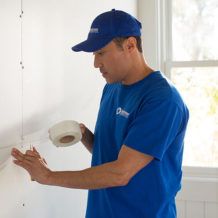
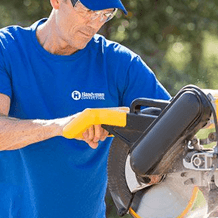
We are excited to announce that a long time Master Craftsman of our business is now the proud new owner; please join us in congratulating Earl Swader as the new owner of Handyman Connection of Blue Ash. Earl has previous business ownership already under his belt and is looking forward to continuing to serve the Blue Ash community as the proud owner.

Carpentry / June 30, 2026

An air compressor is one of the most useful machines a home workshop can hold. It powers nail guns, impact wrenches, spray guns, and a blow gun for cleaning. One machine replaces a drawer of single-purpose tools.
The hard part is matching the compressor to your projects. Buy too small and tools stall mid-task. Buy too large and you waste money and space. Suppliers of compressed-air gear, such as Penry Air, stock everything from small portable units to industrial systems. This guide covers tank size, airflow, moisture, and safe use.
Air tools care about two numbers: pressure and airflow. Get both right and every tool runs smoothly.
Pressure is measured in PSI, or pounds per square inch. Most home air tools run well at 90 PSI. Airflow is measured in CFM, or cubic feet per minute. CFM trips up most buyers.
Different tools pull different amounts of air. A brad nailer sips air. A grinder or sander gulps it and needs a bigger compressor. Here is a rough guide at 90 PSI.
Always check the air requirement printed on each tool. The grinder and sander figures are the ones that force a larger purchase.
Start with your thirstiest tool, then add a safety margin. A common rule is to pick a compressor that delivers at least 1.5 times that tool’s CFM at 90 PSI.
Say your impact wrench needs 4 CFM. Multiply by 1.5 and you want about 6 CFM of supply. That buffer covers pressure drops. If you run two tools at once, add their CFM needs together first.
Follow these steps to size your unit:
Tank size affects rhythm, not raw power. A bigger tank stores more air, so the motor cycles less often. Home units commonly range from 2 to 80 gallons.
A 6-gallon pancake tank suits trim and small jobs. A 20 to 30 gallon tank handles longer sessions. Continuous work, like sanding, wants 60 gallons or more.
Compressing air creates heat, and cooling air drops water. That water collects inside the tank and travels down the hose. Left alone, it causes real problems.
Moisture rusts the inside of the tank over time. It also spits water into spray finishes and shortens tool life. Painters notice it first, since droplets ruin a coat.
Three habits keep water under control. Drain the tank after each session using the valve underneath. Add an inline filter or water separator near the tool. For frequent spraying, fit an air dryer.
A dryer is not vital for occasional tire top-ups. It earns its keep once you spray paint or run air tools weekly. Suppliers stock filters, separators, and dryers for small shops and large operations alike.
Compressed air looks harmless, but the numbers say otherwise. A few simple rules prevent most injuries in a home workshop.
Federal workplace standards offer a clear benchmark. Under OSHA power-tool rules, compressed air for cleaning must be reduced to less than 30 PSI. The same rule requires a muzzle safety device on nailers and staplers that run above 100 PSI.
Eye protection is not optional. University safety guidance from the University of Florida advises regulating shop cleaning air to 15 PSI and wearing goggles or a face shield. Never aim a blow gun at skin, since even low pressure is dangerous.
Other safe habits matter too:
Store the compressor where dust and water cannot reach the motor. A tidy garage with smart storage keeps the unit safe and hoses untangled.
You do not need the biggest machine on day one. Match the first purchase to the projects on your list.
A small 6-gallon pancake compressor covers trim, brad nailing, and tire inflation. It plugs into a standard 120-volt outlet and stores on a shelf. Many first projects, like the fixes in a weekend home repair guide, need nothing larger.
Step up only when a tool demands it. A spray gun or large sander pushes you toward a 20-gallon or bigger tank. A single-stage unit at 90 to 135 PSI still serves most home shops. Buy the hose, fittings, and filter together.
A well-sized compressor turns slow chores into quick wins. Size it to your tools, manage the moisture, and respect the pressure. Start with a modest unit and scale up when a real project demands more air.
For trim work, tire inflation, and light nailing, a 6-gallon pancake unit is plenty. Step up to 20 to 30 gallons if you run impact wrenches or longer sessions. Choose 60 gallons or more only for continuous tools like sanders or spray guns.
Sometimes, but it depends on the airflow. An impact wrench often needs about 4 to 5 CFM at 90 PSI. A tiny pancake unit may keep up for short bursts, then stall. A 20-gallon tank with adequate CFM gives far steadier results.
Not for occasional jobs like topping up tires. A dryer matters most when you spray paint or use air tools weekly. Draining the tank and adding an inline water separator handles moisture for lighter, casual use.
It can be if misused. OSHA limits cleaning air to under 30 PSI, and safety guidance suggests just 15 PSI for shop cleaning. Wear eye protection, never aim a blow gun at skin, and release tank pressure before any service work.

11115 Kenwood Rd.
Blue Ash, OH 45242

© Handyman Connection 2026 | Privacy Policy

 (513) 771-3950