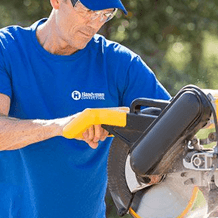
We are excited to announce that a long time Master Craftsman of our business is now the proud new owner; please join us in congratulating Earl Swader as the new owner of Handyman Connection of Blue Ash. Earl has previous business ownership already under his belt and is looking forward to continuing to serve the Blue Ash community as the proud owner.

Roofing / June 15, 2026

Your roof does its job quietly, year after year. Rain, snow, sun, and wind – it takes everything the weather throws at it without complaint. Most of us don’t give it a second thought until something goes wrong.
By then, the damage had been stacking up for months.
The good news is that roofs give you plenty of warning before they fail. You just need to know what to look for. Here are five signs backed by fresh data from the 2026 Verisk U.S. Roof Report and other industry sources.
Age is the single biggest factor. Asphalt shingles typically last 20 to 30 years. If your roof is pushing past that 20-year mark, it’s living on borrowed time.
The numbers back this up. According to the Verisk 2026 U.S. Roof Report, 38% of homes across the country have roofs in moderate to poor condition. Those homes also carry about 60% higher insurance loss costs than homes with roofs in good shape. That’s not a coincidence – worn roofs lead to bigger problems.
If your roof is in that age range, don’t wait for a leak to find out where things stand. A professional inspection can tell you exactly what you’re dealing with. For homeowners in northern Virginia, working with a contractor who specializes in roof replacement in McLean, VA is a smart place to start. They know the local climate, the building codes, and what holds up best through the region’s freeze-thaw cycles.
Not every sign requires a ladder. After a good windstorm, walk around your house and look at the ground first. Shingles in the yard are an obvious red flag. Then grab a pair of binoculars and scan the roof surface.
What you’re looking for: shingle edges that curl upward like a dried-up leaf, cracks running across the middle of a shingle, and dark bare patches where the protective layer has blown off completely.
These aren’t just cosmetic issues. Once the shingle surface is broken, the underlying underlayment is exposed to UV rays and moisture. That’s when real damage starts. A single missing shingle can let water seep into the decking, which then rots the wood and spreads to interior walls.
Those little black specks collecting in your gutters and downspouts aren’t dirt. They’re shingle granules, and they serve a critical purpose – they protect the asphalt from the sun’s UV radiation.
When granules start washing off in noticeable amounts, it means the shingles are degrading. Once the protective layer is gone, the shingle’s fabric deteriorates much faster. You might not notice it from the ground, but your gutters will tell the truth.
This is one reason regular gutter cleaning matters beyond just water flow. When you’re up there clearing out debris, you can spot granule loss early. Our guide on exterior maintenance this fall covers how keeping your gutters, fascia, and roofline in shape also helps you catch roof problems before they get expensive.
According to the U.S. Department of Energy, cool roofs can reduce cooling energy use by 5 to 15% in hot climates. ENERGY STAR-qualified roof products can save anywhere from $0.64 to $1.11 per square foot over a 30-year lifespan. That’s real money.
So if your summer electric bills keep climbing and your roof is pushing 20 years old, a replacement might pay for itself in energy savings alone. The Energy.gov Cool Roofs guide has more details on how reflective roofing works and what kind of savings you can expect.
This is the sign that gets people’s attention. If you can see pinpricks of light coming through your roof deck when you’re in the attic, water can follow those same paths. It’s only a matter of time.
Ceiling stains, peeling paint around ceiling edges, or a musty smell in the attic are all signs that moisture is already making its way inside. By the time water stains appear on your ceiling, the damage has been working its way through the roof layers for a while.
The Insurance Institute for Business and Home Safety has data that shows just how preventable this kind of damage can be. Homes with sealed roof decks built to their FORTIFIED standards reduce water intrusion by more than 95%, even when the shingles themselves are damaged. That’s a strong argument for doing the job right the first time. You can learn more at the IBHS FORTIFIED Home Program.
If you’re planning a replacement, it helps to know what’s ahead. The process is pretty straightforward. Crews start by tearing off the old shingles – that usually takes a day. Then they inspect the deck for rot or damage, lay down underlayment, install flashing around vents and chimneys, and finally put on the new shingles.
Cost-wise, the Verisk report puts the national average for a residential roof replacement at $17,631 in 2025 – a 33% jump over the previous four-year average. Repair costs also rose to $4,699. So if you’re weighing repair versus replacement, the gap has been narrowing. Sometimes a full replacement makes more financial sense than patching an old roof repeatedly.
One thing that matters more than materials: the contractor. The National Roofing Contractors Association estimates that about 47% of roof failures are linked to workmanship, not the shingles themselves. Vetting your contractor carefully is just as important as picking the right shingle color. The NRCA homeowner resources offer solid guidance on what to look for in a qualified roofer.
Here’s something people overlook: your roof doesn’t work alone. It depends on the whole exterior system. Clogged gutters cause ice dams that push water up under the shingles. Damaged fascia and soffits invite pests and moisture that can rot the roof edge. Overhanging branches scrape granules off shingles in heavy wind.
That’s where routine home maintenance pays off. Keeping gutters clear, repairing fascia boards when they start to rot, and trimming back trees all protect your roof investment. Our annual home maintenance checklist includes roof inspections in the spring and ice dam prevention in the winter. When you keep the entire exterior system in working order, your roof lasts longer and performs better.
The cheapest roof repair is the one you prevent by keeping everything else around it in good shape.
A roof replacement isn’t something to dread – it’s something to plan for. The warning signs are usually there long before a leak shows up. Age, shingle condition, granules in the gutters, rising energy bills, and daylight in the attic all tell you when the time is coming.
The smartest move you can make is to catch those signs early, get a professional opinion, and keep up with your home’s regular exterior maintenance. The most expensive roof replacement is the one you didn’t see coming.

11115 Kenwood Rd.
Blue Ash, OH 45242

© Handyman Connection 2026 | Privacy Policy

 (513) 771-3950