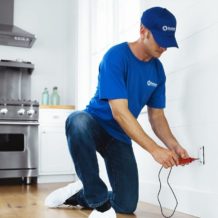
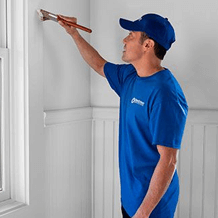
We are excited to announce that a long time Master Craftsman of our business is now the proud new owner; please join us in congratulating Earl Swader as the new owner of Handyman Connection of Blue Ash. Earl has previous business ownership already under his belt and is looking forward to continuing to serve the Blue Ash community as the proud owner.

Home Maintenance / October 15, 2026

I once let a guy into my attic based on a magnet on his truck and a five star sticker he probably printed himself. Three weeks later the condensation line he “fixed” soaked the ceiling above my daughter’s room. That repair cost me $1,900 and a week of sleeping on the couch while the drywall dried.
Vetting a trade pro is not hard, but it is specific. You’re checking three things: whether they’re legally allowed to work in your state, whether they carry insurance that protects your house, and whether their quote tells the truth about what they’ll actually do. Everything else, the friendly handshake and the shiny van, is decoration. Here’s the exact order I check things in now, and the questions I ask before anyone touches a pipe or a breaker in my home.
Price is the last thing you compare, not the first. Before a single dollar figure enters the conversation, confirm the pro is actually licensed for the trade they’re performing. In most states, general handyman work and licensed trades like electrical, plumbing, and HVAC sit in completely different buckets. A friendly fix it guy can patch drywall and hang a ceiling fan. He cannot legally run new gas lines or pull a permit for a panel upgrade.
Ask for the license number, then look it up on your state’s contractor board website. It takes four minutes. You’ll see the license status, the expiration date, and often a complaint history. If the pro gets cagey about the number, that’s your answer. Move on.
Insurance matters just as much, and here’s why. If a technician drops a ladder through your picture window or clips a gas line and floods your basement, you want their general liability policy paying for it, not your homeowner’s insurance. Ask for a certificate of insurance and call the number on it to confirm it’s active. I know that sounds paranoid. Do it anyway. Ask me how I learned.
One useful benchmark: according to the National Association of Home Builders, home improvement and repair work represents a huge share of the residential construction market, which means the pool of available pros is enormous and the quality varies wildly. That’s exactly why verification matters more than a referral from a neighbor.
A good quote is boring. It lists materials, labor, timeline, and what happens if something unexpected turns up behind the wall. A bad quote is a single number texted to you at 9 PM. Here’s what I check before I sign anything:
On bigger systems, ask what efficiency rating they’re installing and why. The Energy Star program is a good neutral reference for understanding how equipment ratings translate to actual utility bills, and it’ll help you spot a pro who’s upselling you into equipment you don’t need.
After a big Arkansas ice storm, out of state crews roll in, knock out quick repairs, and disappear before the ground thaws. Their prices look great until you call them back in June and the number’s disconnected. It’s the single biggest reason I’d tell any homeowner to hire someone with a physical local address and a service history they can verify.
Local pros have skin in the game. Their reputation lives or dies by the reviews of people they’ll bump into at the grocery store next month. When I needed an emergency fix on a Sunday, I called an hvac contractor in little rock homeowners already trust, and the fact that they’d been operating in the area for decades meant I could actually check their track record instead of taking a stranger’s word for it.
Here’s the test I use now: does the company have a physical office or shop I could drive past? Can I find reviews older than twelve months? Do the technicians show up in branded vehicles with a dispatcher I can call back? If the answer to any of those is no, I keep looking.
The National Institute of Standards and Technology exists partly because measurement and verification discipline saves everyone money in the long run, and honestly, the same logic applies to hiring a pro. You don’t guess. You verify. Here’s the routine I follow, and it takes about twenty minutes total:
When the work is done, do a walkthrough before you pay the final invoice. Turn the system on. Run the hot water. Open and close the doors they cut into. Take photos of everything before and after. If something feels off, hold payment until it’s fixed. You have more leverage before the check clears than you ever will after.
The temptation is always to hire fast and cheap, especially when something’s broken and you’re stressed. Fight it. A five hundred dollar repair done wrong becomes a three thousand dollar repair done twice, and the second time you’re paying for someone else to undo the first guy’s mess.
Spend the twenty minutes. Look up the license. Call the insurance company. Read the whole quote, even the parts in small print. The pros who pass those checks won’t mind the questions, because they already know they’re going to pass. And the ones who won’t pass? They’ll walk away before you have to, which is exactly the outcome you want. If you take nothing else from this, remember that a contractor who resists being verified is telling you something important about how the rest of the job will go.

11115 Kenwood Rd.
Blue Ash, OH 45242

© Handyman Connection 2026 | Privacy Policy

 (513) 771-3950