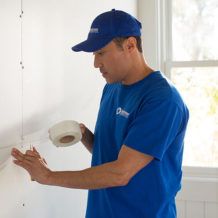
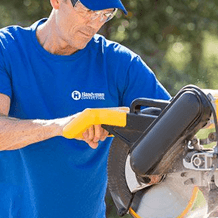
We are excited to announce that a long time Master Craftsman of our business is now the proud new owner; please join us in congratulating Earl Swader as the new owner of Handyman Connection of Blue Ash. Earl has previous business ownership already under his belt and is looking forward to continuing to serve the Blue Ash community as the proud owner.

Outdoors / November 21, 2025

A storm doesn’t negotiate. It arrives with hard numbers. Wind speeds. Surge levels. Pressure drops that don’t care how ready you feel. And when warnings shift from concern to certainty, the threat of a hurricane, tropical storm, or dangerous wind becomes very real.
At that moment, your home turns into a test of preparation. That’s when shutters stop being an afterthought. They’re not cosmetic. They are strategy. And sometimes, they’re survival. And this article will dissect the types, costs, and real-world benefits so you can choose protection that truly holds.
Source: Pexels
Understanding the Odds of a Severe Storm
Before diving into costs and shutter types, it’s worth grounding ourselves in the reality of storm risk. Hurricanes don’t strike every coastline every year, but the trend line is moving in a direction that’s hard to ignore. NOAA’s long-term records show that the Atlantic basin now averages about 14 named storms per season, slightly higher than the historical norm. Two typically make landfall in the United States, and one reaches major hurricane status.
Scientists have been closely tracking this escalation. A study in the Proceedings of the National Academy of Sciences found that the odds of a tropical cyclone rapidly
strengthening into a Category 3 to 5 hurricanes have roughly doubled over the past four decades.
These numbers are not intended to scare anyone. They exist to make one thing clear: storm protection isn’t paranoia. It’s preparation. And that’s where shutters come in.
Source: Climate Center
How Rising Risk Shapes Smarter Protection
When you understand how unpredictable storms have become, the conversation shifts from “if” to “how” you protect your home.
Meteorologists now track an increasing number of storms that undergo rapid intensification within 24 hours, a pattern noted repeatedly in NOAA seasonal reports. And this short-term period of reaction is what catches us off guard and does more than just material damage. So, investing in shutters is not a waste, because it’s only a matter of time before these “home gadgets” do their magic.
And yes, it makes all the difference to know you’re safe.
The Main Types of Hurricane Shutters
People often assume hurricane shutters fall into one broad category, but the reality is far more personal. Each style carries its own strengths, its own rhythm of use, and even its own personality. Choosing the right one depends on how much time you want to spend preparing, the level of exposure your home will have, and how you want it to look throughout the year.
Accordion Shutters
Accordion shutters stay permanently attached to the sides of your windows and slide into place when needed. No storage, no wrestling with panels, no last-minute scavenger hunt in the garage. This reliability is why so many coastal homes rely on them.
They provide a strong mid-range level of protection and are widely used in properties that must comply with requirements similar to those in the Florida Building Code.
Roll-Down Shutters
Roll-down shutters are what happens when convenience meets serious strength. Instead of sliding in from the sides, they roll down like a protective curtain made of interlocking slats that lock together into a rigid barrier. Their performance aligns with testing standards such as ASTM E1996, which is designed to evaluate how materials withstand hurricane-force impacts.
Compared to accordion shutters, roll-downs offer a smoother experience. A single switch can secure your entire home, which becomes priceless when evacuation orders come faster than expected. If accordion shutters are reliable, roll-downs are refined.
Storm Panels
If roll-down shutters feel like the luxury option, storm panels are the clever, budget-friendly workhorse. They take more effort to install, but they’re tough, reliable, and often the first choice for people protecting multiple windows without overspending.
They’re not permanently attached, but what they lack in convenience, they make up for in affordability and raw durability. These panels come in:
The polycarbonate versions are fascinating because they let in daylight, which can make a surprising emotional difference during multi-day power outages.

11115 Kenwood Rd.
Blue Ash, OH 45242

© Handyman Connection 2026 | Privacy Policy

 (513) 771-3950