At Handyman Connection of South Shore, we make home repairs simple. Our licensed, bonded, and insured craftsmen handle everything from drywall and painting to deck repairs and full remodeling — delivering quality handyman services that Hanover, Hingham, Scituate, Duxbury, and surrounding South Shore homeowners count on every day.
Ready to check off your to-do list? Request a free estimate and get it done right.

Home Improvement / October 27, 2017
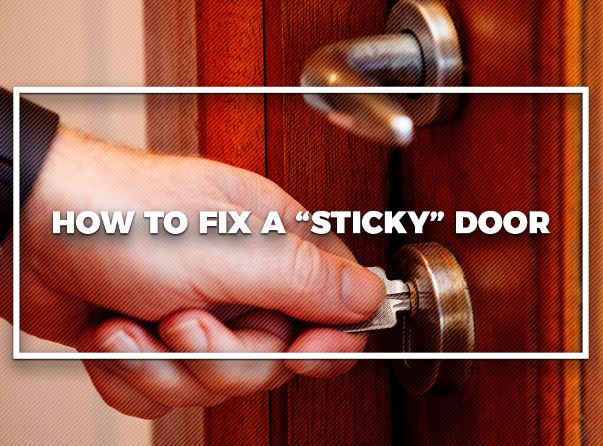
A sticky or tight door is troublesome, and you might think that you’ll need to replace it as soon as it shows signs that it’s starting to affect your ease of movement around the house. Before you replace it, try and see if you can fix the door by tightening the hinges and jambs. Handyman Connection® of South Shore discusses more.
Tighten the Hinge Screws
You don’t necessarily have to sand the door to stop it from sticking; all you may ever need to do is to tighten the hinge screws. These will work themselves loose over the years “naturally”, so simply take your screwdriver and tighten the screws. Avoid using a drill since you might over screw the hinge and cause damage to the screw heads.
You can also adjust the hinge. This is handy if the door in question is very old. Hinges aren’t actually adjustable, but you can tweak its positioning by driving a long screw through the jamb into the wall framing. To do this, simply close the door so that you can determine where it rubs against the jamb. For example, if the door rubs at the lower side of the jamb, draw the screw in the bottom hinge. If it rubs along the side of the jamb, draw in all the hinges.
Planing the Door with a Belt Sander
You should only try planing with a the belt sander if tightening the screws and adjusting the hinges don’t work. Start by scribing the door where it rubs against the top or side of the jamb. Use a carpenter’s compass to keep things accurate.
As for the planing itself, we recommend using a belt sander. Sand the area that you measured earlier, taking care not to sand too much around the area where the mortise holds the door latch. After that, all you need to do is smooth the edges of the door.
Handyman Connection of South Shore offers home improvement services. If you’re having trouble with your sagging and sticking doors, we can help you unstick them or replace them completely.
Fill out our form or give us a call at (781) 829-3030 for more information on our services.

819 Washington St
Hanover, MA 02339
License #188809

© Handyman Connection 2026 | Privacy Policy

 (781) 829-3030