We offer a wide range of services for that fresh look, or just maintenance or updates to keep your home functioning and safe. Regardless of the size of the job, we have a craftsman that can tackle it. We offer a wide range of services for that fresh look, or just maintenance or updates to keep your home functioning and safe. Regardless of the size of the job, we have a craftsman that can tackle it.

Fences / April 7, 2026

You want privacy in your backyard. You want it fast. And you want it to last through every Canadian winter, windstorm, and rainy season without leaning, cracking, or falling apart. The good news? That’s completely achievable, but only when the job is done right, by the right people.
Professional fence installation built to handle wind and weather starts with choosing the correct materials and design for your specific yard. It also means proper post depth, secure anchoring in concrete, and smart structural choices that reduce wind pressure. Done correctly, a well-installed privacy fence can stand strong for decades.
This blog covers what makes a fence truly weather-resistant, which materials perform best in high-wind areas, and how our team at Handyman Connection in Halton approaches every installation to make sure your fence holds up season after season. In this blog, we walk you through everything you need to know about how to add privacy fast with professional fence installation built to handle wind and weather.
The best fencing to withstand wind combines strong, weather-resistant materials with smart design features that reduce wind pressure on the structure. Composite and reinforced vinyl are top-performing options in high-wind areas — both are built with internal supports that help them flex without breaking.
The design matters just as much as the material. A solid board fence catches wind like a sail, putting enormous stress on every post and panel. An alternating picket or “hit-and-miss” style, where boards are spaced with small gaps, allows air to pass through while still blocking the view. This single design choice can dramatically reduce the force that builds up against the structure during a storm.
Pair the right material with deep post installation, at least two to three feet into the ground, set in concrete, and you have a structure that handles Canadian weather conditions reliably year after year.
Not every material is built the same. When wind, moisture, and freezing temperatures are part of the equation, some options hold up far better than others. Here are the key materials worth knowing about:
Each of these materials brings something different to the table. The right choice depends on your yard, your priorities, and your budget.
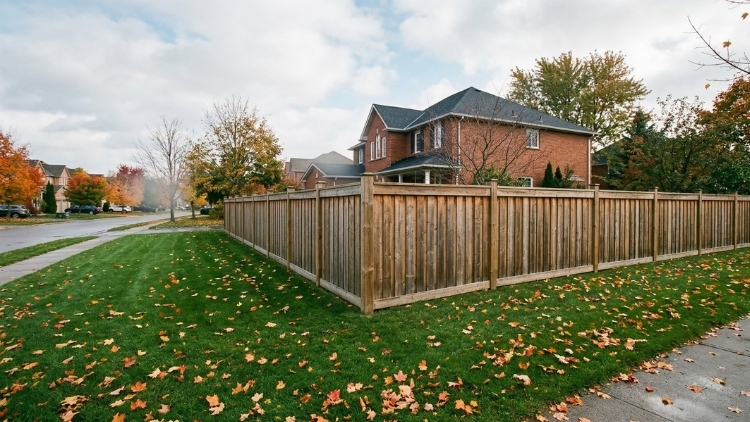
A fence is only as strong as the posts holding it in the ground. Many fences fail because the posts were not installed properly. The boards and panels may still be solid, but weak posts can cause leaning or collapse. A strong foundation is what keeps the entire structure stable.
Fence posts should be buried at least two to three feet deep. The exact depth depends on the height of the fence and how much wind the area gets. Setting the posts in concrete helps lock them in place. This keeps the fence steady, even during strong wind gusts.
Our craftsmen at Handyman Connection follow strict standards for every installation. We check the soil type, yard slope, and local weather conditions before setting each post. This helps us choose the right depth and anchoring method. Getting the posts right from the start ensures the fence stays strong for years.
Here is something many homeowners don’t consider: the way a fence is designed has a huge impact on how it handles wind. A completely solid panel acts as a wind barrier, which sounds good for privacy but actually puts enormous pressure on every post and connection point.
The better approach is an aerodynamic design that allows some airflow while still delivering full visual privacy. A few effective options include:
These design choices aren’t just about aesthetics. They are structural decisions that directly affect how long the fence stays upright and intact.
Installing a high-quality fence is step one. Protecting it from moisture, UV damage, and rot is what keeps it looking and performing its best over time.
Wood fences in particular benefit from regular staining and sealing. Without this protection, water penetrates the surface, leading to warping, cracking, and eventual rot. Even pressure-treated wood needs periodic treatment to maintain its integrity.
Our team offers professional weatherproofing services including:
Investing in routine maintenance after installation extends the life of the structure significantly and keeps it looking sharp year-round.
Even a well-built fence can take a hit after a severe storm. High winds can loosen boards, shift posts, and cause gates to sag or misalign. Catching these issues early makes a big difference — a loose post or cracked board that gets ignored tends to lead to much bigger repairs down the road.
Common wind damage issues our team repairs include:
Addressing these repairs quickly keeps the rest of the structure intact and prevents one problem from cascading into several.
Halton and the surrounding area experience a full range of Canadian weather: cold, snowy winters, wet springs, humid summers, and autumn windstorms. That combination puts real stress on outdoor structures.
Freeze-thaw cycles are especially hard on posts set in shallow or loose soil, as the ground shifts and contracts throughout the year. Moisture is a constant threat to untreated wood. And strong seasonal gusts — particularly in open or elevated yards — can test even a solidly built structure.
Choosing materials and installation methods that are suited to this specific climate makes a meaningful difference. Composite, vinyl, and properly treated cedar all perform reliably here. Deep concrete footings are standard practice in our installations. And our craftsmen are familiar with the local conditions in Halton, which informs every decision we make on the job.
Posts should typically be buried two to three feet deep, with deeper settings required for taller structures or areas with high wind exposure. Setting posts in concrete is strongly recommended in Canadian climates where freeze-thaw cycles affect soil stability.
Most residential installations are completed within one to three days, depending on the size of the yard, the material chosen, and site conditions. Our team works efficiently to minimize disruption and complete the project as quickly as possible.
Yes, significantly. Solid panel designs catch wind pressure directly, which puts more stress on the posts and rails. Designs that allow some airflow like alternating picket styles or lattice-top sections, dramatically reduce wind load while maintaining privacy.
Vinyl and composite are the lowest maintenance options available. Neither requires painting, staining, or sealing, and both resist rot, pests, and moisture. A simple rinse with water keeps them looking clean.
Most wood fences benefit from resealing or re-staining every two to three years, though this depends on sun exposure, moisture levels, and the specific product used. Our team can assess the condition of your fence and recommend the right maintenance schedule.
In many cases, yes. Adding concrete to existing post footings, replacing damaged rails, and installing additional structural supports can significantly improve wind resistance without requiring a full replacement.
A fence does more than just add privacy to your yard; it protects your space and brings peace of mind. But a fence is only as good as its foundation. You shouldn’t have to worry about it leaning, breaking, or falling over after a heavy wind or snowfall. When it’s built the right way — with high-quality materials, a solid design, and properly anchored posts — you can rest easy knowing it’s made to last.
At Handyman Connection in Halton, we understand how important it is to have a fence you can depend on. That’s why our team of experienced professionals is here to help from start to finish. We use durable materials, focus on precision, and ensure every installation is ready to handle the toughest Canadian weather. Whether you’re looking for a simple solution or want to add style along with privacy, we’ll make sure your fence is expertly designed to meet your needs.
Don’t wait to add security and style to your outdoor space. Request a free estimate today and see how easy it is to get a fence you can count on. With Handyman Connection, your privacy and peace of mind are just a call away.

4145 North Service Rd., 2nd Floor Unit 258
Halton, ON L7L 4X6

© Handyman Connection 2026 | Privacy Policy

 905-297-5400